Question about capacitors

Thread Starter

andrea585

Joined May 24, 2026
6
Hello, non EE newb here. There's a desktop amplifier I'm interested in buying. Production years were between 1993-2002. This amp is new in box. My concern is the that having never been turned on there may be issues with the capacitors i.e dried up electrolyte, leakage, etc... Is there cause for concern?

Thanks,
Andrea
 

MrChips

Joined Oct 2, 2009
34,829
Hello, non EE newb here. There's a desktop amplifier I'm interested in buying. Production years were between 1993-2002. This amp is new in box. My concern is the that having never been turned on there may be issues with the capacitors i.e dried up electrolyte, leakage, etc... Is there cause for concern?

Thanks,
Andrea
You are buying something that is 25 years old. I would not worry about capacitors. If the price is right for you then buy it. The concern is that you are buying something that might not work. That is the risk you take.
 

Thread Starter

andrea585

Joined May 24, 2026
6
Hi, thanks for the reply. It wasn't the age of the amp that concerned me (I have a 40 yr old turntable) it's that (1) it was never turned on and (2) I'm giving it to someone to use as a preamp for a 78 rpm TT with a ceramic cartridge and I'd like it to function properly.

Anyway, I trust your judgement so I'm going to buy it.

Thanks again,
Andrea
 

dl324

Joined Mar 30, 2015
18,339
My concern is the that having never been turned on there may be issues with the capacitors i.e dried up electrolyte, leakage, etc... Is there cause for concern?
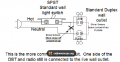
You can use a dim bulb fixture when you first turn it on. A dim bulb tester is simply an incandescent bulb (usually with a light switch to switch power) inserted in the power line to the device to limit current (and not blow internal fuses). It's normal for the bulb to light up and then dim when there are no shorted capacitors.
1779678671649.png
When you build it, just install everything in a 2-gang metal electrical box.

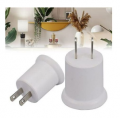
The bulb goes in an adapter:
1779678978872.png
 
Hello, non EE newb here. There's a desktop amplifier I'm interested in buying. Production years were between 1993-2002. This amp is new in box. My concern is the that having never been turned on there may be issues with the capacitors i.e dried up electrolyte, leakage, etc... Is there cause for concern?

Thanks,
Andrea
The only thing I can say is, test before you buy.
 

MrChips

Joined Oct 2, 2009
34,829
Hello, non EE newb here. There's a desktop amplifier I'm interested in buying. Production years were between 1993-2002. This amp is new in box. My concern is the that having never been turned on there may be issues with the capacitors i.e dried up electrolyte, leakage, etc... Is there cause for concern?

Thanks,
Andrea
You said a desktop amplifier. By that I am to presume that it is powered speaker meant for a computer.

Secondly, you want to amplify the signal from a vinyl turntable. The two are not compatible because you need RIAA frequency compensation. Without it, the sound will be very tinny with no bass.
 

Thread Starter

andrea585

Joined May 24, 2026
6
You said a desktop amplifier. By that I am to presume that it is powered speaker meant for a computer.

Secondly, you want to amplify the signal from a vinyl turntable. The two are not compatible because you need RIAA frequency compensation. Without it, the sound will be very tinny with no bass.

This is an integrated amp. That means it has a built-in preamp. One of its features is a phono input which is switchable between ceramic and magnetic. It also has a tape out so it can basically function like a phono preamp. These amps are commonly used by people wanting to get the correct signal input resistance and RIAA correction for a ceramic cartridge (although most ceramics have RIAA built in). Standard MM carts have an input resistance of 47k ohms (which is why they require a preamp). While a ceramic has an input resistance of between 500k and 1 meg that modern equipment does not accommodate.

The other options are building a velocity equalizer or buying a CerMag which all in costs about $100. At $30-$50 these little units are a cost effective way of getting correct signal and can also be used for their primary function as an integrated amp. I'm all for multi use gear.
 

MrChips

Joined Oct 2, 2009
34,829
This is an integrated amp. That means it has a built-in preamp. One of its features is a phono input which is switchable between ceramic and magnetic. It also has a tape out so it can basically function like a phono preamp. These amps are commonly used by people wanting to get the correct signal input resistance and RIAA correction for a ceramic cartridge (although most ceramics have RIAA built in). Standard MM carts have an input resistance of 47k ohms (which is why they require a preamp). While a ceramic has an input resistance of between 500k and 1 meg that modern equipment does not accommodate.

The other options are building a velocity equalizer or buying a CerMag which all in costs about $100. At $30-$50 these little units are a cost effective way of getting correct signal and can also be used for their primary function as an integrated amp. I'm all for multi use gear.
If the amplifier has RIAA equalization built-in then you're good to go.
 

Futurist

Joined Apr 8, 2025
769
Hello, non EE newb here. There's a desktop amplifier I'm interested in buying. Production years were between 1993-2002. This amp is new in box. My concern is the that having never been turned on there may be issues with the capacitors i.e dried up electrolyte, leakage, etc... Is there cause for concern?

Thanks,
Andrea
If its never been used then the capacitors will likely be nothing to worry about.

Well, that's what I was going to say until I did some digging!

https://digital.library.unt.edu/ark:/67531/metadc3104/m2/1/high_res_d/thesis.pdf

and

https://www.lung-chen.com/the-capacitor-has-not-been-used-for-a-long-time
 

Thread Starter

andrea585

Joined May 24, 2026
6
If its never been used then the capacitors will likely be nothing to worry about.

Well, that's what I was going to say until I did some digging!

https://digital.library.unt.edu/ark:/67531/metadc3104/m2/1/high_res_d/thesis.pdf

and

https://www.lung-chen.com/the-capacitor-has-not-been-used-for-a-long-time
This was the issue that I had in mind. It's something often brought up in the audio community when discussing the pros and cons of buying older components. I avoided those sites because they will invariably ask about all associated components of the dedicated 78 rpm setup. Then suggest alternatives (which I am already aware of) costing many hundreds of dollars. Since this is a novelty for occasional use spending big bucks isn't an option. Thanks so much for all the "digging"
 

Futurist

Joined Apr 8, 2025
769
This was the issue that I had in mind. It's something often brought up in the audio community when discussing the pros and cons of buying older components. I avoided those sites because they will invariably ask about all associated components of the dedicated 78 rpm setup. Then suggest alternatives (which I am already aware of) costing many hundreds of dollars. Since this is a novelty for occasional use spending big bucks isn't an option. Thanks so much for all the "digging"
You can likely find a decent used audio amp for use with a turntable, on ebay I expect.
 

AnalogKid

Joined Aug 1, 2013
12,143
Last edited:

Thread Starter

andrea585

Joined May 24, 2026
6

Don't think so. Back when, ceramic cartridge equalization was the wild west.

Here is an AI summary:
https://www.google.com/search?client=firefox-b-1-e&q=78+rpm+record+equalization


And a deep rabbit hole:
https://plugins.audacityteam.org/ad...lization-for-78-rpm-shellacs-and-early-33-lps

ak
The 2 cartridges that I will be dealing with are the Chuo Denshi CZ-800 and the Pfanstiehl P 192D flip. I know that correct input impedance is key with these carts as demonstrated in videos by VWestlife(YT) playing at all speeds through the phono section of the Tandy Corp amps I have purchased. If they're slightly off it's not a big deal for me - I expect a little wonkiness in old shellacs. I'm more in it for the enjoyment of the music itself. Thanks so much for the links. You can never have to much info
 

MisterBill2

Joined Jan 23, 2018
27,587
Hello, non EE newb here. There's a desktop amplifier I'm interested in buying. Production years were between 1993-2002. This amp is new in box. My concern is the that having never been turned on there may be issues with the capacitors i.e dried up electrolyte, leakage, etc... Is there cause for concern?

Thanks,
Andrea
Probably, IF the amplifier would work before, it is likely that it should still work. BUT it might not work perfectly, since some capacitors do "age" and some may have reduced capacitance. The amount of aging change is a variable that is hard to predict accurately. And it is variable as well.
 

kaindub

Joined Oct 28, 2019
179
I think you have answered your own question. Without testing you have no idea whether the amplifier will work. Components may have aged and connections could have gone bad. If you don’t have the skills to fix an amplifier, then it’s hit and miss for you. I’d go that it’s not working and if it does it’s a bonus.
 

MisterBill2

Joined Jan 23, 2018
27,587
To clarify my previous response: The cappacitors that may suffer from aging are the electrolytic capacitors, primarily in the power supply area.
One other point is that in a normal "HIFI" amplifier there will be several different varieties of capacitors, used for different purposes. There are "filter" capacitors usually electrolytic, polarized, and much higner values, that are used to smothe the rectified supply voltage. There are "coupling capacitors" used to block the DC voltage different between the amplifier stages. Those may be paper or plastic inside. There are also "bypass" capacitors, used to shunt any signal voltages to the common, from circuit portions that should only have clean DC power present. They may be either disc capacitors, or plastic, or even paper types.
There are also other capacitors used to alter the frequency response of the different stages


What was not mentioned was if the amplifier was a transistorized package, or a TUBE TYPE amplifier. Based on the 1993-2002 era statement, it is probably a transistorized amplifier, and so has no "high voltage" portion. In addition, there have been different schemes for transistor amplifiers since transistors became available.
CERTAINLY the reduced voltage scheme described in post #4 is a good insurance plan, and not able to cause any failures. So I recommend starting up with that scheme, although even finding actual incandescent light bulbs today may be a real challenge, and there is not a low-cost similar substitute available. An alternative would be to use a variable voltage transformer, often referred to as a"Variac" or a "POWERSTAT", along with an AC ammeter to monitor the current draw. There is a caution about that scheme, which is that an electronic device such as an amplifier will not respond to a reduced voltage the same as a resistor load will respond. So the response may be rather confusing.
 
Last edited:

Parkera

Joined May 3, 2016
127
This is an integrated amp. That means it has a built-in preamp. One of its features is a phono input which is switchable between ceramic and magnetic. It also has a tape out so it can basically function like a phono preamp. These amps are commonly used by people wanting to get the correct signal input resistance and RIAA correction for a ceramic cartridge (although most ceramics have RIAA built in). Standard MM carts have an input resistance of 47k ohms (which is why they require a preamp). While a ceramic has an input resistance of between 500k and 1 meg that modern equipment does not accommodate.

The other options are building a velocity equalizer or buying a CerMag which all in costs about $100. At $30-$50 these little units are a cost effective way of getting correct signal and can also be used for their primary function as an integrated amp. I'm all for multi use gear.
Magnetic cartridges require a preamp for two reasons: 1) the level is MUCH less than a ceramic cartridge, and 2) they are a constant amplitude output, meaning that they have essentially a flat frequency response. Modern recordings use equalization to reduce noise and increase the amount of time that can be put on a side. Without equalization, there would be no bass and an exagerated treble with high surface noise. (This is a highly simplified explanation to those who know the intimate details.)

Ceramic cartridges also have a fairly flat response when properly loaded with a 1 Megohm and low capacitance input to the amplifier. It too would sound tinney and noisy. But since most amplifiers have a 10K to 47K input impedance on the AUX level inputs, and you usually hook a turntable up with 3' of cheap coax that gives around 100pf of input capacitance, the net "equalization" is actually fairly close to RIAA and doesn't sound that bad.

The first "78's" were acoustically recorded with a 'flat' frequency response. Most labels were recorded at 80 RPM, with Victor being recorded at 76.59 RPM. When electrical recording (using amplifiers), first the speed was standardized to 78.26 RPM, which was measured using a 92 bar strobe disc. That was a middle-ground compromise between Columbia (80 RPM, 90 strobe bars) and Victor (76.59 RPM, 94 strobe bars).

Electrical equalization however was not standardized until I believe about 1947, followed by additional high and low frequency specifications until finally settled about 1954, which is what we have today. Before 1947 the effective equalization was determined by the microphone characteristics and what the record company thought was the best overall compromise. In other words, they were all different from one another. Very early '50's preamps frequently had crossover and rolloff equalization switches to be adjusted for what label record you were playing. Interestingly, the equalization that was used by Victor from 1925 was very close to the modern RIAA standard.

The link that Bertus (#7) gave is a very good one. It lists many of the different equalizations the different labels used. It is by no means fully comprehensive though. The preamp circuit is a fairly standard phono stage circuit with the addition of crossover and rolloff switch components. If you have the schematic of the phono stage in your amplifier, modification may not be that bad.
 
Top