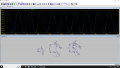
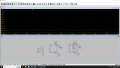
I said depending on output voltages but yes it is not. I just wondered.How do you define "performs better"?
Diodes are often used clamped to the heatsink on which the output transistors are mounted.
Because of the negative temperature coefficient, the diodes prevent thermal run-away.
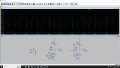
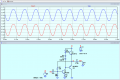
The diodes bias the transistors so they're always on to minimize crossover distortion. It works best when the diode drops match the base-emitter junction drops. Your simulations don't show any crossover distortion.I said depending on output voltages but yes it is not. I just wondered.
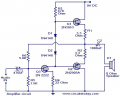
I worked on this , Q3 is preamplifying the signal , and remaining part is same. R3 and R4 changes gain. I guess R1 and R2 is for cables inner resistances.Study the biasing in this circuit.
You can replace Q1 and Q3 with NPN transistor 2N3904 and Q2 with PNP transistor 2N3906.
R6 provides negative feedback.
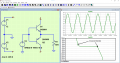
View attachment 329803

The gain is set by negative feedback via R6 and R5.R3 and R4 changes gain.
No, they provide negative feedback to the biasing network.I guess R1 and R2 is for cables inner resistances.
Actually yes but the output is different from feedback gain and R3,R4 affects the gainThe gain is set by negative feedback via R6 and R5.
No, they provide negative feedback to the biasing network.
Hi Eric , seems like R5 must be small for higher current ability of amplifier. Is that right ?Hi demir,
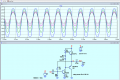
You are over driving the Amp input, also made minor changes in the values.
The amp needs further design changes.
You must take more care when drawing and laying out your simulations, also use Labels at the Nodes. F4.
E
View attachment 329818