Problem with Universal Motor Control Using a TRIAC

Thread Starter

mhm_004

Joined Sep 3, 2017
3
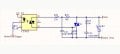
I have used the following circuit to control a washing machine universal motor. The problem is that after some time, the resistors in the optotriac-to-TRIAC drive path, namely R29 and R30, start to burn out, especially R29.

I have attached the datasheets for these resistors:

  • 100Ω: SR2512JK-07100RL
  • 220Ω: AS122WJ0221T4E

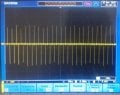
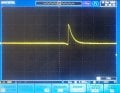
I have also attached the voltage waveform measured across R29.
So far, this issue has only occurred on one board that had been running under test for a few days. However, I am concerned that there might be an underlying design issue that could eventually affect other boards as well.

The circuit is based on STMicroelectronics Application Note AN5114.

I would appreciate any advice from those who have experience with this type of circuit. In particular, I would like to understand why the 100Ω resistor (R29) might be burning out.

Any ideas or suggestions would be greatly appreciated.

Thank you!
 

Attachments

MisterBill2

Joined Jan 23, 2018
28,634
Why is R90 such a low value?? That leads to a lot more current in the other two resistors.
Does the triac really require that much gate drive???
 

Thread Starter

mhm_004

Joined Sep 3, 2017
3
Why is R90 such a low value?? That leads to a lot more current in the other two resistors.
Does the triac really require that much gate drive???
Hi @MisterBill2 , Thank you.
The resistor values recommended in the application note were even lower than the ones I'm using. Do you think using a lower resistance value could contribute to the resistor burning out?
I can't quite understand this. I replaced the burned R29 resistor on one of the boards, and it has now been running continuously, 24/7, for several days without any further problems with the resistor.
 

MaxHeadRoom

Joined Jul 18, 2013
30,888
There is a special ic out there designed by Motorola . TDA1085 for precise control of a Universal motor.
It was originally used for precice control when used in a W/ M application.
You just need to a very simple tach on the motor rear shaft.
I have used it in the past.
 

MaxHeadRoom

Joined Jul 18, 2013
30,888
One day when I get a chance, I would like to see if I can design a BLDC controller using one of the fisher-pakel out-runner washing W/M !.
 

MisterBill2

Joined Jan 23, 2018
28,634
WHAT is that circuit actually supposed to control?? Motor speed?? or just on and off?
If it is only ON/OFF control you may be better off with an adequately rated relay.
 
The burn-out of R29/R30 points to the gate-drive loop, not to the motor current itself. Work through the numbers before changing the resistor values.

1. Gate-drive power. The gate current of a typical 8 A / 600 V triac is on the order of 25-50 mA to trigger reliably, and the gate resistor sits between the opto-triac output and the gate. If the resistor is fed from the mains through the opto device, the worst-case dissipation is roughly P = V^2 / R during the conduction angle, not the average over a full cycle. For example, with a 120 ohm resistor at 230 V RMS the instantaneous peak power can reach (325 V)^2 / 120 ohm = about 880 W at the voltage peak, even though the average is far lower. That is why a standard 0.25 W resistor chars even if the average looks safe. Size the gate resistor for the peak pulse: use a 1 W or 2 W metal-film part, and keep the value in the 100-180 ohm range so the gate still sees at least 50 mA at low line voltage.

2. Check the opto-triac current rating. A common zero-cross opto-triac is rated for about 1 A peak repetitive surge. If the gate resistor is too small, the peak gate current at mains peak can exceed that and damage the opto device, which then stays on and keeps the gate resistor powered. Measure the voltage across the gate resistor with an oscilloscope (through an isolated differential probe, never a grounded scope on live mains) and confirm the peak current stays below the opto device rating.

3. Snubber and inductive kick. A universal motor is highly inductive, so when the triac commutates off, dV/dt across MT1-MT2 can retrigger it. Add a snubber of 100 nF (630 V film) in series with 39-100 ohm (1 W) directly across MT1-MT2, close to the triac, and keep the snubber loop short. Also fit a 275 V metal-oxide varistor across the mains input for surge protection.

4. Test in stages, with a series 60 W incandescent lamp as a current limiter on the first power-up. With the motor disconnected, the triac gate should trigger cleanly at a firing angle of about 90 degrees, and R29/R30 should stay cool to the touch after a minute. If they still heat with no motor connected, the fault is in the gate loop (wrong resistor value, shorted opto device, or a triac with a damaged gate). Only then connect the motor, and re-check the resistor temperature at full load.
 
One more thing!! I have investigated and installed power for quite a few normal clothes washers and at least in my part of the world NEVER even heard of one that used a UNIVERSAL motor!!

That is taking the definition of universal motor to mean "with commutator and a wound field". THAT is the standard description of a universal motor.
Another possible reason would be excessive leakage current of that capacitor, C42! OR maybe even a breakdown condition. An intermittant capacitor failure condition can be a "DOG" problem.
 

MaxHeadRoom

Joined Jul 18, 2013
30,888
A universa;l motor indicates an AC/DC wound field that is in SERIES with the field.
They were not that popular in W.M. applications,, and as I mentioned, Motorola made a IC especialy for them .
I happened to pick up a couple of these motors and controlers from my local electrical surplus supplier , all used the TDA1085 and a simple 8 pulse tach on the rear. they did control fairly nicely for a couple of projects.
 
Last edited:
I have NEVER seen anything except an induction motor in any wash machine. OR is this very new?? The obvious reason is that brushes are going to wear and need to be replaced.
NOBODY wants to be forced into an expensive service call.
 
IIRC this was about 30 yrs ago that I picked up the surplus types.
We have come a long way now with the Fisher-Paykel versions.
Our current W/M has one of these motors, and it it is quite entertaining to watch it establish the load etc.
 
Top