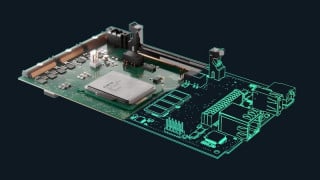
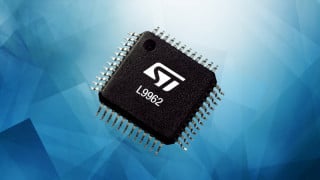
I would try it in a FPGA first. The cost for one is low because the initial investment is low. If you want 10,000 then FPGA costs too much per part.
Example: A FPGA might cost $10 each with no startup cost. A hard part might cost $2 each with $200,000 start up price.
I don't know today's prices. I has been years.
It depends on whether your VHDL is synthesizable. If it is, then yes. But expect to pay serious money for it. How much depends on how advanced you want the process node to be and how many transistors you are talking about. It also depends on whether you have it fabbed as part of a multi-project run or a dedicated wafer run.
I think that the cost of having a device custom made has been VASTLY UNDERSTATED!!
There are(or were) programmable IC devices available. What about the "PIC" line of programmable devices??
AND I am trying to imagine what sort of benefit would derive from another CPU design.
I worked at Intel and briefly was a member of a processor design group. After the VHDL was done, it was literally 1000s of man hours to get the chip working. The issues were around routing and the related timing issues.
This is not the same as giving the GRBL code to a 3D printer.
I worked at Intel and briefly was a member of a processor design group. After the VHDL was done, it was literally 1000s of man hours to get the chip working. The issues were around routing and the related timing issues.
This is not the same as giving the GRBL code to a 3D printer.
It was $50,000 per prototype (10 chip min) each for a small ASIC design in the 90's. The Japanese place I worked for was using direct Ebeam writing of 6 inch wafers instead of photo-masks for small custom jobs. That pricing was really cheap for that era. https://www.fujitsu.com/global/about/resources/news/press-releases/2006/0915-01.html
I didn't design processors, our group was developing the equipment from a test-bed system to something usable for normal production. I wish I had pictures (of the R&D prototype machine, no cameras) but the thing was huge and on a large floating platform with active magnetic shielding.
Modern Examples:
The FPGA can be reprogrammed in minutes. Changes are easy to make. I make mistakes, unlike others. lol
There are many kinds of FPGAs but most can be remade 1000s of time for the cost of a little time. No money.
It is exciting to see a design go from simulation to really working. (or really not working)
I think that the cost of having a device custom made has been VASTLY UNDERSTATED!!
There are(or were) programmable IC devices available. What about the "PIC" line of programmable devices??
AND I am trying to imagine what sort of benefit would derive from another CPU design.
There are avenues for getting IC's fabbed at a pretty low cost, particularly for educational institutions. At one point, you could get a Tiny Chip through MOSIS for $800. The size die you had to live with was enough to do a pretty brain-dead CPU. But that was 30 years ago. Recently, I've seen some other programs available for doing low-cost shared-wafer runs, but don't recall any of them off-hand.
The PICs are still alive and well, as are many, many other MCU chips. You can get them (not PICs, but cheap MCUs from China) as low as three cents each in even modest quantities. I don't know how the tariff situation is impacting that. I know some people that have been using them and they are pretty happy with them.
As for the benefit, I doubt there would be much in the broader scope, but if the motivation is driven by educational goal then a completely different set of criteria apply.

 Facebook
 Google
 GitHub
 Linkedin