Power ratings in circuit schematics

Thread Starter

quadhed

Joined Jan 13, 2016
48
In the drawings of designs I have released, I have included wire size in locations where it mattered. For a hobby construction project, look at the fuse sizes to guess the current rating required.
But most of those systems were not hobby related. AND the BOM, often included with the drawing, usually gives ratings of components, or model numbers. And any adequate simulator can report voltages and currents, and if that is not adequate to decide ratings then you need more study time before building.
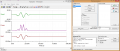
Novice at TINA.
 

MisterBill2

Joined Jan 23, 2018
27,741
One caution with some simulators is that they are not constrained by reality. That is to say, parts never fail due to overloads, excessive voltages or excessive currents. That limitation is important to understand. It is why some circuits will work in a simulator but fail in the real world.
 

Thread Starter

quadhed

Joined Jan 13, 2016
48
One caution with some simulators is that they are not constrained by reality. That is to say, parts never fail due to overloads, excessive voltages or excessive currents. That limitation is important to understand. It is why some circuits will work in a simulator but fail in the real world.
I’ve learned that the hard way by having circuits fry.
 

dl324

Joined Mar 30, 2015
18,404
So, a hobbyist is pretty much blind as far as a reliable circuit goes?
If the hobbyist has the skills to analyze the circuit, they can determine required power ratings. Once you've done that enough times, you'll be able to identify high power situations and ignore the rest.
Is there a program that can work out the power ratings to make it easier?
If you take the time to enter the circuit in a circuit simulator, it can analyze the circuit and do the calculations for you.
 

crutschow

Joined Mar 14, 2008
38,576
With a little experience, you can often tell, just by looking at the voltage and resistor values in a circuit, which components are likely to dissipate at a possible problem power level, so those should be then more carefully looked at to determine their dissipation.

For example, if the power to an amplifier circuit is 5V, and there is a 1kΩ resistor somewhere in the circuit, then its dissipation would be no more than 5² / 1k = 25mW, so its power rating would normally be of little concern.
 

MisterBill2

Joined Jan 23, 2018
27,741
Mostly, folks tend to have a hobby involving something that they have an interest in, and often that interest includes learning more about that subject. Not in all cases, of course.
 

WBahn

Joined Mar 31, 2012
32,970
If you take the time to enter the circuit in a circuit simulator, it can analyze the circuit and do the calculations for you.
Maybe.

It all depends on the quality of the models.

I suspect that commercial models are much, much better today than they used to be, I learned early on that power supply consumption for IC models could not be counted on. The models were only interested in getting the behavior at the I/O pins reasonably faithful and the behavior at the power pins, particularly the current draw, wasn't even a consideration. I discovered this when I designed a test board for one of our ICs and used the simulator to measure the total current draw from each of the supplies -- and it told me that it was drawing way over a thousand amps when I was expecting something in the two amp range. I quickly tracked it down to the opamps, which were TI parts and I was using models that I had gotten directly from them (this is the days of them sending you stuff like that on floppy disks). It took no time to verify that the models resulted in nonsensical power supply currents because, internally, they relied on analog behavioral models and numerous dependent sources to produce the I/O behavior. This behavior, of course, is directly influenced by the supply voltage, so there had to be interaction there. But if it took a current draw of a thousand amps to get the desired I/O behavior, so what.
 

dl324

Joined Mar 30, 2015
18,404
Maybe.

It all depends on the quality of the models.
I'm not a big fan of analog simulators. On the rare occasions that I choose to use LTspice, for all but the simplest of circuits, I usually find myself battling with the simulator to get it to work. I've had LTspice tell me that many of my designs wouldn't work, when I knew that they should and I was just using the simulator for quick validation when I was too lazy to breadboard the circuit, or needed to order a part. Invariably the circuits worked when I breadboarded them.

I won't bother learning more and/or tweaking models because I'm more interested in designing circuits, not learning how to make a simulator work.

I use digital simulators more because I'm too lazy to breadboard the circuits and it's tiresome to do the simulation in my head.
 
Last edited:

WBahn

Joined Mar 31, 2012
32,970
I almost never simulate circuits I can build on a breadboard (or some other way). I only do so if I have a specific reason for it. The only reason I was in a position to try to get a power consumption estimate from a simulation of the test system was because I had to put the entire schematic into the schematic capture tool in order to generate a PCB netlist in order to verify my layout. But, as an IC designer for mixed-signal chips, breadboarding simply wasn't an option. Even if you could physically breadboard the circuit, it simply wouldn't behave like the circuitry on the chip would, so we had to rely on simulations -- and demand that the device models be good enough to achieve first-silicon success.
 

Thread Starter

quadhed

Joined Jan 13, 2016
48
If the hobbyist has the skills to analyze the circuit, they can determine required power ratings. Once you've done that enough times, you'll be able to identify high power situations and ignore the rest.
If you take the time to enter the circuit in a circuit simulator, it can analyze the circuit and do the calculations for you.
Anyone ever heard of software that you can scan a schematic with and have it simulated from the scan?
 
Top