Popcorn maker

sghioto

Joined Dec 31, 2017
8,633
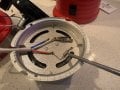
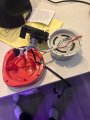
A Thermal fuse.
Are you sure the thermal switch is good?
If the switch is shorted the fuse will eventually blow.
I See markings on the fuse. They should give current and temperature data.
 
Last edited:

Thread Starter

Fixing ir

Joined Jan 13, 2026
3
Sorry, the bi-metal thermostat
A Thermal fuse.
Are you sure the thermal switch is good?
If the switch is shorted the fuse will eventually blow.
I See markings on the fuse. They should give current and temperature data.

thanks for getting back to me so quickly, I took another picture and zoomed in on it better. You are correct and I’ve ordered a 240 thermo fuse
 

wayneh

Joined Sep 9, 2010
18,088
I hate those things. They’re one of the most common failure modes for heating appliances and you usually have to buy 5 or so as a minimum. They always seem to be different temperatures. If I could grab them at Radio Shack like back in the day, I wouldn’t rant anymore.
 

B-JoJo-S

Joined Jan 3, 2026
211
And dont try to solder it
Yes, DON'T solder it. You'll burn it out.
It's supposed to go open when a certain temperature is reached. It's a safety device meant to prevent fires. Once they blow they're done. You have to replace it. Notice how it's swaged under the rivets? A soldering iron can easily render it dead. I know - I've done exactly that.
 

crutschow

Joined Mar 14, 2008
38,322
You might be able to solder it using high-temperature solder (e.g. plumbing), if you hold the lead tightly with the wider part of a needle-nose pliers to sink away the heat.
 

B-JoJo-S

Joined Jan 3, 2026
211
Since the fuse is not polarized (can be either direction) you might try soldering a piece of wire into the board using high temp solder as crutschow suggests. Clip the fuse as close to the body as possible. Then take a couple of butt splices and strip off the plastic sheathing. Be careful, it's not an easy task and a slip of a knife could lead to stitches.

Once you have the bare metal butt splices slip them over the one soldered wire and slip the new fuse into place. Then using a cheap pair of crimpers, crimp the metal body with both leads crossing past each other. Then do the same on the other side. The length of wire is not critical so don't worry about making it too long. As long as it's close enough to do the job it is supposed to do. And carefully fold the fuse leads down so that the fuse body can be close to the mica insulator. That way you'll have the proper protection.

Caveat: Make sure you have the right fuse (fusible link or thermal fuse - same things). Same current rating and same temperature ratings.
 
Top