Phase resonance.

Thread Starter

cdummie

Joined Feb 6, 2015
124
Let's say we have the following circuit, where R=0.5 Ω, L= 10uH, C=10uF.
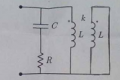
слиба.png

Determine the value of the coupling coefficient for which the angular frequency of the phase anti-resonance (frequency for which phase difference between voltage and current at the input is equal to zero) is equal to ω=400 000 rad/sec.

Phase anti-resonance occurs when imaginary part of admittance (or even impedance) is equal to zero. So basically all i have to do is to determine admittance or impedance of the given circuit and then set the imaginary part equal to zero and then get the value of k for given angular frequency.

Now, since i have pair of coupled coils, the best way to find admittance is to determine equivalent inductance so i would have a circuit with R and C (which are in series) in parallel with L equivalent. Is this a legitimate thing to do?

Now, when i calculated L equivalent i got Le=(1-k^2)L

Then admittance is Y=(jωRC)/(R+jωC) +1/(jωL)

But when i solved it this way i got a very strange answer (irrational number) which makes me think that i either made a mistake in calculations or i did something wrong with the circuit, maybe i am not allowed to find Le the way i did or maybe i did admittance wrong? Any advice or suggestion appreciated!
 
Last edited:

MrAl

Joined Jun 17, 2014
13,702
Let's say we have the following circuit, where R=0.5 Ω, L= 10uH, C=10uF.

View attachment 144595

Determine the value of the coupling coefficient (labeled "k" in this picture, in some literature this is labeled as M) for which the angular frequency of the phase anti-resonance (frequency for which phase difference between voltage and current at the input is equal to zero) is equal to ω=400 000 rad/sec.

Phase anti-resonance occurs when imaginary part of admittance (or even impedance) is equal to zero. So basically all i have to do is to determine admittance or impedance of the given circuit and then set the imaginary part equal to zero and then get the value of k for given angular frequency.

Now, since i have pair of coupled coils, the best way to find admittance is to determine equivalent inductance so i would have a circuit with R and C (which are in series) in parallel with L equivalent. Is this a legitimate thing to do?

Now, when i calculated L equivalent i got Le=(1-k^2)L

Then admittance is Y=(jωRC)/(R+jωC) +1/(jωL)

But when i solved it this way i got a very strange answer (irrational number) which makes me think that i either made a mistake in calculations or i did something wrong with the circuit, maybe i am not allowed to find Le the way i did or maybe i did admittance wrong? Any advice or suggestion appreciated!

Hello,

What do you mean by "equivalent" inductance? Do you mean that you found a single inductor that would replace the entire 'transformer' ?
If so, how did you find that? That is probably the source of the error.
However, it does look like it could be correct because that looks like you calculated the leakage inductance and that would be what you would see when it is connected like that and there are no winding resistances.

The way you could do this, and i am not sure how you did it yet until you reply again, is to choose a model for the transformer that includes the coupling factor 'k', then analyze the circuit, then apply the operating conditions required (frequency or whatever), then solve for k.
So you analyze the circuit as usual, but solve for 'k' instead of some other parameter.
Actually after a second look it looks like you tried to do this already.

I assume that you would be able to find any results you needed if you knew what 'k' was to start with. Like if k=1 or k=0.9 you would be able to completely analyze this circuit.

Instead of using admittance try doing it another way, like use impedance instead.
Your admittance does look right though, so maybe you did not do the rest correctly.
Maybe show the rest of how you did the problem.

Just to note, i used impedance and i got a reasonable result for k which was between 0.75 and 0.95 but i wont say which exactly yet until you try this again. I actually get two values for k because of the k^2 but of course reject the negative result.
LATER: I tried using admittance and got the same result as with impedance.

BTW, "k" is the coupling factor while "M" is the mutual inductance.
Sometimes the mutual inductance is specified instead of 'k'.
 
Last edited:

Thread Starter

cdummie

Joined Feb 6, 2015
124
Hello,

What do you mean by "equivalent" inductance? Do you mean that you found a single inductor that would replace the entire 'transformer' ?
If so, how did you find that? That is probably the source of the error.
However, it does look like it could be correct because that looks like you calculated the leakage inductance and that would be what you would see when it is connected like that and there are no winding resistances.

The way you could do this, and i am not sure how you did it yet until you reply again, is to choose a model for the transformer that includes the coupling factor 'k', then analyze the circuit, then apply the operating conditions required (frequency or whatever), then solve for k.
So you analyze the circuit as usual, but solve for 'k' instead of some other parameter.
Actually after a second look it looks like you tried to do this already.

I assume that you would be able to find any results you needed if you knew what 'k' was to start with. Like if k=1 or k=0.9 you would be able to completely analyze this circuit.

Instead of using admittance try doing it another way, like use impedance instead.
Your admittance does look right though, so maybe you did not do the rest correctly.
Maybe show the rest of how you did the problem.

Just to note, i used impedance and i got a reasonable result for k which was between 0.75 and 0.95 but i wont say which exactly yet until you try this again. I actually get two values for k because of the k^2 but of course reject the negative result.
LATER: I tried using admittance and got the same result as with impedance.

BTW, "k" is the coupling factor while "M" is the mutual inductance.
Sometimes the mutual inductance is specified instead of 'k'.
Ive tried few times again but i got completely wrong answers, if everything else is fine, i am probably making mistakes in calculations constantly. NOTE: I've edited the part about "k" and "M", it was a mistake!
 

MrAl

Joined Jun 17, 2014
13,702
Ive tried few times again but i got completely wrong answers, if everything else is fine, i am probably making mistakes in calculations constantly. NOTE: I've edited the part about "k" and "M", it was a mistake!
Hi again,

Then i strongly suspect that you are simply making an error with the complex math, that's all.
The inductance you calculated is correct, and the function you calculated is correct, so it must be in the complex algebraic manipulation.

But also, did you remember to replace L with L1*(1-k^2) before you solved for k?
(L1 is the original value of the inductor which is 10uH, while L is the leakage inductance calculated later).
I like using two different symbols for the inductances because it can be confused other wise.
So in your system function you use L, but then replace it with L1*(1-k^2) before solving for k.
I guess you did that though.

All i can say then is you will have to show some work if you cant figure it out.
Hopefully you can present something neat and clear so it is easy to read and then we can go over it.
 

Thread Starter

cdummie

Joined Feb 6, 2015
124
Hi again,

Then i strongly suspect that you are simply making an error with the complex math, that's all.
The inductance you calculated is correct, and the function you calculated is correct, so it must be in the complex algebraic manipulation.

But also, did you remember to replace L with L1*(1-k^2) before you solved for k?
(L1 is the original value of the inductor which is 10uH, while L is the leakage inductance calculated later).
I like using two different symbols for the inductances because it can be confused other wise.
So in your system function you use L, but then replace it with L1*(1-k^2) before solving for k.
I guess you did that though.

All i can say then is you will have to show some work if you cant figure it out.
Hopefully you can present something neat and clear so it is easy to read and then we can go over it.

Well, the most important thing is that my reasoning about this was correct, i actually tried to solve this once more and i got k=0.5 (rejected the negative one), i tried to take a picture of it but i'ts quite messy (not to mention my bad handwriting and low resolution of the camera), but basically i understand what i need to do here, i just need to get a little bit more better at calculations. Thanks for help!
 

MrAl

Joined Jun 17, 2014
13,702
Well, the most important thing is that my reasoning about this was correct, i actually tried to solve this once more and i got k=0.5 (rejected the negative one), i tried to take a picture of it but i'ts quite messy (not to mention my bad handwriting and low resolution of the camera), but basically i understand what i need to do here, i just need to get a little bit more better at calculations. Thanks for help!
Hello again,

Sorry, i made a mistake when reading your original post. The admittance you show is not correct after all.

That's because that is the admittance for a resistor in **parallel** with a cap and inductor, not for a resistor in *series* with a cap and then that string in parallel with an inductor.

The impedance for a cap in series with a resistor is:
R+1/(jwC)

and the reciprocal of that is:
jwC/(jwCR+1)

and so that added to yL is:
jwC/(jwCR+1)+1/jwL

Very sorry for this misread, but now we know what is wrong. Go over it again, then i bet you get the right result.
I wont verify anyone else's result yet, but it is between 0.8 and 0.85, and is expressible exactly as the square root of the ratio of two smallish integers.
 
Last edited:

Thread Starter

cdummie

Joined Feb 6, 2015
124
Hello again,

Sorry, i made a mistake when reading your original post. The admittance you show is not correct after all.

That's because that is the admittance for a resistor in **parallel** with a cap and inductor, not for a resistor in *series* with a cap and then that string in parallel with an inductor.

The impedance for a cap in series with a resistor is:
R+1/(jwC)

and the reciprocal of that is:
jwC/(jwCR+1)

and so that added to yL is:
jwC/(jwCR+1)+1/jwL

Very sorry for this misread, but now we know what is wrong. Go over it again, then i bet you get the right result.
I wont verify anyone else's result yet, but it is between 0.8 and 0.85, and is expressible exactly as the square root of the ratio of two smallish integers.

I see now, the best way to deal with admittance is to find impedance then invert it. I got k=0.83. Thanks!
 

MrAl

Joined Jun 17, 2014
13,702
I see now, the best way to deal with admittance is to find impedance then invert it. I got k=0.83. Thanks!
Hi,

You're welcome and i am happy to see that you got the right result after all.

Your way of doing the admittance was ok i think, and it would have worked if you did a series RC instead of a parallel RC.
Actually many people prefer to do it that way when there are parallel elements involved because then you can use addition of the different element admittances. We can always use impedance to check the result though, which is a good idea.

The exact result is sqrt(11/16).
 
Last edited:
Top