PELKO ELECTRIC MICROFURNACE MF2207-D5A

Thread Starter

matteomarini

Joined Dec 2, 2023
35
All glass diodes look the same, but its designation on the board is D not ZD,I believe.


then its shorted out... are there any markings on it?
You're right, it's a T4148 diode, removed from PCB right now : my meter set to diode measure gives 0.078 in both directions. Guess it's fried.
 

Thread Starter

matteomarini

Joined Dec 2, 2023
35
You're right, it's a T4148 diode, removed from PCB right now : my meter set to diode measure gives 0.078 in both directions. Guess it's fried.
I have an 1N4148 that is apparently the same and in good condition (0.748 in one direction): will mount it and measure voltage across all pins without LM to check for abnormal values prior plugging in the LM

Here the measures (pin / dc ac)

1 / 0 08 / 49 59
2 / 11 09 / 4 6
3 / 26 010 / 0 0
4 / 27 011 / 44 0
5 / 16 012 / 6 67
6 / 6 0 013 / 0 0
7 / 0 014 / 0 0
 
Last edited:

Thread Starter

matteomarini

Joined Dec 2, 2023
35
I am still trying to figure out why the voltage on some pins is so damn high : back to the PCB for analysis ... Capacitors are now on my checking list. I suspect that probably in the past somebody tried to repair it and messed up something. I will also check the variable resistor that I guess is there for opamp fine tuning ...
 

Irving

Joined Jan 30, 2016
5,140
Measured from where to where? All should be relative to ground, so I would expect pin 11 to be 0/0 and pin 8 to be 0.6v lower than pin 5 and a little lower than pin 4.
 

Thread Starter

matteomarini

Joined Dec 2, 2023
35
Measured from where to where? All should be relative to ground, so I would expect pin 11 to be 0/0 and pin 8 to be 0.6v lower than pin 5 and a little lower than pin 4.
Every measure is taken relative to the ground connection of the PCB

PIN DC
4 27v
8 49.8v
5 6.5v

Connections PIN8
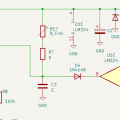
pin 8 - diode
diode - capacitor
capacitor - ground
 

Irving

Joined Jan 30, 2016
5,140
pin 8 has resistor & trimmer to VCC on pin 4, via diode. So should be nearly same as pin 4 less 0.6v, assuming your multimeter input resistance >> trimmer + R7. Non-bar end of diode should read same as pin 5. On ohms setting, with power off, red to pin 8, black to pin 11 should read OC, as should bar end of diode. Non-bar end of diode should read 0ohm to pin 5 and a resistance (R7 + trimmer) to pin 4.

1704922351893.png
 

Thread Starter

matteomarini

Joined Dec 2, 2023
35
pin 8 has resistor & trimmer to VCC on pin 4, via diode. So should be nearly same as pin 4 less 0.6v, assuming your multimeter input resistance >> trimmer + R7. Non-bar end of diode should read same as pin 5. On ohms setting, with power off, red to pin 8, black to pin 11 should read OC, as should bar end of diode. Non-bar end of diode should read 0ohm to pin 5 and a resistance (R7 + trimmer) to pin 4.

View attachment 312422
I just noticed that I mistakenly reported pins 8-14 as 14-8 ! The correct values are then

PIN DC
8 -> 5.9v
9 -> 5.1v
10 -> 41.8v
11 -> 0
12 -> 0
13 -> 3.8v
14 -> 49.8v

The powered-off measures you indicated are ok : will now do the power-on measurement on.
 

Thread Starter

matteomarini

Joined Dec 2, 2023
35
I just noticed that I mistakenly reported pins 8-14 as 14-8 ! The correct values are then

PIN DC
8 -> 5.9v
9 -> 5.1v
10 -> 41.8v
11 -> 0
12 -> 0
13 -> 3.8v
14 -> 49.8v

The powered-off measures you indicated are ok : will now do the power-on measurement on.
I tested the original LM324 (out of curiosity) and the new one and, apparently, if I did nothing wrong they seems to be in good working order. I tested each element (one by one) as voltage follower (inverting input connected to output, non inverting connected to +power) using two 9v batteries (for LM power and as input) and apparently nothing bad had happened to the opamp. Measuring between ground and output gave me constantly 9v. I thought they were totally fried.

If no mistake was made while measuring I should look somewhere else for the root cause.

Is this fact compatible with the data we have right now ?
 

Irving

Joined Jan 30, 2016
5,140
That's not really a valid test scenario for an LM324 as its not a rail-to-rail input or output...

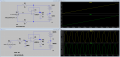
Here are a couple you could try... the first uses a pot to give a variable input voltage, the second uses the 1kHz square-wave calibration output of your 'scope as a source, with a simple RC filter to give a useful shape to the waveform, but you could use the square-wave directly as well.

BTW the LM324 could appear OK on +/-9v (18v) but still exhibit failure modes, such as non-linearity, at 27v due to internal changes...

1705069182593.png
 

Thread Starter

matteomarini

Joined Dec 2, 2023
35
That's not really a valid test scenario for an LM324 as its not a rail-to-rail input or output...

Here are a couple you could try... the first uses a pot to give a variable input voltage, the second uses the 1kHz square-wave calibration output of your 'scope as a source, with a simple RC filter to give a useful shape to the waveform, but you could use the square-wave directly as well.

BTW the LM324 could appear OK on +/-9v (18v) but still exhibit failure modes, such as non-linearity, at 27v due to internal changes...

View attachment 312559
Will play around this : I guess that replacing the pulse with a low voltage sine (<<9V) will also fit with the picture (I have a variable AC from 3v to 30, a 12v AC transformer and a 24-48v AC transformer). Btw do you thinks that testing the PCB with 48 is a non-sense (I am not afraid of saying stupid things:))
 

Thread Starter

matteomarini

Joined Dec 2, 2023
35
Will play around this : I guess that replacing the pulse with a low voltage sine (<<9V) will also fit with the picture (I have a variable AC from 3v to 30, a 12v AC transformer and a 24-48v AC transformer). Btw do you thinks that testing the PCB with 48 is a non-sense (I am not afraid of saying stupid things:))
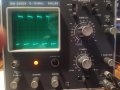
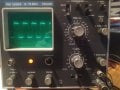
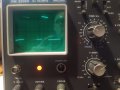
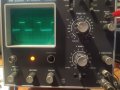
Hi Irving, I implemented the second circuit you suggested and tested the LM with two different input sources: oscilloscope calibration input and an android signal generator (sine, square and skewed). ICs are apparently working (look ate the pictures).
The first two are in/out with the signal generator. The last two are with the calibration input.

I will try to reassemble the pcb and play around with 48v for checking again the components-
 

Attachments

Irving

Joined Jan 30, 2016
5,140
Testing with an isolated 12v AC without the 12k input resistor should work (and without the fan since that's unlikely to work on 12v ). The DC voltage will be around 17v and all others should be in the ratio 17/27 of course.

Or 24v AC with a 680ohm 1/2W input resistor, or 48v AC with a 3.9k 2W resistor, or a variable AC of 19-20v with no input resistor (start low and adjust slowly up until DC = 27v). All assumes these are isolated from mains so you can use scope for testing...
 
Last edited:

Thread Starter

matteomarini

Joined Dec 2, 2023
35
Testing with an isolated 12v AC without the 12k input resistor should work (and without the fan since that's unlikely to work on 12v ). The DC voltage will be around 17v and all others should be in the ratio 17/27 of course.

Or 24v AC with a 680ohm 1/2W input resistor, or 48v AC with a 3.9k 2W resistor, or a variable AC of 19-20v with no input resistor (start low and adjust slowly up until DC = 27v). All assumes these are isolated from mains so you can use scope for testing...
Hi Irving, I have not abandoned the project, I am just busy on an important job. Will come back for additional help as soon as I have time.

Many thanks again.
 
Top