Patent idea - what to do?

Thread Starter

Michal Podmanický

Joined May 11, 2019
289
Consider I got a patent idea about internal structure of op-amps. Lets say it does not alow all the options as common op-amps in market, but it has very high symetry and reduces number of transistors.
What to do with it? I am unemplyed now so i don’t have much extra money.
 

Jon Chandler

Joined Jun 12, 2008
1,560
Keep in mind that a patent only allows YOU to take legal action against someone who violates your patent. There's no agency who will take any action on your behalf. If your idea truly is a game changer and TI or somebody else decides to use it, they can out-lawyer you without breaking a sweat and bury you in court. Also consider that a US patent protects you only in the US. If you want protection else, that means filing patents in other countries, each with different requirements.

All that being said, you can do things to reduce the cost of filing a patent. A major component is conducting a patent search to look for prior art and related patents. Probably easier today, with many resources online.

Also remember that having patent in itself does no good. Once you have a patent, somehow you have to monetize it. Find somebody at TI who is willing to pay a royalty to use it, for example. Designing your own IC, finding a fab to make it and building a market for it would be a vast undertaking.

MY patent is 6,257,066. I got a token dollar for assigning it to the company where I worked, and a few hundred bucks helping with the patent application after I left the company.
 

Papabravo

Joined Feb 24, 2006
22,058
Keep in mind that a patent only allows YOU to take legal action against someone who violates your patent. There's no agency who will take any action on your behalf. If your idea truly is a game changer and TI or somebody else decides to use it, they can out-lawyer you without breaking a sweat and bury you in court. Also consider that a US patent protects you only in the US. If you want protection else, that means filing patents in other countries, each with different requirements.

All that being said, you can do things to reduce the cost of filing a patent. A major component is conducting a patent search to look for prior art and related patents. Probably easier today, with many resources online.

Also remember that having patent in itself does no good. Once you have a patent, somehow you have to monetize it. Find somebody at TI who is willing to pay a royalty to use it, for example. Designing your own IC, finding a fab to make it and building a market for it would be a vast undertaking.

MY patent is 6,257,066. I got a token dollar for assigning it to the company where I worked, and a few hundred bucks helping with the patent application after I left the company.
I have two patents for different technologies that I worked on. Neither one has resulted in ANY significant income. You should look up an article by Don Lancaster from more than 30 years ago about why you should never act like an inventor, but act like a writer and publish everything you can think of in every place you can find so you establish a reputation and people come to you for counsel and advice.

The image Lancaster paints is the greater reward and lower risk for selling crack cocaine on the steps of the Salt Lake City Police Station. Just contemplating the greater rewards and lower risk of doing that makes me shiver every time some wide-eyed youngster mentions patents.

casagpat.pdf (tinaja.com)

I have cited this article many times on this site and never had somebody offer a cogent counter argument.
 

Sensacell

Joined Jun 19, 2012
3,769
I second the no patents idea.

I have my name on 13 of them (mostly for clients) not ONE of them has yielded ANY return on what must now be millions spent on lawyers and fees.

The US patent system might have worked for individuals in 1850, but now it's only a game for giant corporations.
 

MrSoftware

Joined Oct 29, 2013
2,273
I'm far from expert, but have some products I thought of trying to patent, but my own personal thoughts are; having a patent is one thing, being able to defend it is another. Assume you have a patent and someone infringes, now you've got to hire a lawyer and go after them. You need cash or credit to hire the lawyer. If you lose, you're out a ton of money. If you don't go after them because you don't have the money for a lawyer, your patent is worthless anyway. If you win then yay, but will you recoup the cash it cost you to fight? Maybe if it's a big corporation infringing. Maybe that's the best angle; decide if your idea is good enough that a corporation would buy it, or infringe at a scale that it's worth some lawyers time to represent you based on commission or something, but what are the odds. The patent system is broken for the little guy.
 

Ya’akov

Joined Jan 27, 2019
10,226
Unfortunately, the value of a patent to an independent “inventor” comes when it is sold—to a patent troll who will then turn around and use it as a bludgeon to extort settlements from deep pocket corporations that calculate the settlement to be cheaper than fighting it.

Then the trolls use the settlements as “proof” of the legitimacy of the patent (often, they are not defensible) but as the trolls work down the food chain of companies the rationale for settling changes from “it‘s cheaper” to “it’s our only choice”.

The only real value of patents to the industries that file them is self-protection and defensive cross licensing.
 

DickCappels

Joined Aug 21, 2008
10,661
The U.S. Patent and Trademark office was thinking of you when they initiated provisional patent applications.

A provisional patent application is merely a good description of your invention. You write it and file it. Then you have one year to decide whether you want to do turn it into an actual (utility) patent.

If you do the work yourself you can file over the internet for less than US $200, unless you are a large business (and you aren’t).

It gives you protection for year so you can shop your invention around and determine whether you want to invest thousands of dollars in a utility patent application.

A provisional application is less formal than a utility patent application and you can probably do it all (writing, illustrations, applying) by yourself. I have helped other inventors do it many times as well as filing some of my own.

Background: I have nearly 30 granted U.S. Utility patents. They are mostly intended to keep others from using the technologies in their competing products.

Once I detected an infringement in a Japanese product, and I had my group’s patent attorney contact the infringer. A few days later we were all at the conference table. After a 30 minute discussion they offered about US$1,000,000 a year in royalties, which made my boss smile broadly.

Give a provisional application a try before you spend the big bucks.

Read here:
https://www.uspto.gov/patents/basics/apply/provisional-application
 

Ian0

Joined Aug 7, 2020
13,097
You say it’s an op-amp? Is it an audio op-amp?
if so, make a preamp out of it put it is a nice box with plenty of gold-plated connectors and wire it up with silver wire.
Write some fancy marketing stuff.
Then sell it to the Golden Ears Brigade.
That will make more money that the patent ever would.
Or write a book about it, modify it slightly every year and sell everyone who buys it a new edition. (I think you all know who I‘m referring to)
 

Ya’akov

Joined Jan 27, 2019
10,226
Once I detected an infringement in a Japanese product, and I had my group’s patent attorney contact the infringer. A few days later we were all at the conference table. After a 30 minute discussion they offered about US$1,000,000 a year in royalties, which made my boss smile broadly.
I had a client, a small company that produced specialized test equipment for the cable TV industry. One of their direct competitors was a very well known test equipment manufacturer (no, not Fluke). My client had invented and patented an innovative method that made their version of the test gear so much better than the large competitor's that it was certain they would be the market share leader in a very short time.

This was quite a win for such a small company, but before the victory party hangovers could even clear up, the competitor had announced a new product with the capabilities of the unique and patented product. This was shocking—to put it mildly. They couldn’t find any way it could be done without infringing the patent.

As soon as the actual product was released, they got their hands on one and, sure enough, it was just a direct infringement, it wasn’t even obfuscated or rationalized—it was just a straight rip off. So, my client sued.

During discovery, my clients uncovered internal communications discussing the danger the new product posed to their market share, concluding that infringing and paying whatever the cost of a lawsuit would be less of a loss than losing the market share to the new product. It was all calculated, and the conclusion was: infringe and pay the cost of litigation.

And, they were right! They lost the case, of course, and had to pay all profits from the infringing sales, plus penalties, plus licensing—and they still came out ahead. While my client got their money (years later), they didn’t get the market share they deserved.

I learned from this that corporations only care about legality and morality when they affect the bottom line, otherwise “illegal” and ”immoral” are just labels attached to actions that may or may not be the best course on any given day—the labels having no direct impact on the decision.
 

MisterBill2

Joined Jan 23, 2018
27,186
If the idea is really new and really provides some benefit, then selling it to a LEGITIMATE semiconductor manufacturer is the best choice. Avoid the trolls, they can all go to the place where asbestos burns. If it has not already been invented by them they will probably show you which of their patents covers it. So in that case ask them if they have a job opening for you.
The one benefit I have from the one patent in my name has been on job applications. It does look good on a resume.
 

Ya’akov

Joined Jan 27, 2019
10,226
if so, make a preamp out of it put it is a nice box with plenty of gold-plated connectors and wire it up with silver wire.
I think you mean oxygen-free copper Litz wire. Silver wire will have “artifacts” because it is contaminated with coinage collected in recycling. The coins have been struck, and I don’t have to tell you the impact of that on the integrity of the domain interfaces—don‘t think you can fix that just by melting it completely an making new ingots.

Now, a virgin silver heavy plating on the OFC Litz conductors, over-plated with gold will really get you some listening room creds…

NOTE: I made all of this up, it’s not a thing. I am not responsible if it becomes a thing because of a Google search or whatever—I plead parody.
 

BobTPH

Joined Jun 5, 2013
11,463
You should look up an article by Don Lancaster from more than 30 years ago about why you should never act like an inventor, but act like a writer and publish everything you can think of in every place you can find so you establish a reputation and people come to you for counsel and advice.
I met Don at a party at about that time. I was a self-employed consultant at the time, just starting out and trying to find my way. He showed me a copy of his book, saying I should get it because it addressed the very isuues I was facing. I took the book and thanked him for the gift. You should have seen the look on his face.
 

MisterBill2

Joined Jan 23, 2018
27,186
Certainly "the materials" are important in reducing distortion, although none have ever explained to me the mechanism of oxidized copper producing non-linear current fluctuations in speaker cables.
But I did understand about the phase distortion introduced by coupling capacitors versus the lack of distortion in direct coupled amplifiers. But to me that does not outweigh the grief of a failed first stage transistor taking out a $35 output module.

So certainly an improved pre-amplifier might sell. IF one could market it to the right folks. So the best choice will be to sell the design to a semiconductor company and get a job with them.
 

ApacheKid

Joined Jan 12, 2015
1,762
You say it’s an op-amp? Is it an audio op-amp?
if so, make a preamp out of it put it is a nice box with plenty of gold-plated connectors and wire it up with silver wire.
Write some fancy marketing stuff.
Then sell it to the Golden Ears Brigade.
That will make more money that the patent ever would.
Or write a book about it, modify it slightly every year and sell everyone who buys it a new edition. (I think you all know who I‘m referring to)
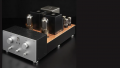
I've sometimes wondered if it might be worth the effort to design a tube based audio amplifier that has a few innovations and target the high end Hi Fi crowd.

Look at this, the Audio Note "Ongaku" amp:

1706728034917.png

It retails for 250,000 bucks, you've only got to sell one a year to make very good money.
 

Ian0

Joined Aug 7, 2020
13,097
I think you mean oxygen-free copper Litz wire. Silver wire will have “artifacts” because it is contaminated with coinage collected in recycling. The coins have been struck, and I don’t have to tell you the impact of that on the integrity of the domain interfaces—don‘t think you can fix that just by melting it completely an making new ingots.

Now, a virgin silver heavy plating on the OFC Litz conductors, over-plated with gold will really get you some listening room creds…

NOTE: I made all of this up, it’s not a thing. I am not responsible if it becomes a thing because of a Google search or whatever—I plead parody.
My apologies. It’s the transformers that have to be wound with silver wire.
The interconnecting wires have to have the arrows pointing in the direction of the signal flow.
 

Ya’akov

Joined Jan 27, 2019
10,226
My apologies. It’s the transformers that have to be wound with silver wire.
The interconnecting wires have to have the arrows pointing in the direction of the signal flow.
Few so-called “electrical engineers” seem to realize the staggering effective of domain discontinuities on the subtle aspects of the musical qualities of the electrical signals involved. Of course interconnections are directional! With all of those nanodiodes at the domain boundaries, how could one expect anything else to come out of the end of backwards connected lead save an abused and unmusical signal literally shredded by the electrical music grater created by this backwards thinking?

I probably shouldn’t say too much but—
I am currently working on a method that will completely avoid these problems by transporting the music via the E and B fields that surround the cursed wires we are currently forced to rely on. In this new method, the signals will propagate outside the wire.

This will completely avoid the reliance on these stopgap measures like domain realigned double plated oxygen free high purity copper Litz wire mains leads which are surely cheap for the improvement (a good example is the Auribus Aurum® Clear Path™ mains lead which, at a MSRP of only $2,300USD is practically disposable*)

This method permits not only unmolested transport of the musical signal but much faster movement from source to input not being forced to deal with resistance or impedance (terms that should be self-explanatory). This will, our team believes, revolutionize musical reproduction, and in anticipation of the release of our innovative technology we are preparing a variety of domain realigned double plated oxygen free high purity copper Litz wire Faraday cage containers for the new leads to ensure the E and B fields can proceed unmolested by contamination from stray fields and things like 5G masts and Wi-Fi signals (which are often transporting incredibly low fidelity “music”).

We believe this will bring the additional advantage to the true audiophile of greatly increasing the cost over previous technologies, something that to this point could only be dreamed of—yet thanks to this breakthrough we may see seven figure mains leads in our lifetime!

*Just a reminder, and I apologize because I know you already know this, but for those lurking… There is a reason your amplifier—if it is at all serious—has an hour meter next to the power input jack (on the cheaper options) or the 10mm domain realigned double plated oxygen free high purity copper binding posts for a more serious amp.

The wear on a mains lead from the transit of electrons though it, quickly degrades its musical qualities. This is why it should be replaced every 20 hours of play, or 3 months of idling for the budget-oriented leads like the Clear Path™ and for the better ones at least twice as often—consigning the spent one to the rubbish bin where it belongs.
 
Top