Facebook
 Google
 GitHub
 Linkedin

Just wanted thoughts on this design.
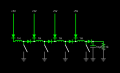
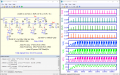
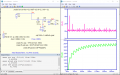
It's very similar to your standard boost converter, but it takes advantage of the properties of having multiple inductors. Inductors, of course, change fast in parallel and slow in series (relative to one another). An issue I see with your standard boost converter is that, because of how long it takes to charge the inductor, it has a limit to how high of a voltage it can output (which usually isn't much) simply because the capacitor will discharge much of the voltage before it can be charged again.
The idea of this converter is to solve that problem by minimizing the time it takes to charge the inductive components. If they spend almost all their time discharging and only a small amount charging, voltage can be increased substantially and ripple can be minimized.
Specs of the components in the diagram may not be accurate to real life, but focus should be put on the circuit as a whole instead anyways.
EDIT: I just told you all that the specs of the components may not be accurate to real life. I know it will not actually use 1h inductors. The simulation automatically marked them as such.
It's very similar to your standard boost converter, but it takes advantage of the properties of having multiple inductors. Inductors, of course, change fast in parallel and slow in series (relative to one another). An issue I see with your standard boost converter is that, because of how long it takes to charge the inductor, it has a limit to how high of a voltage it can output (which usually isn't much) simply because the capacitor will discharge much of the voltage before it can be charged again.
The idea of this converter is to solve that problem by minimizing the time it takes to charge the inductive components. If they spend almost all their time discharging and only a small amount charging, voltage can be increased substantially and ripple can be minimized.
Specs of the components in the diagram may not be accurate to real life, but focus should be put on the circuit as a whole instead anyways.
EDIT: I just told you all that the specs of the components may not be accurate to real life. I know it will not actually use 1h inductors. The simulation automatically marked them as such.
Last edited: