Like I mentioned in the beginning, the UPS works fine with two new fans in the case replacing the old fans and one old fan outside of the case and not cooling anything. (All fans are connected in parallel.) Hence I believe that the error gets triggered purely electrically and only from the fans themselves and not from any other sensors.
For now I put the external fan in a Tupperware box and placed the box far away from my working space.There is a cable between the fan box and the UPS. The UPS doesn't complain anymore. A Stone Age solution for lack of a better one.
For now I put the external fan in a Tupperware box and placed the box far away from my working space.There is a cable between the fan box and the UPS. The UPS doesn't complain anymore. A Stone Age solution for lack of a better one.
@nsaspook Can we chat via conversations? You have to initiate the conversation. One initiated, I have that as a medium (same conversatio forever) untill all participants pull out. I know we have similar interests. I worked in a semiconductor research lab. Think about it. I'll clobber this if a get a PM or late Saturday night if I remember. If you tell me not more PM's. then no more PM's. Thanks!
To be quite honest, I think you're going to need a o-scope on it, and you can use a clamp-on ammeter to get current easily. The waveform without the 3rd (original) fan, and then with it, comparing the two is probably the easiest way to determine what's going on.
To be quite honest, I think you're going to need a o-scope on it, and you can use a clamp-on ammeter to get current easily. The waveform without the 3rd (original) fan, and then with it, comparing the two is probably the easiest way to determine what's going on.
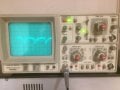
Oscilloscope settings (amateur configuration; tried until the image was relatively stable and until it fit into the scope screen in a meaningful way):
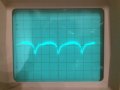
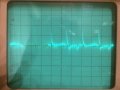
Without original fan (details):
Without original fan (overview):
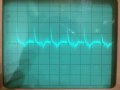
With the original fan (shot 1):
With the original fan (shot 2):
When the original fan is connected, the lines below the x-axis move while the ones above are relatively stable. That's why I took two shots.
Which models the behavior of an old school DC fan motor without electronics.
I've had this problem before with older devices and obsolete fans. (electronics paleontologist is one hat I wear at work ) One solution I used was to find and isolate the fan 'GOOD' signal on the original PCB and then use a microcontroller to convert the new three wire fan signal(s) into a pass/fail dry contact to provide the needed emulation function as needed.
Possibly by using the power of the rotor I could cut them in the same way a lathe works. The blades are made of hard plastic, though. This would require a precision construction in order to avoid the rotor becoming off-center. I am wondering if this is worth it.
Which models the behavior of an old school DC fan motor without electronics.
I've had this problem before with older devices and obsolete fans. (electronics paleontologist is one hat I wear at work ) One solution I used was to find and isolate the fan 'GOOD' signal on the original PCB and then use a microcontroller to convert the new three wire fan signal(s) into a pass/fail dry contact to provide the needed emulation function as needed.

 Facebook
 Google
 GitHub
 Linkedin



 ) One solution I used was to find and isolate the fan 'GOOD' signal on the original PCB and then use a microcontroller to convert the new three wire fan signal(s) into a pass/fail dry contact to provide the needed emulation function as needed.