Oscilloscope probe ground loop question?

Thread Starter

jbullock

Joined May 27, 2018
6
Oscilloscope ground loop.jpg

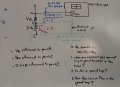
If I was to measure the voltage across R1 with an oscilloscope and I connect the o-scope probe and ground clip like what's shown in the image, am I creating a ground loop? Vr1 should be Vr1 = Vs - Vr2, What is Vr1 now? How does current flow in a ground loop?

Thank you for your help with understanding these concepts!
 

KeithWalker

Joined Jul 10, 2017
3,603
Is this an assignment? We need to see your best effort to answer before we can help you. What do you think is happening when the scope is connected as shown? Have you researched the definition of a ground loop?
 

Thread Starter

jbullock

Joined May 27, 2018
6
Is this an assignment? We need to see your best effort to answer before we can help you. What do you think is happening when the scope is connected as shown? Have you researched the definition of a ground loop?
No this is not an assignment. I'm teaching myself electronics and thought I would reach out and get an experienced opinion on what exactly is happening when I connect an oscilloscope's probe ground clip to a different reference point.

My DUT is two resistors in series with one another. I want to measure the voltage across each component with an oscilloscope.

I know the scope, generator and DUT are all referenced to earth ground (point c) as somewhat shown in the image. Because of this the scope's ground clip also has to be connected to point c.

I know if I was two take two probes and connect one to point a and its ground clip to point c and take the second probe to point b and its ground clip to c, then use the math function to take the difference, I can get the voltage across R1.

Now the question at hand is if I take a single probe and connect it to point a and its ground clip to point b, what is actually happening here?

I know connecting the ground clip to point b will put it at a higher potential than point c.

Will this create a short, ground loop or both?

If its a ground loop, this will obviously give an incorrect voltage measurement across R1. How about the current, how does it travel through the loop?

Thanks for any clarity on this matter!
 

MrChips

Joined Oct 2, 2009
34,628
Assuming that your scope ground clip is at ground, and your generator and DUT are also referenced to ground, you cannot connect the ground clip of the oscilloscope to any place you please. You will be creating a short circuit in the circuit of the DUT.

You need to do a difference measurement by using two oscilloscope probes connected to CH1 and CH2. Set the oscilloscope to measure CH1-CH2.

If you are measuring DC voltages only, you can take one reading at a time and do the math manually.
 

KeithWalker

Joined Jul 10, 2017
3,603
When you connect your probe ground clip as shown in your diagram, it is not a ground loop. You short circuit R2 which will invalidate any measurements. In a real live circuit, it could also create some smoke!
 

SamR

Joined Mar 19, 2019
5,470
Or, use a differential probe. Which is a bit pricey... Be very careful where you put that ground connection and preferably keep it as short as possible. Most probes come with an optional small piece of coiled wire that attaches to the tip of the probe for "close" grounding instead of the relatively "long" ground wire and clip.
 

BobTPH

Joined Jun 5, 2013
11,463
What you are doing is wrong, but it is not what we refer to as a ground loop. A ground loop is when is when two points are connected together that are both theoretically at ground potential, but differ by a small amount due to currents in the wiring which has non-zero resistance. Your two points are NOT at ground potential (or, more generally, the same potential) That makes it a short circuit.
 

Thread Starter

jbullock

Joined May 27, 2018
6
When you connect your probe ground clip as shown in your diagram, it is not a ground loop. You short circuit R2 which will invalidate any measurements. In a real live circuit, it could also create some smoke!
Thank you for your response! I thought the same thing, but when I looked this up on the internet, it responded with a ground loop. That is why I wanted to get a professional opinion to confirm what I was thinking and seeing.

If R1 and R2 was 2 Ohms and Vs was 8 volts and I connected the ground clip to point C on the image, I would see a voltage drop of 4 volts across R1 and R2. If I connect the ground clip to point B as shown, I would short R2 and see all 8 volts across R1. Is this a correct statement?

I'm still not 100% on what a ground loop is, how its created, and how to fix it. I will keep researching this, but do you have any recommendations on literature that teaches this from a simplistic point-of-view?
 

KeithWalker

Joined Jul 10, 2017
3,603
Thank you for your response! I thought the same thing, but when I looked this up on the internet, it responded with a ground loop. That is why I wanted to get a professional opinion to confirm what I was thinking and seeing.

If R1 and R2 was 2 Ohms and Vs was 8 volts and I connected the ground clip to point C on the image, I would see a voltage drop of 4 volts across R1 and R2. If I connect the ground clip to point B as shown, I would short R2 and see all 8 volts across R1. Is this a correct statement?
That is correct.

[/QUOTE]
I'm still not 100% on what a ground loop is, how its created, and how to fix it. I will keep researching this, but do you have any recommendations on literature that teaches this from a simplistic point-of-view?
[/QUOTE]

This is a pretty good brief description of ground loops and how to avoid them:
What is Ground Loop? Preventive steps to avoid ground loop? - PLC - Engineers Community
 

Thread Starter

jbullock

Joined May 27, 2018
6

ronsimpson

Joined Oct 7, 2019
4,646
I don't want to talk about the defecation of ground loop. I have ground clips that have burned because of large amounts of current.
 

MisterBill2

Joined Jan 23, 2018
27,164
OK, in response to the question of "what exactly IS a ground loop: A ground loop is the portion of a circuit in which some current other than the current producing the voltage of interest is also flowing. There are also loops that are not "ground" loops, but produce a similar result.
Ground loops are notorious because they are often much more subtle, and sometimes very well hidden. And because they are seldom intended, they are often a problem.
 
Top