Hi Agonche,
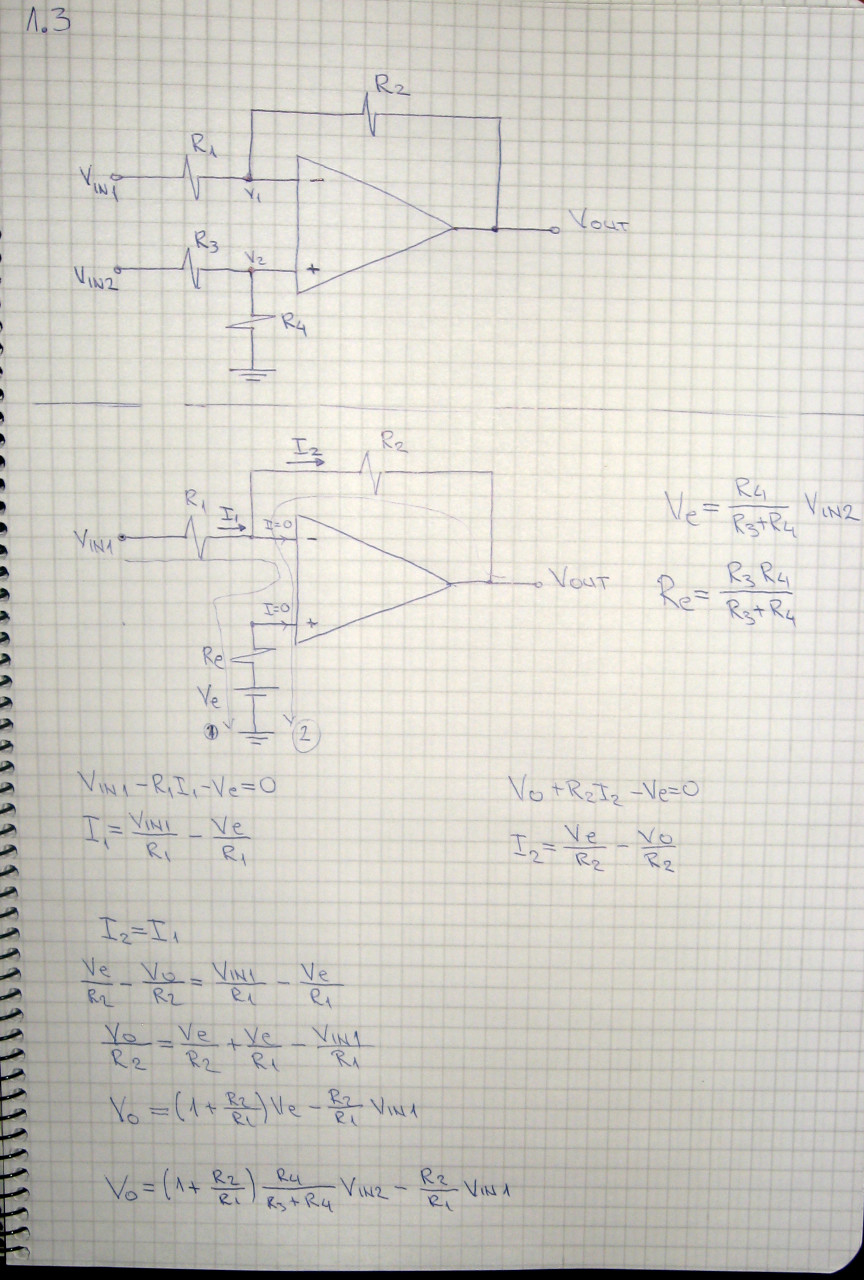
the result is correct - you have applied the superposition theorem.
Yes - it is a diff. amplifier.
For
R2/R1=R4/R3=1
you simply have the difference Vout=V2-V1
Some might call it a differential amplifier, but I wouldn't. A differential amplifier amplifies the difference of two signals, so you need to have something of the form:
Vo = A(V1-V2)
Which you don't have.
I would say that this is an amplifier that produces the weighted sum of two inputs with the two weights being oppositive in sign. If you adjust things so that the magnitude of the weights is equal, then it becomes a differential amplifier.
But, as I said, others aren't as picky about such things as I am.

 Facebook
 Google
 GitHub
 Linkedin