On board jump starter

Thread Starter

stryped

Joined Sep 17, 2023
136
Would it be possible to make an on board jump starter that is mounted under car seat, stays charged by connection to the cars 12 volt system, and when the car battery is dead, initiates the jump starter with a toggle switch or some other means without having to pop the hood and manually connecting to the battery like a traditional jump starter? Something good for wife or daughter to jump start without having to get out of the car?
 

Tonyr1084

Joined Sep 24, 2015
9,744
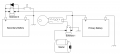
over 30 years ago I had a Ford Station wagon. A friend had the same car but with a cracked frame. He gave the car to me and I scraped several things out of it. A rear window defogger, some electric locks, the battery and the starter solenoid. Focusing on the battery and the solenoid I jumped the solenoid with a high amperage diode. Don't recall the details, but when the engine ran a second battery under the hood was charged. Did that because where I lived it was foggy often enough that there were times when I left the lights on when I got to work. Coming out to go home, the battery was dead. So a switch on the dash board would energize the second battery powered FROM the second battery and it would apply its energy to the first battery and start the car. Never needed a jump start after that. I'll bang out a picture for you.
 

Tonyr1084

Joined Sep 24, 2015
9,744
This is how I hooked up my "Under The Hood" secondary battery and solenoid. The diode kept the secondary battery charged. It was only active when I pressed the momentary push button switch. That switch engaged solenoid 2 by providing chassis ground. Battery positive was then connected back to the primary battery, the key switch and to solenoid 1. When the key switch was turned the starter would engage and start the engine.
Screenshot 2024-12-14 at 11.28.51 AM.png
Of course, you setting up the same thing would require a battery box to securely hold the battery, a high amperage diode, a solenoid and a momentary switch. Plus using a heavy cable from solenoid 2 to the primary battery. It will take some engineering to make it all fit and you may have to forego something like the windshield washer reservoir. OR you might find a new place for the reservoir. It all depends on how much room you have for this modification.
 
Last edited:

Thread Starter

stryped

Joined Sep 17, 2023
136
This is how I hooked up my "Under The Hood" secondary battery and solenoid. The diode kept the secondary battery charged. It was only active when I pressed the momentary push button switch. That switch engaged solenoid 2 by providing chassis ground. Battery positive was then connected back to the primary battery, the key switch and to solenoid 1. When the key switch was turned the starter would engage and start the engine.
View attachment 337934
Of course, you setting up the same thing would require a battery box to securely hold the battery, a high amperage diode, a solenoid and a momentary switch. Plus using a heavy cable from solenoid 2 to the primary battery. It will take some engineering to make it all fit and you may have to forego something like the windshield washer reservoir. OR you might find a new place for the reservoir. It all depends on how much room you have for this modification.
Really wanted an on board jump starter. There is no room for a second battery.
 

crutschow

Joined Mar 14, 2008
38,400
Really wanted an on board jump starter. There is no room for a second battery.
You could use a solenoid contactor to connect the jump starter controlled by a momentary switch.
You would need to run two heavy starter cables from there to the contactor and the engine chassis.

Charging would depend upon the individual jump-starter design.
Some charge from a car's USB port.
 
Last edited:

Tonyr1084

Joined Sep 24, 2015
9,744
They make car batteries with this built in. If the battery goes dead, you flip a switch or press a button and it flips to a previously-unused portion of the battery.
Very interesting. But does it mean you're using only part of the battery at all times except for when you need that Jump of power?
 

Ya’akov

Joined Jan 27, 2019
10,226
Mounting such a device in the passenger compartment is extremely ill-advised. Not only is the fire hazard very real and scary, but the cables necessary would be of an enormous gauge.

If you want to pursue this, you need to find a way to put it in the engine compartment. Don't forget that Li-Ion batteries don't really like the cold weather very much.
 

Thread Starter

stryped

Joined Sep 17, 2023
136
Mounting such a device in the passenger compartment is extremely ill-advised. Not only is the fire hazard very real and scary, but the cables necessary would be of an enormous gauge.

If you want to pursue this, you need to find a way to put it in the engine compartment. Don't forget that Li-Ion batteries don't really like the cold weather very much.
It would be easier to put in the engine compartment but I thought the heat would not be good for the jump starter.
 

Tonyr1084

Joined Sep 24, 2015
9,744
Don't forget that Li-Ion batteries don't really like the cold weather very much.
Maybe I missed it - but I didn't see a reference to Li-Ion batteries. Would DEFINITELY not recommend mixing battery types. The car battery is a wet lead acid battery - I wouldn't use anything other than another lead acid battery. Wouldn't mix deep discharge with standard car battery either. But I would DEFINITELY not go with Li-Ion. The charge profile of a Li-Ion battery is nothing like that of lead acid. NEVER mix the two.

As for using one of those car jumpers - I have one. I rarely have ever needed to use it. I've kept mine charged and take it along when going on a long trip but otherwise it stays home on the charge.

You ask about capacitors. Like @crutschow said - you'd need a lot of them. Also, like Ya'akov said:
Mounting such a device in the passenger compartment is extremely ill-advised. Not only is the fire hazard very real and scary, but the cables necessary would be of an enormous gauge.
When I did mine - it was under the hood. And I used single Ot gauge to jump between the two batteries, and that was under the hood. Some racers put their batteries in the trunk, but they also run double Ot gauge wire. There are two reasons why I can imagine Ya'akov is advising against putting a battery in the passenger compartment is because of the chance of fire and possibly the chance of noxious gasses or even potentially explosive gasses, depending on what kind of battery you use. Lead acid batteries produce hydrogen gas when charging. Under the hood is the right place for that.

Those jumper boxes have a sealed lead acid (SLA) battery. They certainly lack the amperage to start a car. Their benefit is that they can assist a weak battery. But even a dead battery - you're not going to get started with one of those jump boxes.

So we're all advising against putting it in the passenger compartment. We're recommending a very large cable. We're recommending putting it under the hood. I think those are all good options, good advice. Either that or forego the idea all together and just keep the jump box charged in the trunk and drag it under the hood when necessary. Many women don't know how to handle automotive needs. Teaching them to be self sufficient and able to jump their own vehicle is a good thing. My wife can change a tire, jump start a car from another car WITHOUT BLOWING OUT THE ALTERNATOR of the other car. That's something a lot of guys don't know. Knowledge is power. Empower your wife and daughter.
 

bassbindevil

Joined Jan 23, 2014
922
There's DC-to-DC chargers that allow you to charge the starting battery from a smaller battery. Usually just a few Ah worth of charging is enough (in a headlights on situation). Schumacher had a portable unit like that with a small SLA battery; Renogy makes a thing for RVs that lets the engine charge the RV battery and vice versa (if you see what I mean).

Or, if your secondary battery is hefty enough to use for starting, use a battery isolator to keep it charged, and a solenoid to connect it to the starting battery when desired. Or I think there's RV charge controllers that will charge it from solar or from the starting battery while driving.
 

MrSoftware

Joined Oct 29, 2013
2,273
Very interesting. But does it mean you're using only part of the battery at all times except for when you need that Jump of power?
Yes, I believe that's the idea. Someone used to make one with a big yellow switch on top, and you flip the switch when needed. It must have been more than 10 years ago when I saw it, and I can't remember the brand.

For the OP: The little portable jump packs have lithium batteries and they hold a charge for a really long time. So you can charge one up, leave it in the trunk and it will most likely have plenty of charge to start the car 6+ months down the road.
 

MrSoftware

Joined Oct 29, 2013
2,273
I was thinking 4 220F supercapacitors in parallel. Would that not provide enough energy to start a vehicle?
Enough supercapacitors will start a car, many people have done this on YouTube (click here). The challenge with capacitors is they have a relatively very high self discharge rate, so if you charge it up today, in a few days it might be too discharged to be useful. So generally speaking, capacitors are not good for long term storage.
 

crutschow

Joined Mar 14, 2008
38,400
I was thinking 4 220F supercapacitors in parallel. Would that not provide enough energy to start a vehicle?
Are they rated for 15V operation?

For a 200A cold-weather starter current, the 4 capacitors will drop about 1V every 4 seconds of starter operation.
You'd have to try it to see if that's sufficient to start your car.
 

Thread Starter

stryped

Joined Sep 17, 2023
136
Enough supercapacitors will start a car, many people have done this on YouTube (click here). The challenge with capacitors is they have a relatively very high self discharge rate, so if you charge it up today, in a few days it might be too discharged to be useful. So generally speaking, capacitors are not good for long term storage.
Could a person keep the supercapacitors charged with 18650 batteries, then use the capacitors when needing to jump start the car?
 
Top