Facebook
 Google
 GitHub
 Linkedin
I've got an old outboard that uses a Capacitor Discharge Ignition (CDI.) Within the passed month, I've wrecked three of them-- the original, a new one, and another replacement. I've attached the schematic for the outboard. The CDI is labeled as "Switch box."
The wiring harness are over 30 years old, insulation is cracked, and connections look bad. The new CDI states that voltage over +16V could ruin the part. The last CDI broke when I accidentally bumped into the wiring harness.
Can someone either support or refute my thought-- there's either a bad connection or occasional short causing a spike in voltage or amperage at the CDI positive terminal.
I'm almost convinced, but I'd like to get a better understanding. Without knowing a lot about electronics, my thought is that if there's electricity flowing from the battery and from the stator, and I suddenly disconnect the negative, the momentum so-to-speak causes a build up of electricity. Any comments?
(New wiring harnesses and a new CDI will cost $600, so I'd like to know for sure that it won't break again after I replace the harnesses.)
The wiring harness are over 30 years old, insulation is cracked, and connections look bad. The new CDI states that voltage over +16V could ruin the part. The last CDI broke when I accidentally bumped into the wiring harness.
Can someone either support or refute my thought-- there's either a bad connection or occasional short causing a spike in voltage or amperage at the CDI positive terminal.
I'm almost convinced, but I'd like to get a better understanding. Without knowing a lot about electronics, my thought is that if there's electricity flowing from the battery and from the stator, and I suddenly disconnect the negative, the momentum so-to-speak causes a build up of electricity. Any comments?
(New wiring harnesses and a new CDI will cost $600, so I'd like to know for sure that it won't break again after I replace the harnesses.)
Attachments
-
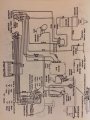 244 KB Views: 14