Ok I’m addicted... another meter

joeqsmith

Joined Oct 15, 2016
63
I am not a fan of any handheld meter where they share current measurement with the voltage. Low cost meters normally wont have proper fuses rated for for both AC and DC at the 10KA+ break currents at a KV.

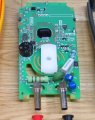
I will go out on a limb and guess there is a single PTC in the meter that it followed by a couple of transistors that make up a clamp. This is all AFTER the switch.

If that's the case, it would not fair well. But I am sure there are several channels willing to give it five star reviews if that's what you are after.
 

Thread Starter

Wolframore

Joined Jan 21, 2019
2,619
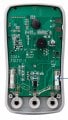
Nah I’ll be using it for low voltage. There is a single MOV and some MELFs. Ceramic fuse for current and a glass one for resistance. Some transistors to clamp. It’s pretty sparse. I have my Fluke for any mains stuff.
 

joeqsmith

Joined Oct 15, 2016
63
I have watched several large channels wrongly describe parts inside a handheld meter. The best was a guy who points to a quad op-amp and calls it an LCD controller. Many of them call PTCs MOVs.

So, if you can, post a picture of the PCB and let's see this one MOV.
 

joeqsmith

Joined Oct 15, 2016
63
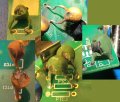
Never mind. Found a review from the guy who doesn't know what an op-amp is. Sure enough, one PTC as I mentioned and you can see the back to back clamp. No MOV. Of course, this guy calls it a MOV, which it's not. Sad really that these people making reviews have no idea what they are looking at.


shteii01

Joined Feb 19, 2010
4,644
Never mind. Found a review from the guy who doesn't know what an op-amp is. Sure enough, one PTC as I mentioned and you can see the back to back clamp. No MOV. Of course, this guy calls it a MOV, which it's not. Sad really that these people making reviews have no idea what they are looking at.

MOV is easier to pronounce.
 

dl324

Joined Mar 30, 2015
18,326
Sad really that these people making reviews have no idea what they are looking at.
There are a lot of self proclaimed experts on YouTube who are idiots.

I was looking for some hints on how to move a sliding latch for the headlights on my Ford Explorer. I came across a video where the guy removed the battery, the battery tray, then went through some gyrations to be able to remove more stuff that didn't need to be removed. I watched the whole thing wondering how someone could be so stupid and actually memorialize it on YouTube.

It turned out I just needed to use a squirt of WD-40 and pull the latch up.
 

Thread Starter

Wolframore

Joined Jan 21, 2019
2,619
I started regretting as soon as I saw that video. I don’t have the meter yet. Just ordered it on impulse. What’s to post there’s basically no protection in it. I can’t tell PTC and mov by looking. So the varistors are for transient voltage and thermistors are probably slower because they have to heat up first? They look the same to me.

I was not kidding when I said it would blow up just looking at joes bench.

I was able to cancel the order. Got skerrrrd what would happen if joe got a hold it. Why am I buying another meter?
 
Last edited:

Ya’akov

Joined Jan 27, 2019
10,235
@joeqsmith If you were going to choose the smallest well-built DMM you know of, which would that be?

Fixed leads is OK because size matters in this case. I am looking for a “pocket” meter for a very-small-toolkit I am building up.

Any ideas?
 

Thread Starter

Wolframore

Joined Jan 21, 2019
2,619
actually now I want another decent and inexpensive small meter but not that one. Must have auto off and buzzer.

Is the Fluke 101 any good? That one looks pretty small and about $40. Looks like a PTC and couple MOV’s. No fuses or a wire shunt so not sure how that works. Do I need all this for low voltage? Looks tougher. I’ve been looking online Fluke does do a great job of making rugged designs. Not sure why the others skimp out.

27277136-3176-4B26-9E3C-0F8C26481562.jpeg
 
Last edited:

Ya’akov

Joined Jan 27, 2019
10,235
I have a Fluke 101. It's very basic, good for what it is. No current, which is a good thing in a meter this size. Easy to read but no backlight. I don't know if it has auto-off or not. I do like that it uses AAA instead of 9V.

The case is high quality plastic, but there is no overmolding or rubbery jacket. I have the impression it would handle drops just fine.

Typical Fluke positive action on the selector knob, PVC lead jackets not silicone but quite long. Continuity buzzer is decently fast and loud.

And, it I believe it when it says "600V CAT III" on the meter and "1000V CAT II" on the probes.
 

Thread Starter

Wolframore

Joined Jan 21, 2019
2,619
I wish the smaller ones used 9V for diode testing because they’re handy for testing LEDs. Otherwise the smd LEDs all look the same. I need to light em up.

I have a few specific uses for something like this. I’m doing a series of very low power led stuff for hobby use. I need to easily check my smd components might check current draw on a few LEDs maybe 100mA max. Eyesight getting bad don’t want to strain, small size is great for workspace and may be used on my automotive and motorcycle once in a while. I have other meters for tube circuitry and higher voltage stuff. Might also come in handy to just keep it in my car.
 
Last edited:

Thread Starter

Wolframore

Joined Jan 21, 2019
2,619
How about this one? Looks like it would at least hold up to ESD. Again the clamping is a little weak but for low voltage should be fine I don’t like that it’s 3v and 2000 count Seems slow to settle. Not built like a tank for sure 7892A46D-8BBF-42D9-916F-F324CA0F6FDD.jpeg
 

joeqsmith

Joined Oct 15, 2016
63
The Brymen BM869s continues to be my choice of meters. I don't normally recommend meters because I really have no way of knowing what an individuals needs are. It makes more sense to provide some data about the meters.

The Fluke 101 was included in the first set of meters I ever tried to benchmark. It held up to levels far beyond any other meter in the sub $50 class. In the end, I changed my transient generator to put out a 13KV peak with a 100us FWHH using a 2 ohm source and subjected the meter to this. The reason is we had a member who had a real combo generator for testing to the IEC standards. They had followed the testing and wanted to repeat it. They could run to 12KV at 50us, 2ohm. So I wanted to run mine way beyond that. They ended up running the test and made a video of it. Sure enough, it held up just fine.

I had a few people write how the 101 survives because it has no features. lol. It takes all kinds... Anyway, I have repeated these tests on several Fluke branded meters since then.

I don't have a lot of data but based on what I have collected, the meters produced by Brymen, Fluke, HIOKI and Gossen appear to be some of the most robust. The Gossen I looked at had far too many problems to consider ever using it but it was very robust.


Someone else just pointed out how they don't work with high voltages. This is one of my favorite slides on high voltage generators....
 

Attachments

joeqsmith

Joined Oct 15, 2016
63
I started regretting as soon as I saw that video. I don’t have the meter yet. Just ordered it on impulse. What’s to post there’s basically no protection in it. I can’t tell PTC and mov by looking. So the varistors are for transient voltage and thermistors are probably slower because they have to heat up first? They look the same to me.

I was not kidding when I said it would blow up just looking at joes bench.

I was able to cancel the order. Got skerrrrd what would happen if joe got a hold it. Why am I buying another meter?
Warning, my videos are long and boring. There are also mistakes in most of them but I do know what a MOV and PTC are. lol This video shows an old Fluke 87V being retested. I explain the front end.
 

Thread Starter

Wolframore

Joined Jan 21, 2019
2,619
This one looks decent and it’s 9V 6000 count but again it looks full size. 5 diode clamp is decent. Might be worthy of a test @joeqsmith my guess is it will fail somewhere in the middle and those PTC will short. They look very small. It’s the Etekcity MSR A1000. Maybe you’ve already tested one.

8190CFC3-5821-4766-936F-AB2269A7396D.jpeg
 

Thread Starter

Wolframore

Joined Jan 21, 2019
2,619
I really need a small 9v, auto range, auto off and buzzer for low voltage. So many meters and not the one I need.
 

joeqsmith

Joined Oct 15, 2016
63
How about this one? Looks like it would at least hold up to ESD. Again the clamping is a little weak but for low voltage should be fine I don’t like that it’s 3v and 2000 count Seems slow to settle. Not built like a tank for sure
It looks like a 5mm PTC and nothing to limit the current through it. What normally happens with these piss ant parts is they breakdown. The transistor clamp then blows apart and then the IC comes apart. After that we have more plastic waste.

Wolframore said:
This one looks decent and it’s 9V 6000 count but again it looks full size. 5 diode clamp is decent. Might be worthy of a test @joeqsmith my guess is it will fail somewhere in the middle and those PTC will short. They look very small. It’s the Etekcity MSR A1000. Maybe you’ve already tested one.
There is a list of the data I have collected on-line that is free to download. This meter does have the typical 3XPTC and MOV setup but again, it missing the surge rated resistors. PTCs are again the 5mm. My guess is you are right, the PTCs will fail short. The MOV won't come into play as the highspeed clamp is somewhere under 10V. So all the energy is soaked up by a couple of SOT23s. Which again will fly apart leaving the controller IC to take what is left. There is a right way to make a meter robust and we can see from the Fluke 101, that it wouldn't add too much cost.
https://docs.google.com/spreadsheet...KXqM22CEQZP3_xwWvDyeVwxTy4/edit#gid=400910915
 

Attachments

Thread Starter

Wolframore

Joined Jan 21, 2019
2,619
I give up for today. Can’t find what I want. Yeah that 101 is interesting. I don’t understand why more of them adopt that sort of current soaking with a large resistor. It would make them much more robust at very little cost. They almost get there then they back off. Maybe they want them to break to sell more.
 

BobaMosfet

Joined Jul 1, 2009
2,211
People can talk all day about features, but the bottom line is this- is it reasonably accurate? Never by a meter unless its a truly old name-brand like fluke, unless you can test it on a circuit at the store and take a known, good meter with you to prove whether or not the meter you're getting works properly. Pocket meters can be great, but are worth nothing if they are not accurate.
 
Top