Facebook
 Google
 GitHub
 Linkedin

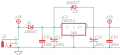
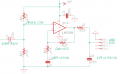
My partner and I are designing a guitar tuner based on a CYD (cheap yellow display with 2.8" TFT) that runs on ESP32. The basic audio circuit is below. As you can see it runs on 5v, has gain, an offset voltage to put the guitar signal in the center of the 3.3v ADC, and has low and high pass filters appropriate for stringed instruments. GPIO35 is the input to the CYD where it processes the signal.
It has been suggested to put a large capacitor (>100u) on the input of the CYD because it's a screen that puts off EMI noise. The problem is that if I put a large capacitor in parallel with C6, this will lower the cutoff of the LPF too much unless I got rid of R15. I suppose that is an option to forgo the LPF and filter it with software? Can the signal go straight from IC1 to GPIO35 without a resistor?
I'd appreciate any suggestions.
It has been suggested to put a large capacitor (>100u) on the input of the CYD because it's a screen that puts off EMI noise. The problem is that if I put a large capacitor in parallel with C6, this will lower the cutoff of the LPF too much unless I got rid of R15. I suppose that is an option to forgo the LPF and filter it with software? Can the signal go straight from IC1 to GPIO35 without a resistor?
I'd appreciate any suggestions.