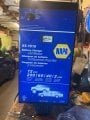
NAPA 85-1010 Battery charger repair

Thread Starter

Bazthespazz

Joined Jun 17, 2025
12
I was given a NAPA 85-1010 battery charger that stopped working and I'd like to try and fix it. It's 12 volt with settings for 2 amp, 40 amp, 60 amp and 200 amp jump start but both 60 and 200 amp are on the same position on the control switch. On the 2 amp setting it's putting out 8.8 volts, on the 40 it's at 12.35 volts and on the 60/Jump setting it's at 13.88 but it will not charge a battery. The gauge never moves. THe fan runs and nothing looks obviously burned inside but I think one of the guys at work hooked it up backwards and it never worked after that. What's the first thing I should be looking at?
 
:)Welcome to the forums

These battery chargers are made by one OEM and usually sold under several brand names. Parts for it. Look at Schumacher SE series, it might also be sold as that.

The output is rectified pulsing DC so it is normal for a multimeter to read lower than expected (average) voltages, about 64% low. So a target of 13.8V would read around 8.8VDC I believe.

You read output voltage but it will not charge a battery? It could be just the ammeter is not working?
I would connect a light bulb to the output, even an #1157 and see what you get for voltage across it, both DCV and then ACV.

A common problem with these chargers is the rectifier diodes failing, they are usually a cheap button diode on a heatsink, so they easily overheat or it makes poor connections as well. So they can go open-circuit. I would take it apart and check the four rectifier diodes if you get weird ACV values with the light bulb load.
 

Thread Starter

Bazthespazz

Joined Jun 17, 2025
12
:)Welcome to the forums

These battery chargers are made by one OEM and usually sold under several brand names. Parts for it. Look at Schumacher SE series, it might also be sold as that.

The output is rectified pulsing DC so it is normal for a multimeter to read lower than expected (average) voltages, about 64% low. So a target of 13.8V would read around 8.8VDC I believe.

You read output voltage but it will not charge a battery? It could be just the ammeter is not working?
I would connect a light bulb to the output, even an #1157 and see what you get for voltage across it, both DCV and then ACV.

A common problem with these chargers is the rectifier diodes failing, they are usually a cheap button diode on a heatsink, so they easily overheat or it makes poor connections as well. So they can go open-circuit. I would take it apart and check the four rectifier diodes if you get weird ACV values with the light bulb load.
Sorry it took so long to reply. I got it torn apart and it has no PCB but it has a small rectifier plate with 2 rectifier diodes, both 75 Amp 400 Volt. According to the specs I’ve found online, they’re positive probe. When testing these with a multimeter, what should my readings be, both directions?
 
Put the multimeter in Diode-Test mode and see what you measure across each diode, in both polarities. You can also try using Ohms.
Because the transformer windings are low resistance, they can interfere with the readings and it's best to disconnect one end of the diode when checking it- but I doubt there are any connectors allowing this because of the high currents. So just try the measurements "in circuit" and tell us what you get.
The rectifier diodes can be press-fit into the aluminum plate heatsink (+ out/diode cathodes), or stud mount or spring clip. You can see 70A parts running to 225A during cranking... may not be the best idea.

Also look around for bad connections, melted wiring etc. The output circuit-breaker, the ammeter might be at fault as well.

Pictures of the insides also helps to guess what could be wrong.
 

Thread Starter

Bazthespazz

Joined Jun 17, 2025
12
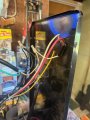
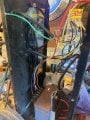
The diodes, which I thought would be the problem, seem to check out. They're showing around .415 and open when I reverse polarity. I reinstalled the rectifier plate and hooked the leads up to an 1157 bulb and the voltage output was a little over 8 on the 2 amp setting, 11 on the 40 amp and 13 on the 60 amp/Boost setting. The inside is pretty simple. It has a transformer, circuit breaker, amp meter and selector switch. I've attached pictures of the inside.
 

Attachments

Thread Starter

Bazthespazz

Joined Jun 17, 2025
12
The diodes, which I thought would be the problem, seem to check out. They're showing around .415 and open when I reverse polarity. I reinstalled the rectifier plate and hooked the leads up to an 1157 bulb and the voltage output was a little over 8 on the 2 amp setting, 11 on the 40 amp and 13 on the 60 amp/Boost setting. The inside is pretty simple. It has a transformer, circuit breaker, amp meter and selector switch. I've attached pictures of the inside.
I messed up the readings on the diodes, they both read about .514 and open when reversing polarity.
 
The diodes test OK then but remember if one has failed open-circuit, you won't see that- because the other diode shows up plus the transformer winding resistance which is really low. So the 0.514V could be from only one diode. Just something to remember if this charger looks like it works but only has 1/2 the output.

The charger is very basic inside, there's not much more just a negative cable going through the ammeter.
What makes you think the charger is not working?
The multimeter voltage readings appear low- but that is normal because it does not output pure DC, it outputs pulsing (rectified) DC which peaks at the right charging voltage, but since the dips go to zero V, the average is a low number. If only one diode was working the voltage would still look OK. Source Hammond 5C007 Rectifier Design Guide
If it was connected to a car battery, or had a filter capacitor across the output you would see the real output voltage is likely OK.
 

Thread Starter

Bazthespazz

Joined Jun 17, 2025
12
I removed the rectifier plate from the charger and tested each diode separately and got the same reading on both. If I hook it to a battery, the amp meter never moves, even when set to the 200 amp jump start setting which will not jump start the car.
 
I'm bit confused you measure OK output voltage (at the clamps) but get no substantial current, that leaves a high resistance connection somewhere.
Check the output circuit breaker, with an ohmmeter. It's the grey module I think. It might have tripped and not reset.
 

Externet

Joined Nov 29, 2005
2,628
Connect it to a battery that is not a cadaver and reads between 9.5 and 12.0 VDC and come back with observations.

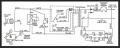
Is this schematic similar ?
1751229266949.png
 
Last edited:

Thread Starter

Bazthespazz

Joined Jun 17, 2025
12
I'm bit confused you measure OK output voltage (at the clamps) but get no substantial current, that leaves a high resistance connection somewhere.
Check the output circuit breaker, with an ohmmeter. It's the grey module I think. It might have tripped and not reset.
I've got good continuity through the circuit breaker, it's one of the first things I checked. One of the guys at work hooked it up backwards trying to jump start a large mobile compressor and it never worked after that.
 
Then keep looking for the bad/high reisstance connection. From the output cables back in to the diodes and transformer.
I notice the circuit breaker has a thick wire from the output to the parrot clip, but the connection from transformer center-tap to he circuit breaker is hilariously just two skinny wires. Those need to be checked, they must be a fuse or current limiter. With a bright light look for anything corroded or melted. Otherwise, I don't see the ammeter in a pic, check continuity across it too.
It's really a simple circuit, only a handful of parts.
Does the light bulb #1157 light up?
 

Thread Starter

Bazthespazz

Joined Jun 17, 2025
12
Then keep looking for the bad/high reisstance connection. From the output cables back in to the diodes and transformer.
I notice the circuit breaker has a thick wire from the output to the parrot clip, but the connection from transformer center-tap to he circuit breaker is hilariously just two skinny wires. Those need to be checked, they must be a fuse or current limiter. With a bright light look for anything corroded or melted. Otherwise, I don't see the ammeter in a pic, check continuity across it too.
It's really a simple circuit, only a handful of parts.
Does the light bulb #1157 light up?
I just did a few more tests and here's what I came up with: Output at the leads with nothing attached, 2 amp 8.79 V, 40 amp 12.29
V, 60/200 amp 13.82 V. Voltage at leads with 1157 bulb attached: 2 amp 8.06 V, 40 amp 11.59 V, 60/200 amp 12.93 V.
AC Volts at rectifier plate: 2 amp 19.9 V, 40 amp 27.6 V, 60/200 amp 31.0 V.
DC volts from transformer main lead to rectifier plate: 2 amp 8.4 V, 40 amp 11.7 V, 60/200 amp 13.4 V.

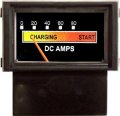
Correct me if I'm wrong but it looks like everything is working. I took all my connections apart and cleaned them, including the circuit breaker which has good continuity. The Amp meter, which is in the second picture behind that string of wires, never moves, it's a pass-thru so no bad connections there. Is it possible the rectifier diodes are bad and crap out when they're under a load?
 
It looks like it works, the ammeter might be pooched? They don't do anything at 2A. It might have pegged stuck when the battery was connected backwards and is still stuck.
You'd have to load it down more, either with a good battery but with a low state of charge, or a couple car headlights they are around 5A each, or a cooling fan etc.
I'm the type of person that will tap the clamps to each other (briefly short the output) and see if there's sparks and the ammeter moves, on the lower settings.
Power diodes typically fail short-circuit. It's connections to the heatsink, transformer, wiring, circuit breaker etc that go open-circuit. sometimes due to cheapness or corrosion.
If the #1157 is lighting up, then there is no open-circuit. You tested the diodes and they are not shorted.
So it's a bit puzzling and I would suspect the charger's wiring or ammeter or some connection went bad.
You would have to load it down more and measure some voltages.
NAPA Battery Charger Parts says your model of charger has 4 diodes, not 2.
The ammeter looks pretty basic, hard to see even 20A deflection.
5399100143-2T.jpg
 

Thread Starter

Bazthespazz

Joined Jun 17, 2025
12
It looks like it works, the ammeter might be pooched? They don't do anything at 2A. It might have pegged stuck when the battery was connected backwards and is still stuck.
You'd have to load it down more, either with a good battery but with a low state of charge, or a couple car headlights they are around 5A each, or a cooling fan etc.
I'm the type of person that will tap the clamps to each other (briefly short the output) and see if there's sparks and the ammeter moves, on the lower settings.
Power diodes typically fail short-circuit. It's connections to the heatsink, transformer, wiring, circuit breaker etc that go open-circuit. sometimes due to cheapness or corrosion.
If the #1157 is lighting up, then there is no open-circuit. You tested the diodes and they are not shorted.
So it's a bit puzzling and I would suspect the charger's wiring or ammeter or some connection went bad.
You would have to load it down more and measure some voltages.
NAPA Battery Charger Parts says your model of charger has 4 diodes, not 2.
The ammeter looks pretty basic, hard to see even 20A deflection.
View attachment 352059
The battery on my truck died last week and I tried cranking to high but it did nothing where my little charger fired it right up. I’m kinda lost.
 

Thread Starter

Bazthespazz

Joined Jun 17, 2025
12
It looks like it works, the ammeter might be pooched? They don't do anything at 2A. It might have pegged stuck when the battery was connected backwards and is still stuck.
You'd have to load it down more, either with a good battery but with a low state of charge, or a couple car headlights they are around 5A each, or a cooling fan etc.
I'm the type of person that will tap the clamps to each other (briefly short the output) and see if there's sparks and the ammeter moves, on the lower settings.
Power diodes typically fail short-circuit. It's connections to the heatsink, transformer, wiring, circuit breaker etc that go open-circuit. sometimes due to cheapness or corrosion.
If the #1157 is lighting up, then there is no open-circuit. You tested the diodes and they are not shorted.
So it's a bit puzzling and I would suspect the charger's wiring or ammeter or some connection went bad.
You would have to load it down more and measure some voltages.
NAPA Battery Charger Parts says your model of charger has 4 diodes, not 2.
The ammeter looks pretty basic, hard to see even 20A deflection.
View attachment 352059
Yeah, all the parts places I find online says it take 4 diodes and they all show the same plate that's discontinued but mine has a plate about 1/2 the size as the parts pictured that only has 2 diodes and it snaps into 3 plastic clips on top of the transformer. You can see it in the last picture I posted.
 
Yeah, all the parts places I find online says it take 4 diodes and they all show the same plate that's discontinued but mine has a plate about 1/2 the size as the parts pictured that only has 2 diodes and it snaps into 3 plastic clips on top of the transformer. You can see it in the last picture I posted.
I was just checking if there are missed diodes to test. Asking because we haven't yet found a problem.

If this could not boost or charge the car to starting, yet the "small charger"worked, somehow must have been used to charge it up slower, that kinda leaves bad connections at the vehicle's battery? Making the big charger look like a dud. Did you fix the car?
 

Thread Starter

Bazthespazz

Joined Jun 17, 2025
12
I was just checking if there are missed diodes to test. Asking because we haven't yet found a problem.

If this could not boost or charge the car to starting, yet the "small charger"worked, somehow must have been used to charge it up slower, that kinda leaves bad connections at the vehicle's battery? Making the big charger look like a dud. Did you fix the car?
Turned out my alternator was bad and I ran down the battery trying to start it, it doesn't get driven very often. Replaced the alternator and jumped it with the little charger and everything's good now...other than the big charger. It worked fine until it got hooked up backwards and the boss wanted to throw it out so I scrounged it hoping to get it working again.
 
Reverse-polarity to a dead battery? Regardless it would just over-current the charger and the circuit breaker should trip and later reset. What does its yellow sticker say the rating is. The transformer thermal fuse should be OK.

When repairs go like this, they don't make sense - you have to go back to the beginning and see what is overlooked or what wrong assumption was made.
Back in my days as an electronics tech, what worked really good for me was the visual inspection. It flushes out bad soldering, crimps, melted/burnt things etc. and it's my first go-to with repairs - to stare at them and look for trouble.

These chargers are low cost and corners get cut all over the place. I'm suspicious of the wiring handling say 100A for a while, it would more likely just melt.
I think it's best is to load the charger down, and when it seems to be not putting out, take voltage readings here and there to find the high resistance part/connection. Easiest way to find out what is going on.
The two rectifier diodes - I've never seen them go "weak" where they seem to work at a few amps and then crap out with a bigger load.
 
Top