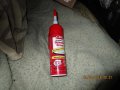
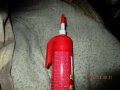
Well after talking about it here i realized that it is the responsibility of the company to fix the problem so i emailed them, and they were nice enough about it so they offered to send a new can.
If they want the old can back i'll have to send it i guess, but if not, i'll poke it. I'll try to take a video but i have a feeling it will be very uneventful, similar to the Voyager 1 pics of Titan which were a bust and the craft was sacked just for that very purpose (although it is still going way out there beyond the place where the sun has very little influence anymore).
I expect to recover a LOT of grease though because the can is still so heavy, almost full of grease. I probably used less than a tablespoon of the 3.3 oz grease in the can so far. What to put it in is the next question, i'll have to find something.
Maybe time for another remake of the movie, "Grease" ?
I'm afraid it might blow up so i am building a Mars Rover with a pick hand/arm. It's gonna take a while
Hey that would be funny, fly it to Mars and have the Rover pick at it.
Or, just have a model Rover here and film it slowly approaching the can, then striking it with a pick.
Would be a good excuse to build a Rover
I'm afraid it might blow up so i am building a Mars Rover with a pick hand/arm. It's gonna take a while
Hey that would be funny, fly it to Mars and have the Rover pick at it.
Or, just have a model Rover here and film it slowly approaching the can, then striking it with a pick.
Would be a good excuse to build a Rover
I actually was given an automatic, battery powered can opener not long ago. It works really well. Once triggered, it takes a few seconds to close in on the bead and make the first cut. Plenty of time to hit the button and run.
I’m a big fan of shooting it, but the can opener would be great for cleanly recovering the contents.
I actually was given an automatic, battery powered can opener not long ago. It works really well. Once triggered, it takes a few seconds to close in on the bead and make the first cut. Plenty of time to hit the button and run.
I’m a big fan of shooting it, but the can opener would be great for cleanly recovering the contents.
Yes you are right. I dont have an automatic anymore though because i got tired of buying new ones when the old ones went south on me, so i went back to the old hand crank type.
But a hole first by small bit is hard to resist too. Just think of the funny patterns it might make if there is still any propellant left inside. Maybe someday this will lead to grease fireworks on the 4th of July where we see lit up streaks of grease across the night sky. This grease is clear, so i suspect that it conducts light like a fiber optic cable strand when lit from one end.
I have a plastic pill bottle i can probably use for the grease once i get it out.
I've opened cans before. The way I did it was to take a pair of side cutters and slowly roll the top lip of the can. Don't unroll it all the way around, start with one spot and keep rolling it till any remaining gasses come out. If there's a lot of gas, rolling it slowly will allow you to release it and have the seal stop the flow. If the pressure is extremely low or non-existent then you can safely remove the top of the can along with the spray nozzle assembly. Not that you'd need any of that stuff, but you WILL gain access to the can's content.
Go to the hardware store and steal a half inch pipe thread cap (the plastic red thing on the end of the pipe - NOT THE PIPE!). That cap will fit nicely as a cork to your can (most likely) and can be used to keep the content clean from dust. But you should also know that in some cases, like a can of conformal coating, relieving all the pressure then plugging it up - the contents can have dissolved gasses in them that can outgas and raise the pressure inside the can, thus blowing off the cork with an obviously unexpected POP! And this explosive release of gasses can cause the contact to flash boil, sending its content all over the place. As I said, I've done this. Including the unexpected POP. AND the resulting coating of everything within 20 inches. So if you GO this route, consider poking a pin hole in the cork so that gasses can vent without allowing dust or other debris from getting into the content.
One way to tell if the propellent is exhausted is if you can squeeze the can. Dent the side a little. If you can dent it and it stays dented then there is no pressure inside the can. Safe to open via the method I suggest. Other suggestions of poking the can leave little means for removing the content. Using a can opener to open the rolled bead will give you access to the content nicely. But so will rolling the valve top slowly.
I had trouble finding this thread again because i forgot what category i put it under, but when i read the title again now i have to laugh a little. "Must Puncture Can Of Grease". Certainly a strange thing to have to do Sounds almost like a MacGyver episode or something
But anyway, they notified me today that they are sending a new can, but it's not exactly the original because they discontinued that item. Gee, wonder why
But that's good customer service if you ask me. The new can looks like a better design too.
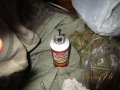
Sorry for that wait, but i wanted to see if they wanted me to ship back the old can for analysis before i ripped it open. So i was waiting for the new can to ship. Now that it has shipped, the can has NOW been punctured (4th pic attached).
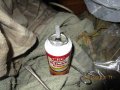
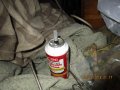
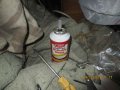
The first three pics 1 through 3 are trying to peel the TOP fold up so that i could take the top off, but that failed very badly. I also tried to peel off the bottom fold (not shown) but that turned out to be too hard too, for now. So i took some pliers and broke the top tube off (it snapped like a twig) and then stuck a screw down into the outlet port.
The fourth pic is the punctured can. The screw shown there is 3 inches long but you only see 3/4 of an inch sticking out the top because the rest is of course inside the can body. Taking the screw back out was uneventful as there was no gas at all inside the can. So all it was was a greasy screw with grease all over the threads, a bit messy (see the rags and plastic bag i had ready too in the pics).
It was fun but not as much fun as i thought it would be.
Next, i have to pull the bottom off so i can scoop out the grease. That will take a little more effort but at least now i know the thing will not blow out grease all over the place once the bottom comes loose.
BTW i ended up using a screw serendipitously. I was using some sheet rock screws for something else today and happened to have a few laying right next to where i was doing the can thing. I looked at the screws, looked at the top can port, put 2 and 2 together and saw a quick solution.
Also BTW, the top did not come off with the peel of the top fold because that is apparently not the main fold. The main (strong) top fold is just under that one.
I may have discovered the reason the can failed in the first place too. I noticed some grease around the top main seal fold. I suspect it was leaking gas there for a while and that is probably why it went dead.
After having done this i am happy with the results so far, but i do have to wonder what would have happened if there was a lot of gas pressure still in the can.
He he yeah. Hey a little less violent for the can, bow and arrow from a distance
Well i had my rags and plastic bag ready and good quality eye protectors, and all that for no POP of any kind. I guess i was expecting more bang for the effort. At least now i can proceed to get the contents out and thus not be wasteful. Once i get the bottom off the grease will come out easily.
Yes they were very generous, very good customer service. I'll have to give them good ratings when it comes time to review one of their products online (like on Amazon).
The new can came yesterday so i got it last night. Took a couple pics just for reference.
The new design has a different kind of mechanism that allows the 'bead' width to be set to variations between thin and wide. The second pic shows the lever that you squeeze to get some grease out of the top.
Havent tried it yet though
I will laugh if it is out of gas too
The reason i use this stuff is because it works so well. Keeps contacts from oxidizing. I use it on all my batteries in all my flashlights and i have like a million flashlights from collecting them over the years. Before i used this stuff my lights kept giving me trouble after a few months and i had to unscrew and screw back the tail cap on some lights just to get the oxide layer wiped clean. The dielectric grease seems to do the job well as i dont have to do that anymore.
I also tried some actual spray grease (this CRC stuff is more like toothpaste). The actual spray comes out like a mist, but then solidifies somewhat to form a grease. That's made by another company but is also dielectric grease, a somewhat lighter weight variety.
I finally got the bottom off. It was on there pretty good and took a lot to get it off while resisting the temptation to whip out the Dremel and grind the dang thing off in seconds. I realized that i could not saw or grind the can metal because if the grease gets contaminated, i can no longer use it for a lubricant even though i could still use it for battery connections and the like.
But getting that bottom off took a lot of prying with vice grips. Finally it came off and i found out that there was an 'insert' made of plastic that took up half the can. The insert was an inverted 'cup' shape, that apparently has the grease at the top and air or gas pressure inside (forming two distinct chambers). Thus when i pull the trigger, the gas pushes the cup upward and that pushes the grease out.
I had wondered how they did this because if you pressurize raw grease you dont know if you will get grease out or air out when you open the top, or a combination of both.
The problem with the can design now is becoming more clear. The seal made between the cup and the side of the can is not very good at all. No "O" ring for example. So any tiny leak will leak air into the grease chamber. Once in the grease chamber, it will release at random when the trigger is pulled. That's why i kept hearing a "pop" sound every time i went to use it before it ran out of air. Obviously that's why it ran out of air too.
I realized a better way to do it would be to simply have a lever that pushed the cup up, rather than air. I am hoping that's the way they did the 'new' can which is a different design.
Anyway, i can push the cup out the bottom by pushing a long rod into the top port, so once that is out, i can finally get my precious grease out
Unfortunately, the can is not full as noted, so i only get 1/2 a can out for all my efforts
Turned out to be very interesting though.
Just wondering if it would have been better to store the can in the inverted position. That way, even with a leaking seal, the pressure on both sides would be equal. I'm not saying you "Should" store it upside down, but maybe it wouldn't hurt. After all, the new and improved design may simply be new printing on the exterior of the can. And maybe you got the one in 1,000 cans that statistically have the leak you experienced.
But getting that bottom off took a lot of prying with vice grips. Finally it came off and i found out that there was an 'insert' made of plastic that took up half the can. The insert was an inverted 'cup' shape, that apparently has the grease at the top and air or gas pressure inside (forming two distinct chambers). Thus when i pull the trigger, the gas pushes the cup upward and that pushes the grease out.
I had wondered how they did this because if you pressurize raw grease you dont know if you will get grease out or air out when you open the top, or a combination of both.
Can be used in any orientation. I still think storing the can top side down would have prevented the gasses from mixing in with the grease. At least to a large degree.
Just wondering if it would have been better to store the can in the inverted position. That way, even with a leaking seal, the pressure on both sides would be equal. I'm not saying you "Should" store it upside down, but maybe it wouldn't hurt. After all, the new and improved design may simply be new printing on the exterior of the can. And maybe you got the one in 1,000 cans that statistically have the leak you experienced.
Well it is hard to say for sure, but if air leaks into the grease chamber it is difficult to predict where the air will go, as it may form bubbles of different volumes.
But given that it would work, it would be hard to strore upside down because the can nozzle sticks out the top and the bottom is a nice round regular can bottom,which sits nicely on a shelf. So i would have had to make up a jig or something.

 Facebook
 Google
 GitHub
 Linkedin


 We want to know what happened