Multiplier circuit with op-amp OP07 connected to 12+-V power supply (from research paper)

Thread Starter

Alek0403

Joined Jul 6, 2023
10
Hi,

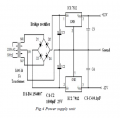
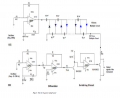
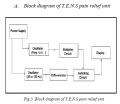
I'm trying to reconstruct a multiplier circuit from a research paper related to a TENS unit. However i'm confused about the setup and connection from the power supply to the op-amp OP07 for the multiplier circuit and differentiator circuit. As i can see from the schematic the OP07 is connected to ground for both circuits in the plus and minus input, but from the block diagram i can tell that it should be connected to the power supply? How should i connect it? Specifically i am asking about the connection of fig. 5, OS1 and OS2.

The schematic is from the paper:
Sarkar, Jayjeet. (2015). Design and fabrication of A T.E.N.S. pain relief unit. 1-6. 10.1109/C3IT.2015.7060136.
1721141942149.png
1721141957992.png
1721141973276.png
 

MisterBill2

Joined Jan 23, 2018
27,164
I agree with ALEC in post #2. Those lines in the block diagram are flow paths, not actual connections. Quite a big difference. The secret code telling that is the arrow heads on those lines, telling us that it is a flow path.
 

MisterBill2

Joined Jan 23, 2018
27,164
What makes you think your multiplier will make 330 V. The numbers do not appear to properly compute. What diodes were you planning to use?
Aside from the diode PRV issue, which is a valid concern, understand that there is no additional added POWER. so at an 18X multiplication there is also one eighteenth the current potentially available, at the theoretical best.
 

Papabravo

Joined Feb 24, 2006
22,058
Aside from the diode PRV issue, which is a valid concern, understand that there is no additional added POWER. so at an 18X multiplication there is also one eighteenth the current potentially available, at the theoretical best.
I wasn't even thinking about power, rather the voltage losses at each stage of the multiplication. It will get worse if you try to draw even a small amount of power out of the other end.
 

Thread Starter

Alek0403

Joined Jul 6, 2023
10
What makes you think your multiplier will make 330 V. The numbers do not appear to properly compute. What diodes were you planning to use?
Thank you for pointing out the issue. I assumed since it was from a paper and his measurements showed 330V at the end of the multiplier circuit it was correct. But after doing a simulation i see it's no where near.

The diodes used should be 1N4007 according to the paper. However i'm planning on using another design after this.

Thanks again!
 

Thread Starter

Alek0403

Joined Jul 6, 2023
10
Aside from the diode PRV issue, which is a valid concern, understand that there is no additional added POWER. so at an 18X multiplication there is also one eighteenth the current potentially available, at the theoretical best.
Thanks for pointing it out. The power is however not a concern as I only need to draw approx 20mA from the circuit. I will however use another circuit design with a transformer to get the correct voltage needed.
 

MisterBill2

Joined Jan 23, 2018
27,164
Probably the original author used a theoretical value for the 330 volts. And note that the value of R5, the resistor in series with the voltage, is not legible. And, with that circuit, the MJ10023, shunting the voltage is a bit unusual, at least as I see it.
 

Papabravo

Joined Feb 24, 2006
22,058
Probably the original author used a theoretical value for the 330 volts. And note that the value of R5, the resistor in series with the voltage, is not legible. And, with that circuit, the MJ10023, shunting the voltage is a bit unusual, at least as I see it.
This is a constant problem in duplicating results from research papers: at least in my experience. There always seem to be details that are glossed over to the detriment of anyone trying to confirm or duplicate the results. This is why I have largely ignored the enormous volume of academic publishing in a career spanning half a century. N.B. this is a personal preference that I have had the luxury of indulging in. Many (most?) engineers may NOT have this luxury.
 

MisterBill2

Joined Jan 23, 2018
27,164
My impression has been that the verification of the validity of a new discovery was thru others being able to duplicate the results. thus publishing the means of getting the results accurately was the way to enhance one's reputation. I was once in the position of discovering the error on another's test process, which disproved his discovery of shock waves traveling at the speed of light in a solid. He was incorrectly measuring the speed of an electrical signal, not a shock wave, because of an incorrect connection.
From then on, all of my experiments included a brief reality check. Saved my credibility.

AND, HOW MUCH power CAN an OP07 op-amp ACTUALLY DELIVER???
 

Papabravo

Joined Feb 24, 2006
22,058
My impression has been that the verification of the validity of a new discovery was thru others being able to duplicate the results. thus publishing the means of getting the results accurately was the way to enhance one's reputation. I was once in the position of discovering the error on another's test process, which disproved his discovery of shock waves traveling at the speed of light in a solid. He was incorrectly measuring the speed of an electrical signal, not a shock wave, because of an incorrect connection.
From then on, all of my experiments included a brief reality check. Saved my credibility.

AND, HOW MUCH power CAN an OP07 op-amp ACTUALLY DELIVER???
Only an insignificant amount.
 
Top