Multiple Solar Panel connected

Thread Starter

DJ_AA

Joined Aug 6, 2021
490
Hi All,

I am using the LTC4162 MPPT Charger to charge my 12.6V Li-ion battery, and it works well. At times, due to cloudy conditions, I might use a 50W panel instead of a 30W panel. Is it possible to connect multiple panels together to increase the input current?

I understand that I could simply connect them using diodes, but if I understand correctly, only the current from the panel producing the higher voltage would pass through, not necessarily a combination of currents. Unless the voltage drops and it alternates between the panels, I’m unsure how efficient that would be with the MPPT feature of the charger.
 

nsaspook

Joined Aug 27, 2009
16,275
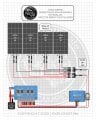
The parallel mismatched solar panels act as parallel non-ideal current sources of different current capabilities. You will get extra mppt input current and it will be better for battery charging. Your array voltage will be that (approx for not too different types of panels) of the lowest panel so your mppt power curve will not be optimal for the entire array.

1734361035041.jpeg
 
Last edited:

Thread Starter

DJ_AA

Joined Aug 6, 2021
490
Are these solar panels connected directly or via a diode? It seems no diode is being used, and they are connected directly. If so, what happens if the current from one panel flows into the other?

Currently, I have two diodes: one diode is connected to a solar panel, and the other is connected to a 14V DC input. When the voltage of the solar panel drops below 14V, the DC power supply provides the current. Once the solar panel voltage rises above 14V, the current produced by the panel is supplied to my charger.
 

nsaspook

Joined Aug 27, 2009
16,275
Are these solar panels connected directly or via a diode? It seems no diode is being used, and they are connected directly. If so, what happens if the current from one panel flows into the other?

Currently, I have two diodes: one diode is connected to a solar panel, and the other is connected to a 14V DC input. When the voltage of the solar panel drops below 14V, the DC power supply provides the current. Once the solar panel voltage rises above 14V, the current produced by the panel is supplied to my charger.
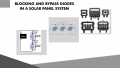
Most commercial solar panels already have blocking and bypass diodes.
1734381443396.png

A normal power supply is not a current source (usually, it's a voltage source). So what you have with that configuration (a non-ideal configuration so YMMV) without diodes is a current source in parallel with a voltage source. Your external diodes act as a logical circuit elements that select the source with the external diode that's forward biased.
 

Thread Starter

DJ_AA

Joined Aug 6, 2021
490
Yes there is bypass diode.

So do I simply connect two panels together in parallel. What happens if they are producing two different voltages or a little different?
 

boostbuck

Joined Oct 5, 2017
1,042
As described in post#2, as long as the panels are reasonably close in voltage, the voltage delivered will be that of approximately the lower panel voltage, so power delivered will be the sum of each panels power, at that lower voltage.

The additional power from the extra panel will likely more than compensate for the loss due to a lower common voltage.

As already mentioned, panels are current sources, not voltage sources.
 

boostbuck

Joined Oct 5, 2017
1,042
Assuming the load demand is more than one panel can provide, the panel with the higher voltage will have it's voltage pulled down the the point where the other panel can add current to meet the demand.

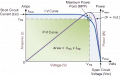
This should help:
1734395054815.png
 

nsaspook

Joined Aug 27, 2009
16,275
In regards to diode In my current setup higher voltage source is outputted, then wouldn't this also be the case for the panels?
You don't need another (in addition to the one(s) on the panel(s)) solar panel series blocking diode in your power supply backup to solar panel setup. It's wasting valuable power for nothing. Just the one () in series of the power supply feed is fine to isolate it from voltage backfeeds.

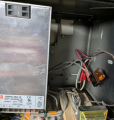
I've been running a similar configuration of single high power isolation diode from the PS on my old 12V solar bank for more than a decade.
1734398374886.png

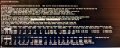
System Status readout of the old system using my old monitor system using the power supply on the solar panel input with the single diode show above.

1734399211544.png

Some of the display source code for pic18F8722 controller.
C:
        "GMT, Boot Code %i\r\n Controller Status:\r\n SD time %lu, SD records %lu, SD status %d:%d, Power status 1=OK %u, Config DIPSW %u%u%u%u%u%u%u%u lsb, Temp Raw %i, Temp Sensor %lu, Temp Offset %li, Ah Temp Comp %i",
        (int16_t) BOOT_STATUS, SDC0.timekeep, SDC0.sdpos, sdret, sderr, P.PRIPOWEROK, DIPSW8, DIPSW7, DIPSW6, DIPSW5, DIPSW4, DIPSW3, DIPSW2, DIPSW1, therm, R.thermo_batt, R.thermo_batt - Temp_ZERO, C.temp_drate);
    puts2USART(bootstr2);
    sprintf(bootstr2,
        "\r\n UTC counter %lu, Time Skew %li, Highint %lu, Lowint %lu, Timerint %lu, Workerint %lu, \r\n Com1rx INT %lu, Com1tx INT %lu, Com2int %lu, Bint %lu, PWMint %lu, Eint %lu, Aint %lu, Lowclocks %lu, Lowruns/S %lu,\r\n",
        utctime, time_skew, V.highint_count, V.lowint_count, V.timerint_count, worker_count, V.c1rx_int, V.c1tx_int, V.c2_int, V.buttonint_count, V.pwm4int_count, V.eeprom_count, V.adc_count, V.clock50, V.clock50 / V.timerint_count);
    puts2USART(bootstr2);
    sprintf(bootstr2, " %c,%c,%c,%c, CHARGER %u, H%u,L%u,B%u CRITC levels %u, CRITIC counts %lu, CCLED counts %u, ADC Zero Offset %u\r\n",
        cell[B1].id, cell[B2].id, cell[B3].id, cell[B4].id, CHARGERL, hirez_count[0], hirez_count[1], hirez_count[4], critc_level, critc_count, ccled_flag.ticks, zero_ref);
    puts2USART(bootstr2);
    sprintf(bootstr2, " CCS status: pick %u, boi %u, boc %u, alert %u, bn %u : MBMC network  %u, MBMC Data Bytes %lu, Tx CPS: %li, Rx CPS: %li",
        CCS.pick, CCS.boi, CCS.boc, CCS.alert, CCS.bn, mbmcflag.cmd_timeout ? 0 : 1, V.mbmcdata_count, LINK.tx_cps, LINK.rx_cps);
    puts2USART(bootstr2);
    sprintf(bootstr2, "\r\n System Status:\r\n PV Voltage %lumV, Charging Voltage %lumV, Controller Voltage %lumV, Charge Cycle Time Left %s, Absorp Current %li00mA, End-Amps %li00mA",
        R.inputvoltage, R.ccvoltage, R.systemvoltage, hm(B.charge_time_left), ABSL(absorp_current), end_amps);
    puts2USART(bootstr2);
    sprintf(bootstr2, "\r\n PV Current sensor %li00mA, Inverter Battery Current sensor %li00mA, Inverter Load Current %li00mA, Current Power IN %liW, OUT %liW\r\n AC PWR Inverter %i, Utility %i, Glitch Count %i: ",
        R.currentin, R.current, C.currentload, (R.currentin * R.inputvoltage) / 10000, (R.primarypower[CCS.boi] * C.currentload) / 10000, AC_OFF_I, AC_OFF_U, glitch_count);
    puts2USART(bootstr2);
    if (AC_OFF_U || AC_OFF_I) {
        if (AC_OFF_I) putrs2USART(" \x1b[7m Inverter Power is OFF \x1b[0m,"); // ANSI escape codes (REVERSE)
        if (AC_OFF_U) putrs2USART(" \x1b[7m Utility  Power is OFF \x1b[0m,");
    }
    if (DIPSW3) putrs2USART(" Inverter Battery 1 only: DIPSW3,");
    if (B_GANGED) putrs2USART(" \x1b[7mStrings 1&2 are GANGED\x1b[0m,");
    if (!DIPSW7) putrs2USART(" Power Diversion enabled: DIPSW7,");
    if (DIVERSION) {
        sprintf(bootstr2, " Diversion Status Off: PWM %i%%\r\n Todays Power Q level: %i, Yesterdays Power Q level: %i", (int16_t) MBMC.diversion.power,
            (int16_t) B.today, (int16_t) B.yesterday);
    } else {
        sprintf(bootstr2, " \x1b[7mDiversion Status On\x1b[0m: PWM %i%%\r\n Todays Power Q level: %i, Yesterdays Power Q level: %i", (int16_t) MBMC.diversion.power,
            (int16_t) B.today, (int16_t) B.yesterday);
    }
    puts2USART(bootstr2);
    sprintf(bootstr2,
        "\r\n Total Charger Energy %liWh, Todays Charger energy %liWh, Prev Charger Energy %liWh, Diversion Energy: Total %liWh, Todays %liWh",
        SDC0.harvest.c_total / 1000, SDC0.harvest.charger / 1000, SDC0.harvest.prev_charger / 1000, SDC0.harvest.diversion / 1000, B.diversion / 1000);
    puts2USART(bootstr2);
    ClrWdt(); // reset the WDT timer
    sprintf(bootstr2,
        "\r\n Total PV Energy %liWh, Todays PV energy %liWh, Prev PV Energy %liWh, Total Usage %liWh, Todays Usage %liWh, Dayclock %u:",
        SDC0.harvest.e_total / 1000, SDC0.harvest.energy / 1000, SDC0.harvest.prev_energy / 1000, SDC0.harvest.u_total / 1000, SDC0.harvest.usage / 1000, SDC0.DAYCLOCK);
    puts2USART(bootstr2);
 
Last edited:

Thread Starter

DJ_AA

Joined Aug 6, 2021
490
What I understand is that the voltage of the panels needs to be similar. Therefore, positioning them in different directions would not be a good idea. Instead, they should be kept in the same direction and angle.

If I am correct, I can connect two or more panels together, route their input through a single diode, and have another diode for my DC power supply. This way, the source with the most power will be used. Would this be the correct understanding?
 

nsaspook

Joined Aug 27, 2009
16,275
What I understand is that the voltage of the panels needs to be similar. Therefore, positioning them in different directions would not be a good idea. Instead, they should be kept in the same direction and angle.

If I am correct, I can connect two or more panels together, route their input through a single diode, and have another diode for my DC power supply. This way, the source with the most power will be used. Would this be the correct understanding?
Sure, that would work fine. Be sure to use low voltage drop power diodes to reduce power losses for each power source.
Something like this should work: https://www.digikey.com/en/products/detail/smc-diode-solutions/15SQ045/6022444
 
Last edited:

MisterBill2

Joined Jan 23, 2018
27,362
I suggest connecting the two five amp solar arrays in parallel, and then putting those in series with the two eight amp solar arrays, with bypass diodes for each set that may have it's light blocked. That would provide 520 watts maximum power as opposed to 20 volts at 26 amps. Theoretically the same power, 520 watts, but at the higher voltage less loss.
 
Top