Motional EMF from an Electron Flow Perspective

Status
Not open for further replies.

Wendy

Joined Mar 24, 2008
23,798
Even copper has a lattice.

As I said, atoms to not exist in isolation. Take alloys, for example.

It is this lattice structure that makes metals conductive, which the valance electron helps create. EMF is an electric force (similar to magnetic). It makes electrons move as a mass. They don't bunch up as you seem to have indicated.

I have no intention of getting sucked into this thread though, take it or leave it as you will.
 
Last edited:

Thread Starter

Gerry Rzeppa

Joined Jun 17, 2015
170
Even copper has a lattice... atoms to not exist in isolation..
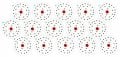
BR-549 mentioned a hairnet-like lattice earlier, and we ended up illustrating electron accumulation something like this:

hairnet 4.jpg

Which was helpful at that level of abstraction. Unfortunately, it didn't provide any insight into the questions
that naturally arise from illustrations at a slightly lower level of abstraction, like this one (click the link to see it in action):

https://cdn.sparkfun.com/assets/9/5/6/1/4/519fcd42ce395f804c000000.gif

Hence my second question about the copper rod moving in a uniform magnetic field at a constant velocity (repeated here for your convenience):


Assuming a strong enough field and a fast enough velocity, what is the most extreme electron distribution we can get out of this arrangement of atoms in a copper rod? Will atoms A, B, C, and D end up missing one electron each while E gets all four extras? What's the maximum number of electrons that a copper atom can have in it's outermost shell?

But if it's necessary to work with a lattice of copper atoms to answer the question, perhaps we can work from an illustration like this:

copper rod atoms 5.jpg
But I would think the answer to the latter part of my question (What's the maximum number of electrons that a copper atom can have in it's outermost shell?) would be the same in any case. What say we knock (at least) that question off the list right now. What is that maximum?
 

Wendy

Joined Mar 24, 2008
23,798
The balance is always neutral, the elctrons are just wanderers, they migrate from atom to atom, but never crowd. The ones entering one end make up for the ones leaving the other end, keeping the net charge zero. Like the analogy of the garden hose, water is the same at both ends of the hose. It is the electric force, expressed as volts, that make them move. One electron does not push the other.
 

Lool

Joined May 8, 2013
116
What's the maximum number of electrons that a copper atom can have in it's outermost shell?) would be the same in any case. What say we knock (at least) that question off the list right now. What is that maximum?
All of your questions are opening the proverbial "can of worms". You are asking detailed questions that we nomally address with electromagnetic field theory and quantum mechanics. If you think of these subjects as a deep ocean across the entire earth, you have to rate your present knowledge as being equivalent to wading up to your waist on a beach. By not studying these subjects formally, you are severely limiting your ability to understand answers to these questions. Also, you are hampering our ability to answer because we don't even know in what language to speak to you to answer these difficult questions.

Let's take this very simple question you ask. The maximum number is a very detailed question to figure out. Think about Albert Einstein in 1905 trying to understand the photoelectric effect. Think about the topic of thermionic emission which describes why you can get electrons off the cathode plate on a tube. Think about corona discharge and arcing. There is a lot of physics, math, formulas and numbers involved in properly answering this question.

In an electromagnetics fields course, you would address this question in a very simple way. You would learn that there is a breakdown electric field for any material such as air or glass etc. Once the charges create a field beyond this limit either corona discharge or arcing will occur. The field is going to be stronger when the surface curvature is greater, which is why sharp pointy places tend to be the spots of arcing or discharge. There is tons of literature on this subject on the web and in books, so I dont feel we need to spell it all out here. But that is basically the limiting factor.

Another thing about charge accumulation is that it tends to usually be a surface charge on the surface of the metal. This means the electrons will often go into the outer 1 or 2 atomic layers of thickness on the surface.

The case you describe with the bar moving in a magnetic field is even more difficult to deal with if you dont have formal study. Not only are you dealing with material properties, but now you bring in the Lorentz force which is a nonconservative force. This means you have left the realm of "electrostatics" which is much easier to understand. In electrostatics, electric fields, potential and charge are much easier to understand. There, potential really is always caused by charge buildup as you are imagining. But the EMF created by the bar moving in the field is not created by static charges. The charges that you see are only the charges that move in the conductor in response to the force created on them by the EMF. This is very hard to visualize.

In this complicated case, you actually have a choice of which reference frame you would like to understand the physics in. All frames have the same laws of physics, but we dont typically measure the same quantities in each frame.

If we are stationary, we attribute the forces on the electrons in the conductor with the Lorentz force F=v x B, and the only electric field we will measure is that created by the charges after they move. They will move in a way that creates zero electric field in the inside of the conductor and the field outside the conductor will look something like an electric dipole field.

If we let our reference frame move with the bar, then there is no velocity of the bar in that frame, and hence the Lorentz force is zero. But we still have to have the same physics going on so we will attribute the forces on the charges to be an electric field. Relativistic transformations will show us that the magnetic field in the stationary frame will be seen as an electric field in the moving frame. Good luck with your intuition telling you why that is true, but it is the way the universe works. In the moving reference frame, the charges will move to exactly cancel the electric field inside the conductor, and the external electric field will again look like an electric dipole.

Why are electric fields inside conductors zero for static cases? Think about it. If you have a free charge inside a conductor and the field is not zero, then that free charge will move. That's the definition of free charge. So the charges move until the electric field is zero inside. This happens very quickly by the way.

So answering your question is not so easy and there is no one clear answer because it depends on the details, but the basic principles guide you on basically what will happen.

For the bar moving in the B field, the charges will move until they kill all forces on the electrons in the metal. In simple cases you can calculate the answer but in complicated cases you have to program a computer to give you the charge distribution. The charge buildup in practical cases will not be so high as to create corona discharge and breakdown due to electric field limits. So, you wont have to worry about what the upper limit is. You really need to be dealing with very high voltages (>100,000 V or 1 million volts) before these effects become important.
 
Last edited:

Lool

Joined May 8, 2013
116
Another thing that I mentioned previously but which probably did not sink in is the way you are thinking of the valence electrons in orbit around the atomic nuclei. You need quantum mechanics to study this properly, but the reality is that free electrons in a metal are not bound to any particular nucleus. Instead they form a sea of conduction electrons that are in some sense bound (or unbound) to all nuclei equally. It is similar to how two atoms of a molecule can share a valence electron in a covalent bond, but they are more free than that. Ultimately, it is the the surface of the metal and the drive to create charge neutrality that confines all free electrons. And there is complicated physics involved in describing how the surface behaves.

The bottom line is that, for metals, you need to abandon the notion of free electrons paired up with nuclei. There are bound electrons to the nuclei that we don't even need to worry about, and there is a sea of free conduction electrons available to move under the influence of electric fields. That' is the mental image we typically use.
 
Last edited:

Thread Starter

Gerry Rzeppa

Joined Jun 17, 2015
170
The balance is always neutral, the elctrons are just wanderers, they migrate from atom to atom, but never crowd.
That statement appears to directly contradict this statement which is common to almost every description of motional EMF that I can find. Note, in particular, the part in italics:

The magnetic force acting on a free electron in the rod will be directed upwards. As a result, electrons will start to accumulate at the top of the rod. The charge distribution of the rod will therefore change, and the top of the rod will have an excess of electrons (negative charge) while the bottom of the rod will have a deficit of electrons (positive charge). This will result in a potential difference between the ends of the rod.

See the problem? How does one know whom to believe? (Please defer responding until you read my next post to Lool, below.)


Last edited:

Thread Starter

Gerry Rzeppa

Joined Jun 17, 2015
170
The bottom line is that, for metals, you need to abandon the notion of free electrons paired up with nuclei. There are bound electrons to the nuclei that we don't even need to worry about, and there is a sea of free conduction electrons available to move under the influence of electric fields. That' is the mental image we typically use.
That may be the mental image folks at your level typically use, but it's not the image given to beginners. See, for example, the animation I mentioned in my earlier post, here:

https://cdn.sparkfun.com/assets/9/5/6/1/4/519fcd42ce395f804c000000.gif

That illustration clearly shows "free" electrons as being associated with one and only one nucleus at a time.

EDIT: And even if we picture a "sea" of electrons, we still end up with some average number of missing/extra electrons per proton -- and it seems to me that the magnitude of this deficit/surplus is representative of the amount of stored energy in one place versus another (without regard to how the situation arose and/or what is or is not maintaining it). In short, it seems what I'm intuitively asserting is that we can understand at least some dynamic circuits by applying electrostatic principles to "snapshots" of electron concentration at various points in time.

Again, there appears to be a conflict between the way these things are explained. Chapter 1, as it were, invariably says, "Think of it this way." And then the rest of chapters talk as if nobody ever said that.

I'm trying to construct a model suitable for a ten-year-old with a vacuum-tube guitar amp. It's a dog house. You folks are architects and engineers trying to build mile-long bridges and and mile-high skyscrapers. So when I say, "Can we just lay a sheet of plywood across here for the roof?" I get answers like, "What about it sagging? What about drainage? What about the effect of snow load in the winter? What area of the country to you live in?"

BOTTOM LINE: I think this is the wrong place for me to seek help. It appears you folks (a) don't share my enthusiasm for the goal; and (b) simply know too much. I need help from someone whose head is full of the forest, not the trees.

But thank you all for trying. I'll monitor this thread for a day or two in case such a one is listening in and would like to make the attempt. But otherwise, I bid you all adieu -- again, with my thanks.
 
Last edited:

Lool

Joined May 8, 2013
116
That may be the mental image folks at your level typically use, but it's not the image given to beginners. See, for example, the animation I mentioned in my earlier post, here:

https://cdn.sparkfun.com/assets/9/5/6/1/4/519fcd42ce395f804c000000.gif

That illustration clearly shows "free" electrons as being associated with one and only one nucleus at a time.

Again, there appears to be a conflict between the way these things are explained.
I can see that it appears there is a conflict and in some sense there must be a conflict because we are trying to create mental images that give us intuition and the mental image is never exactly correct. But it is not a severe conflict. There is nothing wrong with the picture you were describing with the electrons around the nuclei , but I'm just trying to give you a different way to think about it. It is an image that is sometimes more useful. It also tends to be more accurate for metals. The picture you described is better for good insulators where the conductivity of the dielectric is not very good. This is not a case of right and wrong, but only what works better for you.

I'm trying to construct a model suitable for a ten-year-old with a vacuum-tube guitar amp. It's a dog house. You folks are architects and engineers trying to build mile-long bridges and and mile-high skyscrapers. So when I say, "Can we just lay a sheet of plywood across here for the roof?" I get answers like, "What about it sagging? What about drainage? What about the effect of snow load in the winter? What area of the country to you live in?"

BOTTOM LINE: I think this is the wrong place for me to seek help. It appears you folks (a) don't share my enthusiasm for the goal; and (b) simply know too much. I need help from someone whose head is full of the forest, not the trees.

But thank you all for trying. I'll monitor this thread for a day or two in case such a one is listening in and would like to make the attempt. But otherwise, I bid you all adieu -- again, with my thanks.
You're welcome. I did try even though it was frustrating at points. Good luck.

As I said, if this was a one on one conversation, this would be much easier. Doing this over the internet is difficult. I recommend you find someone with good knowledge of electromagnetics and talk to that person live.

I think you are wrong that we don't share the enthusiasm, but I think we don't agree with some of your ideas and from our perspective we don't see how you can really achieve the goal in a simple way. I applaud the effort and the motivation that drives you to make this effort, but I'm not sure the goal is attainable. I could be wrong, but even if I'm wrong I dont think achieving the goal is critical. If you simply allow the kid to appreciate electricity and magnetism then his curiosity and fascination will drive him to study in more depth. One way or another, he can get to the answers. Learning is not always easy. It takes perseverance, patience and hard work, but the driving force is curiosity. Instilling curiosity, or at least not hampering it, is much more important than presenting a model.
 
Last edited:

Wendy

Joined Mar 24, 2008
23,798
If you really read what we wrote Lool and I are saying the same things.

It the beginning there was static electricity. It seems to obey different laws, until you look closely. I would suggest reading. When I was a teen I was a bottomless pit for books.
 

Thread Starter

Gerry Rzeppa

Joined Jun 17, 2015
170
It the beginning there was static electricity. It seems to obey different laws, until you look closely.
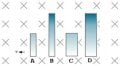
Exactly. What my "intuitions" have been insistent about here is the thought that we ought to be able to understand the operation of at least some dynamic devices by applying electrostatic principles to "snapshots" of electron concentration in such devices at various points in time. An example from earlier in this discussion:

rod in magnetic field 3.jpg

Here we have copper bars moving through a uniform magnetic field at a constant velocity; the gradients indicate electron concentration (the depth of Lool's "sea") at a given point in time, with darker meaning more electrons per proton in those areas. Taking an "electrostatic snapshot" of this electrodynamic device, we can easily see that making the rod longer will give us a greater potential (voltage) from one end to the other, while making the rod wider will not, because the number of surplus electrons (surplus meaning more than one electron per proton) at the top of rods A and C is the same (same shade of blue) --rod C obviously has more electrons at the top than A, but it also has more protons and the surplus is thus the same as the surplus in rod A. Ditto for rods B and D.

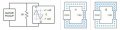
Now this is how we apply "electrostatic snapshot analysis of electrodynamic devices" to an actual AC circuit in the kid's amp:


pickup circuit 3.jpg

1. We explain that we can get electrons to move in a wire by (a) moving a magnet across the wire; (b) moving a wire across a magnet; or (c) putting a magnet and a wire close together and moving a piece of conductive metal -- like a guitar string -- through the magnetic field. (The kid "knows" what a magnetic field is because he has played around with magnets).

2. We explain that when the string goes up, the electrons in the wire are pushed one way, and when the string goes down they are pushed the other way. We explain that the higher the pitch, the faster the electrons change direction. And that when we hit the string harder, more electrons get moved in both directions because more magnetic force is being applied (as when the longer rods above cross more of the magnetic field, ie, more of the Xs in the drawing, and more electrons get pushed to the top).

3. Finally, we show him the two snapshots (at the right of the drawing above) and explain that the voltage readings on the scope at times t1 and t2 (which are backwards, but which we can make frontwards simply by exchanging the red and black probes) correspond to the lack of free electrons on the top of the circuit (at t1) and the surplus of free electrons on the top of the circuit (at t2).

4. Then we summarize: "You can think of current," we say, "as the flow of electrons that get all the way around the loop; in this case, very few (the darker blue dots). And you can think of voltage as a measure of the pressure caused by having too many or too few electrons in one spot versus another at any point in time (all the dots, dark and light) because electrons don't like standing around together; they repel each other just like the north poles of two magnets repel each other."


We can, then, use the same method to describe what happens in the power transformer, the output transformer, the speaker, and the vacuum tubes as well. Not to mention the capacitors. I really don't see how this "electrostatic snapshot analysis of an electrodynamic circuit" could be misleading or harmful to the kid. I've simply taken the usual description of the operation of the insides of a tube, and have extended it to the rest of the circuit. E is still IR, etc.

If anyone's got a better explanation for a ten-year-old with a tube guitar amp, now's the time. Otherwise, I'm going with something like the above and following it up with Ken Amdahl's, There Are No Electrons: Electronics for Earthlings ( http://www.amazon.com/dp/0962781592 ). I think that combo will give the kid a useful understanding of, and a healthy attitude toward, the whole subject. Then we can get on to the next subject: "Usonian Homes: Architecture through the Eyes of Frank Lloyd Wright." So much to do, and so little time...

Again, I thank you all for your valuable input.
 
Last edited:

Lool

Joined May 8, 2013
116
1. We explain that we can get electrons to move in a wire by (a) moving a magnet across the wire; (b) moving a wire across a magnet; or (c) putting a magnet and a wire close together and moving a piece of conductive metal -- like a guitar string -- through the magnetic field. (The kid "knows" what a magnetic field is because he has played around with magnets).
Correct, and no problems here

2. We explain that when the string goes up, the electrons in the wire are pushed one way, and when the string goes down they are pushed the other way. We explain that the higher the pitch, the faster the electrons change direction. And that when we hit the string harder, more electrons get moved in both directions because more magnetic force is being applied (as when the longer rods above cross more of the magnetic field, ie, more of the Xs in the drawing, and more electrons get pushed to the top).
Good enough for my liking.

3. Finally, we show him the two snapshots (at the right of the drawing above) and explain that the voltage readings on the scope at times t1 and t2 (which are backwards, but which we can make frontwards simply by exchanging the red and black probes) correspond to the lack of free electrons on the top of the circuit (at t1) and the surplus of free electrons on the top of the circuit (at t2).
This is the part that is very misleading. You keep going back to it no matter how many times we tell you it is not correct. You need to compare dominant effects with negligible effects. In this case the charge buildup is negligible and the current flow is dominant. In number 2 you describe the current flow back and forth correctly. In this point number 3, you mislead the kid. The current flow goes around the entire loop and through the pickup. If the charges were building up the way you are describing then insignificant current flows through the pickup, which is not true in reality.

4. Then we summarize: "You can think of
current," we say, as the flow of electrons that get all the way around the loop; in this case, very few (the darker blue dots). And you can think of voltage as a measure of the pressure caused by having too many or too few electrons in one spot versus another at any point in time (all the dots, dark and light) because electrons don't like standing around together; they repel each other just like the north poles of two magnets repel each other."
Here you say exactly what I predicted above, that you indicated current through the pickup is small. Why do you say here that very few electrons get all the way around the loop. This is dead wrong and it is just the opposite as we keep explaining. Very few electrons contribute to charge buildup and most contribute to current flow all the way around the loop.

So, let me make an attempt to explain where your confusion originates from. You keep claiming that voltage is due to charge, which is certainly true often enough. But it is not always necessary. One example, not the one I want to focus on, is light waves. There you have electric fields with no charges. A wave can exist on it's own and it is composed of photons, which are chargeless particles. But, let me explain the example I do want to focus on.

Take your example of a bar moving in a magnetic field. Imagine you are in outer space so there is no air, and get rid of the bar so that there is no bar. Imagine that you are in the same magnetic field and you move with the same velocity as the bar would have been moving if it were there, but it is not really there. Only you are there (hypothetically) measuring the potential and electric field caused by the magnetic field and your motion. You can still measure an electric field and potential using any measurement equipment you deem appropriate. That potential will be there even though there is no bar and no charges to build up. Why is this? This is not easy to answer, but it is basically a consequence of the theory of relativity which says that a magnetic field in one frame of reference can and will appear as an electric field in another frame of reference. Electric field implies potential, even if there are no charges

So again, you are trying to attribute the voltage from the pickup as being caused by the charges that buildup, but the charges that build up are a consequence of the EMF generated via Faraday's Law. Those charges that build up are not the essential part of the physics in term of energy transfer and power generation.

There is no way a kid is going to understand all this which is why we resort to the water analogy. The water analogy gets the flow aspect correct at the expense of getting the charge buildup wrong, but at least the most important part is retained. You are actually misleading the kid by making it seem that the least important part is the important thing to consider. You ARE misleading him with some parts of your model.

So, why are you going through all this trouble to make a model that will just mislead him? Don't worry about explaining a model. You know, you are allowed to tell him "I don't know". There are a lot of things we don't know as parents. If my kid asks me, "how can I write a beautiful symphony like Beethoven did?". I'll say, "I don't know how, but if you are willing to dedicate yourself to music for many years, you can learn it yourself, and I can help guide you to the information you will need".

Aren't you wondering yet why you can't get someone to climb aboard your train? Nobody wants to take the train to nowhere. Please don't put your kid on that train.
 
Last edited:

Thread Starter

Gerry Rzeppa

Joined Jun 17, 2015
170
...The current flow goes around the entire loop and through the pickup... Why do you say here that very few electrons get all the way around the loop?
Because I=E/R. E in the case of a real pickup rarely exceeds 2 volts peak-to-peak. So I is 2 volts divided by 1 megohm which is tiny.

If the charges were building up the way you are describing then insignificant current flows through the pickup, which is not true in reality.
I didn't say that the flow of electrons through the pickup is insignificant; it's the flow around the whole loop that is tiny. The pickup pushes enough electrons, first one way and then the other, to account for a voltage swing of 2 volts peak-to-peak, which we can see on a scope. But an ammeter connected in the circuit will read only about 0.000002 amp (even though there is a great deal of electron movement above and below -- but not through -- the resistor).
 
Last edited:

Lool

Joined May 8, 2013
116
Because I=E/R. E in the case of a real pickup rarely exceeds 2 volts peak-to-peak. So I is 2 volts divided by 1 megohm which is tiny.
That is 2 microAmps, which is tiny by some comparisons and quite large when you make other comparisons. It is all relative. The 2 microAmps is quite large compared to what is needed to discharge the very tiny surface charge accumulation. When people do electrostatic charge experiments involving much larger conductors than you see on wires and the resistor, they deliberately stand on special insulating glass plates and they also prefer to do these experiments in winter when humidity is low. A person wearing rubber shoes would have greater than 1 MOhm resistance to ground which is easily able to ruin such experiments. You would need 1 trillion Ohms preferably for your case of the resistor, which means you don't understand by a factor of 1 million. Numbers matter in science. When you measure with a scope, the probe has a couple of picoFarad capacitance and 1 MOhm resistance. Even the act of measurement completely throws off your circuit analysis in this case. Again, you are missing the critical aspects of understanding here.


I didn't say that the flow of electrons through the pickup is insignificant; it's the flow around the whole loop that is tiny. The pickup pushes enough electrons, first one way and then the other, to account for a voltage swing of 2 volts peak-to-peak, which we can see on a scope. But an ammeter connected in the circuit will read only about 0.000002 amp (even though there is a great deal of electron movement above and below -- but not through -- the resistor).
This paragraph is completely wrong. Current can not be significant in the pickup and then the whole loop have a tiny current ... and then "not through the resistor". The current is identically the same through the resistor, wires and pickup and it is 2 microAmps through all of them. Your description is completely wrong. It's just wrong. How many ways can we say it and explain it? It's wrong wrong wrong!
 

Thread Starter

Gerry Rzeppa

Joined Jun 17, 2015
170
Your description is completely wrong. It's just wrong. How many ways can we say it and explain it? It's wrong wrong wrong!
My argument is simple and straightforward. Given this undisputed description of motional EMF in a conductive rod moving through a magnetic field:

The magnetic force acting on a free electron in the rod will be directed upwards. As a result, electrons will start to accumulate at the top of the rod. The charge distribution of the rod will therefore change, and the top of the rod will have an excess of electrons (negative charge) while the bottom of the rod will have a deficit of electrons (positive charge). This will result in a potential difference between the ends of the rod.

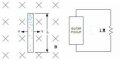
It seems to me that the two circumstances below are congruent:

congruent 1.jpg

The rod on the left moves back and forth in a magnetic field and this forces electrons to accumulate first at one end of the rod (where the electrons meet with big resistance) and then at the other end of the rod (where they meet with equally big resistance). Similarly, a guitar string on the right vibrates in a magnetic field and this forces electrons to accumulate first at one end of the big resistor, then at the other. In both cases this varying accumulation/dispersal of electrons results in a varying potential difference across the ends of the resistances. And in both cases current -- electrons flowing all the way around -- is very small (zero, in fact, on the left; maybe 0.000002 amps on the right).

In other words, the picture on the left is like my guitar when it's not plugged in; the picture on the right when it is. The two cases strike me as different only in degree, not kind. And not that different in degree either.
 
Last edited:

Lool

Joined May 8, 2013
116
I have no more words that could convince you. I've said everything I can think of to say. I've stated, explained, argued and pleaded.

You are demonstrating how a little bit of knowledge and a lot of stubbornness can be a dangerous combination.
 

Wendy

Joined Mar 24, 2008
23,798
The is no compression. There is an electric force generated, part of that conversion process I mentioned. but this is not static electricity.

Offer the electrons a path and they will flow. This in turn will create physical resistance of the wire moving through the magnetic field. You can demonstrate this by turning the shaft of a toy electric motor with the leads open and shorted.

Not sure where you got the compression idea from, but it is wrong. One force creates another, a magnetic force into an electric force in this case.
 

Thread Starter

Gerry Rzeppa

Joined Jun 17, 2015
170
Not sure where you got the compression idea from, but it is wrong.
I got it from the description of motional EMF which is common to, and undisputed, in books and on websites everywhere. Specifically, these words (in purple) that are not mine but are taken from one of those articles (and which are typical of the rest):

The magnetic force acting on a free electron in the rod will be directed upwards. As a result, electrons will start to accumulate at the top of the rod. The charge distribution of the rod will therefore change, and the top of the rod will have an excess of electrons (negative charge) while the bottom of the rod will have a deficit of electrons (positive charge). This will result in a potential difference between the ends of the rod.

I have no more words that could convince you. I've said everything I can think of to say. I've stated, explained, argued and pleaded.
It's true that you have been both diligent and more than patient. What would help at this point would be answering my argument point-by-point so I can see exactly where you think I'm going astray. In the hope that you'll be willing to do that, here's what I said above with the various points numbered. Since the argument is cumulative, you don't have to answer them all; you can stop after the explanation of your first negative response.

1. I'm assuming the statement in purple is reliable. Yes? If not, why not?

Now, given:


2. The rod on the left moves back and forth in a magnetic field and this forces electrons to accumulate first at one end of the rod (where the electrons meet with big resistance) and then at the other end of the rod (where they meet with equally big resistance). Yes? If not, why not?

3. Similarly, a guitar string on the right vibrates in a magnetic field and this forces electrons to accumulate first at one end of the big resistor, then at the other. Yes? If not, why not? How is this different from the rod?

4. In both cases this varying accumulation/dispersal of electrons results in a varying potential difference across the ends of the resistances. Yes? If not, why not?

5. And in both cases current -- electrons flowing all the way around -- is very small (zero, in fact, on the left; maybe 0.000002 amps on the right). Yes? If not, why not?

6. In other words, the picture on the left is like my guitar when it's not plugged in. The pickup is still "putting out" electrons, but they have nowhere to go and thus accumulate "at the ends" as electrons in the rod, which also have nowhere to go, accumulate. Yes? If not, why not?

7. The picture on the right is when [my guitar is plugged in]. The electrons still accumulate, but a small portion manages to flow (or push other electrons) all the way around resulting in a very tiny current. Yes? If not, why not?

8. The two cases strike me as different only in degree, not kind. After all, in both cases we're talking about motional EMF in terms of the movement of electrons in a circuit with a very large resistance. Yes? If not, why not?
 

Wendy

Joined Mar 24, 2008
23,798
Again, the electrons do not accumulate. It generates a EMF, a totally different thing. And that is all I'm going to say.

In math, start from one wrong supposition and you can prove anything. You have fixated on some wrong ideas, and neither I or anyone else can seem to tell you different.
 

Lool

Joined May 8, 2013
116
1. I'm assuming the statement in purple is reliable. Yes? If not, why not?
Yes, of course. No one disputed that. I explained the same thing in my own words. I went to even more detail by providing you two different ways to look at it. You can look at it in the stationary frame or in the moving frame of reference. Either way, an electric dipole field is created around the bar.


2. The rod on the left moves back and forth in a magnetic field and this forces electrons to accumulate first at one end of the rod (where the electrons meet with big resistance) and then at the other end of the rod (where they meet with equally big resistance). Yes? If not, why not?
No. Infinite resistance is not the same as 1 MOhm resistance. Why do you call 1M "equally big resistance"? It is not equally big. One is infinite and the other is 1 MOhm. How can you compare 1 with infinity? One is infinitely smaller than the other.

3. Similarly, a guitar string on the right vibrates in a magnetic field and this forces electrons to accumulate first at one end of the big resistor, then at the other. Yes? If not, why not? How is this different from the rod?
yes

4. In both cases this varying accumulation/dispersal of electrons results in a varying potential difference across the ends of the resistances. Yes? If not, why not?
I already answered yes to this, but I stressed that the charge is small and inconsequential for anything important. Why are we going over the same points over and over and over again.

5. And in both cases current -- electrons flowing all the way around -- is very small (zero, in fact, on the left; maybe 0.000002 amps on the right). Yes? If not, why not?
No, I already said 2 microamps is not small. How can you compare zero with 2? One is infinitely greater than the other.

6. In other words, the picture on the left is like my guitar when it's not plugged in. The pickup is still "putting out" electrons, but they have nowhere to go and thus accumulate "at the ends" as electrons in the rod, which also have nowhere to go, accumulate. Yes? If not, why not?
Yes. But, the pickup is not putting out electrons. The electrons are just being moved in the conductor. They move in response to the magnetic force generating EMF.

7. The picture on the right is when [my guitar is plugged in]. The electrons still accumulate, but a small portion manages to flow (or push other electrons) all the way around resulting in a very tiny current. Yes? If not, why not?
No. Now the electrons have a path to travel around and the current is not small. The idea of small and large is relative.

8. The two cases strike me as different only in degree, not kind. After all, in both cases we're talking about motional EMF in terms of the movement of electrons in a circuit with a very large resistance. Yes? If not, why not?
They are different in kind as well as degree. The left circuit has only one aspect to consider. Charge accumulation, but no current. The right picture has both charge accumulation and current to consider, but we typically ignore the charge as tiny and inconsequential. I have said time after time after time that the charge accumulation is a response to the emf and is not the cause of the emf. The charge does not drive the circuit. The EMF drives the circuit. That's why noone worries about the tiny tiny tiny surface charges.

So you have asked me to yet again say exactly the same things that I said before. You keep saying, "just answer this question" and I keep answering them. But, you dont like the answer so you ignore it. In my previous posts I try to explain why your view in wrong and I point out where you are making statements that are absolute untruths. You just ignore them and go back to your own statements. That tells me that you are either not reading what I say, or you are not understanding what I say. If you don't understand, then that tells you the areas you need to study to get to the point where you can understand this. I'm telling you exactly where your problems are. Focus on those revelations rather than insisting that your idea must be correct.

As I said, I have no more words to offer. This post has just been a restatement of the words I already provided. There is nothing new here. I answered yet again because you asked. But, I really have no other words to offer you.
 
Last edited:

Wendy

Joined Mar 24, 2008
23,798
And I disagree. Just because there is a force acting on a object does not mean it moves. The electrons do not "bunch up". They have a electric force imposed on them. If there is somewhere to move to (a closed circuit) they move in mass. But you do not have a atom sharing a valance electron.

With electronics it is important to think in terms of forces. No energy is expended until their is movement, until then it is potential energy.
 
Status
Not open for further replies.
Top