Facebook
 Google
 GitHub
 Linkedin
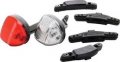
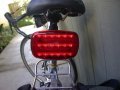
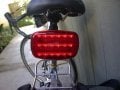
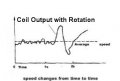 I have hacked the automatic LED safety flasher LED device on my bicycle and disconnected the
LED and instead inserted a schottky bridge rectifier and a 4500uF/6.3V capacitor to the generator coil (150-ohm DC resistance) that gets a kick with every pass of four small magnets mounted on the spokes.
I attached two wires and I now have a generator output I want to use to charge a Li-Ion battery in my custom made light in front of my bike basket.
So, I will use this generator output to charge a 18650 Li-Ion 2200mAH battery to make an emergency headlight/ nighttime safety flasher instead.
I must pedal fairly at a good pace to get the battery to charge at all.
If I use the raw output of the generated DC voltage and connect it straight to the Li-Ion cell, then the voltage must rise to >= the battery voltage before the battery would get any charge.
If I instead use a very low-voltage boost converter (MCP1624) that starts operation at as little as .63V, it will boost the voltage up to 4.18V in small bursts and the slightest movement of the bike will generate some charge.
Which is more effective/efficient at charging?
Last edited: