Mine 1st Welcome thread and asking for help

Thread Starter

Formingus

Joined Nov 19, 2014
37
Which capacitors are you measuring and what are their values? How are you measuring them? Not all multimeters are capable of measuring polarized capacitors. For example, my MS8268 multimeter will not measure aluminum electrolytic capacitors, but it has no issue measuring ceramic or film capacitors. Also, make sure to check the range of the meter to ensure the capacitors in question are within this range.
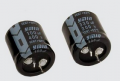
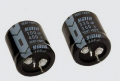
Some of them are 2.2uf -50v and they are aluminum i think upload_2014-11-20_18-12-22.png
Range was or 2.2uf on 20uf so i think is correct
Mine multimeter is CT9890. BTW when we are talking about multimeter , notice that i can't measure capacitor 1000uf-16v present on board - i have only 20uf-200nf and 20nf
Checked some multiumeter like fluke101 but they cant measure amper. Which multimeter you will suggest to buy ? Normally that can measure those things and to not be extremlly expensiv ? In mean while please continue to help me with this problem
 

Attachments

Thread Starter

Formingus

Joined Nov 19, 2014
37
If you've already gone to the trouble of removing them from the PCB, I'd replace them with fresh ones. It will only be a few dollars, and will extend the life of the device. Capacitors grow old. Be careful to check the physical dimensions and lead spacing of the new replacements, in addition to the voltage and capacity ratings.
Purchased set on ebay and waiting for them , i have 1 small problem - when i remove 1 of them capacitor dropped so i dont know the polarity how to put it back. How to found right way to put capacitor back ? Thanks
 

wayneh

Joined Sep 9, 2010
18,117
Purchased set on ebay and waiting for them , i have 1 small problem - when i remove 1 of them capacitor dropped so i dont know the polarity how to put it back. How to found right way to put capacitor back ? Thanks
Are there no clues at all on the board? Sometimes in addition to a "C3" or such label there will be a little +, -, or other indication of the polarity orientation. My last project had hash marks on the ground side half of the circle showing where the cap went. Maybe post a photo - someone else might notice something.
 

wayneh

Joined Sep 9, 2010
18,117
Which multimeter you will suggest to buy ?
That's a whole discussion on its own. The one I use was free at Harbor Freight.

For caps that large, charge it up with a 9V battery and see how long it takes to discharge, say from 7V to 3V, into your meter. Compare your result to some fresh caps. Use the fresh ones to "calibrate" your meter. Turns out the series resistance of my meter is 1MΩ, so I can measure down to ~10µF fairly well. Several seconds, enough to measure.

If the cap cannot be charged - if it is shorted - that's all you need to know. If it does not hold that charge for minutes or longer without your meter attached, that is also a sign the cap is no good. Finally it should exhibit the appropriate time to discharge into your meter, considering its µF rating.

This all said, capacitors that are old have an increasing ESR long before any other fault can be detected. I would not use an old cap until it had been tested for ESR. I built my own ESR meter and I was happy with the result. There was a DIY kit mentioned in these forums not long ago that sounds like a very nice option for an inexpensive meter. I can probably find it if you're interested.
 

Thread Starter

Formingus

Joined Nov 19, 2014
37
Are there no clues at all on the board? Sometimes in addition to a "C3" or such label there will be a little +, -, or other indication of the polarity orientation. My last project had hash marks on the ground side half of the circle showing where the cap went. Maybe post a photo - someone else might notice something.
Only white line in middle of 2 capacitor legs
 

Thread Starter

Formingus

Joined Nov 19, 2014
37
That's a whole discussion on its own. The one I use was free at Harbor Freight.

For caps that large, charge it up with a 9V battery and see how long it takes to discharge, say from 7V to 3V, into your meter. Compare your result to some fresh caps. Use the fresh ones to "calibrate" your meter. Turns out the series resistance of my meter is 1MΩ, so I can measure down to ~10µF fairly well. Several seconds, enough to measure.

If the cap cannot be charged - if it is shorted - that's all you need to know. If it does not hold that charge for minutes or longer without your meter attached, that is also a sign the cap is no good. Finally it should exhibit the appropriate time to discharge into your meter, considering its µF rating.

This all said, capacitors that are old have an increasing ESR long before any other fault can be detected. I would not use an old cap until it had been tested for ESR. I built my own ESR meter and I was happy with the result. There was a DIY kit mentioned in these forums not long ago that sounds like a very nice option for an inexpensive meter. I can probably find it if you're interested.
Of Course i am interested.
As i say on board is capacitor with 1000uf/16v or 22uf/400v and mine multimeter can measure only 20uf-200-nf and 20nf. So need some multimetr that can measure those things as well. One mine question was dismissed and need to know.
Is normal when pcb is connected to power cord i get current hit when i touch top of capacitor ?

BTW i am uploading too much photos, so after we finish this thread so mine problem get solved should i delete those attachment to save forum space or to lkeave for other new members that maybe need ?
 

wayneh

Joined Sep 9, 2010
18,117
Of Course i am interested.
See here.
Is normal when pcb is connected to power cord i get current hit when i touch top of capacitor ?
Normal. (don't do it!) Oh wait, by "top" do you mean the metal can, not the terminals?
BTW i am uploading too much photos, so after we finish this thread so mine problem get solved should i delete those attachment to save forum space or to lkeave for other new members that maybe need ?
Leave them. I believe the older threads eventually get archived and this might automatically remove the images. But don't worry about it in the meanwhile.
 
Last edited:

Thread Starter

Formingus

Joined Nov 19, 2014
37
See here.
As i say on board is capacitor with 1000uf/16v or 22uf/400v and mine multimeter can measure only 20uf-200-nf and 20nf. So need some multimetr that can measure those things as well. One mine question was dismissed and need to know.
Thank you appreciated , i purchased this one after few hours research over internet
http://www.aliexpress.com/snapshot/6361431981.html
What do you think about it ?
Support Capacitance Range

200pF ±2%
2000pF
20nF
200nF
2uF
20uF
200uF
2000uF
20mF


Normal. (don't do it!) Oh wait, by "top" do you mean the metal can, not the terminals?
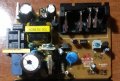
When i touch with finger check image


Leave them. I believe the older threads eventually get archived and this might automatically remove the images. But don't worry about it in the meanwhile.
Ok i will

Now about mine pcb problem any idea ?
 

Attachments

wayneh

Joined Sep 9, 2010
18,117
What do you think about it ?
I wish I had one like that, but I would have chosen one that can also do the ESR testing. That is more useful for detecting an old electrolytic capacitor that needs replacement.
Now about mine pcb problem any idea ?
I checked a few electrolytic capacitors I had handy, and none of them showed continuity between the end cap - the part you touched - and the terminals. If you are detecting current there, it is very suspicious and likely indicates a failed capacitor.
 
Top