Microsofts new Quantum Computing Processor

nsaspook

Joined Aug 27, 2009
16,249
https://news.microsoft.com/source/f...1-chip-carves-new-path-for-quantum-computing/

Microsoft today introduced Majorana 1, the world’s first quantum chip powered by a new Topological Core architecture that it expects will realize quantum computers capable of solving meaningful, industrial-scale problems in years, not decades.
That announcement is totally over the top marketing. Most of the top people in the field think it's BS. It's put up or shut up time for this.

https://www.nature.com/articles/d41586-025-00683-2
Microsoft quantum computing ‘breakthrough’ faces fresh challenge
Analysis pokes holes in protocol that underpins Microsoft’s claim to have created the first topological qubits.

Microsoft unveiled its 'Majorana 1' quantum chip in February.Credit: John Brecher for Microsoft
A physicist has cast doubt on a test that underlies a high-profile claim by Microsoft to have created the first ‘topological qubits’, a long-sought goal of the company’s quantum-computing effort. The critique comes amid mounting speculation about the validity of Microsoft’s claim.
Microsoft announced the breakthrough, which could lead to a quantum computer that is more resistant to information loss than with other approaches, on 19 February. Without a peer-reviewed paper backing up the claim, some researchers were sceptical. An accompanying paper in Nature described a method to measure the read-out from future topological qubits, but did not offer proof of their existence1.
“While the Nature paper outlined our approach, it does not speak to our progress,” a Microsoft spokesperson said in a statement. The paper was submitted almost a year before it was published and since then “tremendous progress has occurred”, they said. (Nature’s news team is independent of its journals team.)
In the latest critique, posted as a preprint2, Henry Legg, a theoretical physicist at the University of St Andrews, UK, raises concerns about a test that Microsoft uses to look for Majoranas, so-far undiscovered quasiparticles arising from the collective behaviour of electrons that are needed for the topological qubits to work.
Known as the topological gap protocol (TGP), the test is not mentioned in the 19 February Microsoft announcement. But the company has subsequently indicated to Nature’s news team, and in a comment online, that it created the topological qubits using the TGP. “Since the TGP is flawed, the very foundations of the qubit are not there,” says Legg.
Chetan Nayak, a theoretical physicist leading Microsoft’s quantum computing effort in Redmond, Washington, stands by the qubit claim. “The criticism can be summarized as Legg constructing a false straw man of our paper and then attacking that,” he says.
A Majorana test
Majoranas have previously proved elusive. Several claimed sightings later proved to be Majorana mimics, in some cases leading to retractions.
In 2022, Microsoft researchers posted a preprint reporting that the TGP could indirectly identify Majoranas with ‘high probability’; the preprint was later published in Physical Review B (PRB)3. The test relies on electronic measurements of microscopic sandwiches of ultracold metal. If the measurement exhibits a specific feature characteristic of Majoranas, the device ‘passes’ and is said to host the elusive particles.
Legg and his colleagues at the University of Basel in Switzerland went on to report that the test could be fooled by false positives, doppelgangers with the electronic features of Majoranas that lack their useful properties4.
In his latest critique, Legg reports further flaws with the protocol. Examining data in the PRB paper, he saw large variations in the external conditions, such as the range of magnetic field strengths, when electronic measurements were taken. The test was designed to measure the intrinsic properties of the device — and thus whether it contained Majoranas. Instead, Legg found that varying conditions made the test an inconsistent weathervane.
Nayak does not accept this criticism. “The ranges come from an initial scan we describe, and we always analyse the full data,” he says.
Another problem, says Legg, is that a key parameter in the code that implements the protocol, which Microsoft shared publicly, differs from the description in the PRB paper. When asked by Nature’s news team about the issue, Nayak said: “Legg claims there’s a difference between our described protocol and the implemented code. This is incorrect, so this is a non-issue.” Legg says that Nayak previously acknowledged this difference in an e-mail to him and planned to issue a correction, but changed his mind.
https://arxiv.org/pdf/2502.19560

https://www.newscientist.com/articl...e-for-claiming-it-has-a-new-quantum-computer/
Last month Microsoft announced, with fanfare, that it had created a new kind of matter and used it to make a quantum computer architecture that could lead to machines “capable of solving meaningful, industrial-scale problems in years, not decades”.

But since then, the tech giant has increasingly come under fire from researchers who say it has done nothing of the sort. “My impression is that the response of the expert physics community has been overwhelmingly negative. Privately, people are just outraged,” says Sergey Frolov at the University of Pittsburgh, Pennsylvania.
But for Frolov, the claim that imperfect results from the past can be neglected because the firm has gone on to build more sophisticated devices rests on faulty logic. Legg shares this view. “Fundamental problems of disorder and material science aren’t going to go away just because you start fabricating some fancier device,” he says.
First, it's a quasiparticle meaning it's not real but is a mathematical construct to explain collective behavior effects of many particle interactions like positive charged electron holes are used to explain electron conduction in doped semiconductors.
 
Last edited:

Motanache

Joined Mar 2, 2015
652
I followed this release from the beginning.
It's a pretty small memory, not a processor.
It is clear that Microsoft are visionaries.

Ever since my quantum physics classes, I have looked at the quantum computer with disbelief and disappointment.

Why Majorana entangled is considered a "quantum" phenomenon
and the transistor, the diode would not be considered "quantum" devices?
 

Motanache

Joined Mar 2, 2015
652
According to Einstein, the highest known speed is the speed of the world in a vacuum c=3*1-^8 m/s
Do you think it is possible to transmit information at a higher speed than this?

The speed of the electric current through the conductors should be about c/3.
Electrons go slower, they are more lazy. Drift speed.

Processors have cache memory.
So that the electrical impulse does not waste time from the CPU to the RAM, first check if a fleg is set that the information was previously accessed and is in the cache.

That's why I don't understand what you think will make the quantum processor faster?
 

nsaspook

Joined Aug 27, 2009
16,249
According to Einstein, the highest known speed is the speed of the world in a vacuum c=3*1-^8 m/s
Do you think it is possible to transmit information at a higher speed than this?

The speed of the electric current through the conductors should be about c/3.
Electrons go slower, they are more lazy. Drift speed.

Processors have cache memory.
So that the electrical impulse does not waste time from the CPU to the RAM, first check if a fleg is set that the information was previously accessed and is in the cache.

That's why I don't understand what you think will make the quantum processor faster?
No, you can't transmit information at a higher speed but that's not what a quantum processor is about.

Analogy time.
It's like the generation of a very high speed sine wave of a fixed amplitude and frequency using a digital computer connected to a 8-bit DAC (digital to analog converter). As a digital process, we can compute, at 'real-time' (using complex math), the digital values need to generate a sine wave output on a device like a DAC or we can precompute those values, offline of the real-time compute process of sine wave generation, put them in a values table (a array of data) and just read the data values in sequence (index the array with a simple index integer) to generate the sine wave in a DAC.
This uses much less computing power and is "faster" because we could pre-compute many tables for various sine wave amplitudes and frequencies and have them simultaneously generate a different wave (function) to each different DAC, with one array index variable being used to sequence many value arrays, all at the same time.

The Quantum computing process gives us a equivalent type way to simultaneously generate different waves. To use this ability we need to formulate our problems to match this type of simultaneous different wave (function) process but there are only a limited set of problems (today) that meet this criteria so the actual usefulness of QC might always be limited to a narrow set of problems.
 
Last edited:

Motanache

Joined Mar 2, 2015
652
" sine wave of a fixed amplitude and frequency "
I like to start with simple things
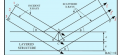
1743250458048.png
Bragg diffraction. Electrons seem to behave like light, like waves.
This is why a virus cannot be seen under the optical microscope because it is smaller than the wavelength of light.

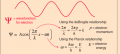
1743250837484.png
The wave function of the electron
What conclusion can we draw from Bragg diffraction?
As each particle has an associated wave. And that the frequency of this wave depends on the mass and speed of the particle. de Broglie. But the amplitude of the wave?
 

Motanache

Joined Mar 2, 2015
652
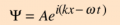
1743251240505.png
We write this in exponential form:
1743251620672.png

This is what you call complex mathematics, i.e. complex numbers i=J=(-1)^0.5

Quantum superposition and if Schrodinger's cat still lives?
 

nsaspook

Joined Aug 27, 2009
16,249
" sine wave of a fixed amplitude and frequency "
I like to start with simple things
View attachment 345614
Bragg diffraction. Electrons seem to behave like light, like waves.
This is why a virus cannot be seen under the optical microscope because it is smaller than the wavelength of light.

View attachment 345615
The wave function of the electron
What conclusion can we draw from Bragg diffraction?
As each particle has an associated wave. And that the frequency of this wave depends on the mass and speed of the particle. de Broglie. But the amplitude of the wave?
Off topic, start you own thread.
 

Motanache

Joined Mar 2, 2015
652

1743253595280.png

Does this information travel instantaneously faster than the speed of light?

that chip from Microsoft is based on this phenomenon.

Two electrons at the ends of a material become quantum-correlated as spin.

I know how they measured or mathematically deduced the speed of information transmission higher than the speed of light in a vacuum, but I don't believe that!

So those who speak of speeds greater than the speed of light are not "rabling"?
I made an introduction to invite others to the discussion.

The functioning of the chip is based on this. On Majorana entanglement. What is rambling?
 
Last edited:

nsaspook

Joined Aug 27, 2009
16,249

View attachment 345622

Does this information travel instantaneously faster than the speed of light?

that chip from Microsoft is based on this phenomenon.

Two electrons at the ends of a material become quantum-correlated as spin.

I know how they measured or mathematically deduced the speed of information transmission higher than the speed of light in a vacuum, but I don't believe that!

So those who speak of speeds greater than the speed of light are not "rabling"?
I made an introduction to invite others to the discussion.

The functioning of the chip is based on this. On Majorana entanglement. What is rambling?
It's rambling because most of it is off the topic of quantum computing and the MS technology specifically. Stop the FTL entanglement rambling BS on this thread.

Read this thread https://forum.allaboutcircuits.com/...r-than-the-speed-of-light.186645/post-1729705
 
Top