Measuring Natural Gas Pressure

Thread Starter

james211

Joined May 29, 2012
291
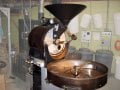
Its been brought to my attention that natural gas pressure can be measured with software and the use of some phidget hardware. I have a coffee roaster and I'd love to be able to measure the gas pressure so it can be logged in the software. This helps with repeating roasts. The software company has posted the following requirements. What I don't know is where to find a sensor that might work. The pressure I'd be measuring would be quite low, 0.1 - 0.2 psi. If anyone has any recommendations I'd appreciate it.

From the support site of the software I'm using:
Gas pressure will always be measured as a percentage. We do not support other units, as conversion between them is error-prone. Using percentage rather than other units is also in-line with our existing strategy for Giesen, Loring and Coffeetool.

This is a list of specifications that a gas pressure meter must adhere to, in order to get the best results in conjunction with Phidgets boards.

Pressure meter with an output range from 0-5V (preferred) or 4-20mA.
The output of the pressure meter must be calibratable. e.g. if the meter measures from 0-4 bar and the pressure from the roaster is 0-2 bar we must be able to set the input maximum on the pressure meter on 2 bar. Note: If this is not possible, it means that the RI will show incorrect values if the max/min value can't be reached)
The pressure output signal is expected to be between 0 and 100%. In the above example 0 bar is 0% and that 2 bar is 100%.
If the pressure meter outputs Volts (0-5V), one can connect it directly to a Phidgets 1018 or Phidget 1019 via a 3-pin 30XX sensor cable (XX means that there are different length available).
If the pressure meter outputs Milli-Ampere (4-20mA), one needs a Phidgets 1018 or Phidget 1019 as well as a Phidget 1132 (there is also an acrylic enclosure available).
There are active and passive 4-20mA loops. Which defines the physical location of the ground. Please refer to the the Phidgets 4-20mA Interface Primer which contains wiring diagrams.
 

wayneh

Joined Sep 9, 2010
18,091
Forgive me but I cannot help but question this strategy. First, the pressure at the burner should be a regulated pressure. To achieve consistency it might make more sense to improve the regulator rather than measure it.

Secondly, isn’t temperature really the issue? Temperature is easier to measure with precision and to my thinking is much closer to measuring the critical parameter. Pressure may be interesting but it will take a lot of study to make use of the data.

That all said, it should not be hard to find the sensor you need. There are even single chip sensors that mount on a PCB. I’ve seen them in Keurig coffee machines for instance.
 

shortbus

Joined Sep 30, 2009
10,050
Secondly, isn’t temperature really the issue? Temperature is easier to measure with precision and to my thinking is much closer to measuring the critical parameter. Pressure may be interesting but it will take a lot of study to make use of the data.
Oxygen free copper wire for coffee. More nonsense for people with more money than brains.
 

Thread Starter

james211

Joined May 29, 2012
291
If you know the exact pressure you need to be at, the easier it is to replicate a roast. Yes, the temperature is crucial, but its significantly easy to overshoot if you give just the slightest amount too much gas. The really expensive high-end roasters ($50,00+) have this built in and it makes a huge difference.

I've found loads of sensors out there for air and non-combustible gases, and I've found ones for gas, I just want to make sure I'm getting a sensor that will definitely work with such low pressure. They aren't cheap, so if I buy the wrong one I'm probably screwed.

Figured maybe with all the brains on this site, that someone would be able to give me some guidance.
 

wayneh

Joined Sep 9, 2010
18,091
If you know the exact pressure you need to be at, the easier it is to replicate a roast. Yes, the temperature is crucial, but its significantly easy to overshoot if you give just the slightest amount too much gas. The really expensive high-end roasters ($50,00+) have this built in and it makes a huge difference.

I've found loads of sensors out there for air and non-combustible gases, and I've found ones for gas, I just want to make sure I'm getting a sensor that will definitely work with such low pressure. They aren't cheap, so if I buy the wrong one I'm probably screwed.

Figured maybe with all the brains on this site, that someone would be able to give me some guidance.
Something like this is getting close. Just go to the big parts suppliers such as Mouser, Digikey, Newark and use their search features.

https://www.digikey.com/products/en...73&quantity=0&ColumnSort=0&page=1&pageSize=25
 

LesJones

Joined Jan 8, 2017
4,511
If the gas distribution in your country as the UK then there is a pressure regulator fitted before the input to the gas meter so within reason the pressure in the distribution system does not effect the pressure in your house. The gas supply companies rely on the pressure being regulated accurately as the meter measures the volume of gas. It is the mass of the gas used that they need to know so a pressure change would effect the mass of gas used for a volume measured by the meter. They even add a correction on the bill to take into account the average temperature and atmospheric. (Remember Charles law and Boyles laws from when you went to school.)

Les.
 

Janis59

Joined Aug 21, 2017
1,894
Oh You gave a true riddle of 0,1 psi! Start to convert to the NORMAL units recognized by that international agreements what America had undersigned century ago. 1psi=0,07 atmospheres, so 0,1 psi=0,007 kg/cm or 0,0007 MPa or 7 kPa. Anyway not clear enough. Convert to Torr, 0,007 kg/cm2*760=4,9 Torr. Aha, that is more undertandable. The region in which still is capable work of plane discs structure of double sylphon, what with micrometric screw may measure so far as 0,1 Torr (patent of 60~ies of our institution). As well that range where direct readings of Pitot tube may be impossible but microtube of double expansion may be rather accurate (it potentially may work under 1E-5 Torr as the only direct measurement instrument going so far.
Try to calculate bit more clear, 0,1 psi=0,007 atm but 10 atm = 1000 mm/H2O thus the 0,1 psi=1000/10*0,007=0,7 mm of water level. Yes, for sure You ought use a double tubes.
Reading is another opera, of course one may try to play with capacitative or in some cases even inductive reading, but better instead use the cheapest videocam for few bucks, and computer recognizing the level heigth by meanhs of LabView software. At least this are well checked as stable and trustable reading method. We are reading in this manner the old russian vacuum meters. Just Varian, Leybold, Edwards etc vacuum meters cost about 2-6 K& and the sensor 1-2 k$ whilst the russian measurer cost 20$ and sensor 10$. I am more than sure the metrological qualities of it is class below, but the ORDER it sure shows right, and 99% of applications need no more.
So, and now the last chance - in the interval of 0,1-100 Torr well works Pirani sensor in constant temperature regime, or 10-500 Torr if in constant current regime. Pirani sensor by default is the oldy-goody Edisson incandescent lamp with glass bubble eliminated. The only problem that it is heavily dependent of gas chemical composition. Your calibration will be lost if change the gas procentage. And it is rather far from being linear (yet that thing computer may linearize/recalculate. The last method, if You atre interested in nothing else but methane, it is flammable. Thus, make a constant current on filament, and measure the resistance, because burning reaction on the spiral will hardly rising the temperature of filament. By the way, probably this is the stopper why Pirani is not best choice for methane if the air is surrounded. Some years ago I bought for some 20$ China device for flammable gas detection. My intent was use it as cheap vacuum leak detector when chamber is filled by 90% N2 and 10% H2. It works well and is rather sensitive. Probably the cheapest is to obtain similar and re-calibrate bon the methane?? Or use a standard e-bay devices for mining workers warning. Them uses some special sensor (dont know what) and are already calibrated over methane.
 

Janis59

Joined Aug 21, 2017
1,894
RE:""I have a coffee roaster and I'd love to be able to measure the gas pressure""
Seems the three centuries old measuring unit had produced the misunderstanding. The any home appliance using the gas are working: if LPG then 0,5 kg/cm2 and if methane then 0,1-0,2 kg/cm2. Thus first has a apperture of 0,4-0,6 mm depending on power, but second has 0,8-1,1 mm hole drilling.. If You system is like that, it is sure sign that pressure ought be the aforementioned and not those in viscouus vacuum regime as You wrote beforehand. More over, vacuum never will get out the pipe, thus may be You mistaken between gas pressure and gas RELATIVE pressure, what means if You have say 0,01 kg/cm2 it MEANS You have in fact 1,01 kg/cm2. Then the measuring methods are absolutely another as I told in previous messsage.
As more accurate one will describe his problem, as more accurate will get the answers. Thats `GIGO principle`.
 

ebeowulf17

Joined Aug 12, 2014
3,307
Wow, you guys really pounced on this variable pressure thing.

Yes, the pressure throughout the building should be regulated reasonably well. Beyond that, there's usually a regulator right where the gas line gets to the roaster.

However, contrary to what you all seem to expect, most gas roasters have variable valves, whether manual or electromechanical, and they reduce the flow of gas through the burner. When you reduce flow through a fixed orifice, the pressure drop across that orifice drops, so you can measure the pressure IN BETWEEN the control valve and the burner and get a good, nearly instantaneous indication of your "heat setting." This does indeed make it MUCH easier to control the roast with predictable results.

The problem with using temperature alone is that the response time of the system as a whole is far too slow. By the time temperature measurements tell you something is off track, it can be way too late.

I was never logging pressure digitally, only using analog gauges as a visual reference when moving between set points, so I don't have any useful advice on sensors, but I can confirm that this is a worthwhile endeavor, at least in the coffee roasting realm.
 

BR-549

Joined Sep 22, 2013
4,928
Maybe a mass flow sensor? Maybe two....one before and one after air mixing. Or one for gas...one for air before mixing. One on exhaust stack might be interesting.

Do they still roast in batches? I would have thought a continuous process for continuity.
 

ebeowulf17

Joined Aug 12, 2014
3,307
Maybe a mass flow sensor? Maybe two....one before and one after air mixing. Or one for gas...one for air before mixing. One on exhaust stack might be interesting.

Do they still roast in batches? I would have thought a continuous process for continuity.
It's like whiskey, beer, and so many other things. The mass produced stuff is run in continuous roasters, which are fascinating technological marvels in their own right.

Small batch roasters are preferred (and also the only economically viable option) for "craft" roasting, which ranges all the way from people are artistic virtuoso geniuses of fine coffee, all the way to Starbucks, depending on who you ask. Continuous roasting is for places like Folgers, Maxwell House, etc.

I really enjoyed roasting on a small scale where it's easier to experiment and explore all the subtleties of each new coffee. Not that you can't experiment at a larger scale, but it's not difficult and more expensive.
 

Reloadron

Joined Jan 15, 2015
7,866
I was never logging pressure digitally, only using analog gauges as a visual reference when moving between set points, so I don't have any useful advice on sensors, but I can confirm that this is a worthwhile endeavor, at least in the coffee roasting realm.
There was a thread on this subject awhile back and I came away amazed at what went into roasting coffee beans. While I appreciate really good beans and making blends and we grind our own beans I never thought beyond that. The previous thread and this thread have been enlightening.

Ron
 

ebeowulf17

Joined Aug 12, 2014
3,307
There was a thread on this subject awhile back and I came away amazed at what went into roasting coffee beans. While I appreciate really good beans and making blends and we grind our own beans I never thought beyond that. The previous thread and this thread have been enlightening.

Ron
That was an interesting thread. I posted a circuit that I thought would help on that one and was a little disappointed that there was no response. Guess the thread starter had already checked out before I got my circuit figured out. Oh well.

I don't know where you're located, but if you've never been to a micro-roaster, you should check it out. Many small roasting operations have their roaster right there in the coffee shop where you can see it in action.

Manual roasting requires a lot of attention, so I'd ask you not to disturb the roaster while he/she is working on a batch of coffee, but most roasters enjoy talking about their craft and would answer any questions you might have in between batches.

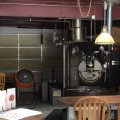
Here are a couple pics of "my" old 1957 Probat roaster. I didn't own the shop or the roaster, but it felt like mine - a labor of love, for sure! You can see that it's only a few feet from a seating area, with only a concrete bar in between.
IMG_5050.JPG IMG_5051.JPG
 

Reloadron

Joined Jan 15, 2015
7,866
Thanks for sharing that, pretty cool. I live in the greater Cleveland, Ohio suburbs where we have no shortage of micro-breweries but I'll have to look for coffee roasting.

On another note I live on a plain residential neighborhood road. Interesting is on my side of the street the natural gas is a low pressure line and right across the street is a high pressure line. On the high pressure side each house has an outside regulator while on this side no regulators so I assume a large regulator somewhere up the street. When there was a leak at my driveway apron they came, dug it up and patched it without even turning the gas main off. Surprised me but the pressure is real low, less than 1 PSIG as they measure it in inches of water column.

Ron
 
Last edited:

ebeowulf17

Joined Aug 12, 2014
3,307
On another note I live on a plain residential neighborhood road. Interesting is on my side of the street the natural gas is a low pressure line and right across the street is a high pressure line. On the high pressure side each house has an outside regulator while on this side no regulators so I assume a large regulator somewhere up the street. When there was a leak at my driveway apron they came, dug it up and patched it without even turning the gas main off. Surprised me but the pressure is real low, less than 1 PSIG as they measure it in inches of water column.
Oh, man. That brings back memories of when we were preparing the building and getting ready to install the roaster. It's been too long - I don't remember any numbers anymore - but we needed a fair bit of gas to run the roaster (I think maybe it was 150k Btu) and there was only low-pressure gas on the mixed residential/commercial street we were on. As a result, we needed rather large, expensive pipes run for great lengths - I think they were 4" ID gas pipes through our building and all the way out to the street.

One street over, there were higher pressure gas lines which would've provided more than enough gas flow for our needs through the existing pipes (3/4" or something close to that.) My boss just about lost his mind when he saw the estimates for all the plumbing upgrades we needed. He tried so hard to convince the gas company to bring the higher pressure gas over to us, but they weren't interested, so we ended up with huge gas lines and a big plumbing bill!
 

Reloadron

Joined Jan 15, 2015
7,866
I don't know the place personally, but it looks like there's a shop called "Duck - Rabbit Coffee" with seating just a few feet from the roaster, just like in my old shop:

https://www.yelp.ca/biz/duck-rabbit-coffee-cleveland?start=20

Not bad and not that far. Close to the West Side Market which is a pretty cool large market place with dozens of vendors from vegetables, to bakery, to meats and poultry. We get there every now and then and take visitors there. The Rock & Roll Hall of Fame and West Side Market are common stops. Thanks for passing that along. I liked the reviews and the one that mentioned the only way they could get more stars is if they served half and half rather than whole milk. Great with me as I never add anything to my coffee. :)

Ron
 
Top