Hi, I'm trying to create an audio amplifier using two TL072 ics. However, the simulation gives me a maximum gain of only +4.
What might be the issue here?
TL072 would make a very poor speaker amplifier.
You can use one stage of TL072 as a preamp and the second stage as a driver amp. Then feed this into an LM386 amplifier to drive an 8 Ω loudspeaker.
TL072 is rated for an output if 10mA. Driving an 8-Ohm speaker, that is at most 0.0008W. You need about 0.5W to get reasonable sound levels from a speaker.
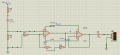
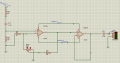
I am surprised to hear you got a max of 4 from the first circuit going by the schematic. The attenuation on the input with the 50 and 330 Ohms and the 4.7uf cap should have really killed the volume down to almost nothing audible. Add to that the 4.7uf in series with the speaker I'd be surprised if you could hear anything.
The impedance of a 4.7uf cap even at 40Hz is almost 850 Ohms, so the attenuation on the input and on the output must be horrendous. And that's at 40Hz when usually we want an audio amplifier response to go down to 20Hz (although 40Hz isn't that bad for a cheap amplifier).
Maybe you can post a new schematic. I for one and others here would like to see what you changed to get a higher level output.
The opamps can have huge gain. the problem here is matching impedance of the opamp to the load.
driver circuit (amp) need to have output impendence lower than the load. and load is 8 Ohm speaker but the Opamp output impedance is much higher (kOhms).
i am guessing that this is a learning exercise...
the second OpAmp is unity gain and same type as previous one so it does nothing.
and when the speaker is low impedance, one could use audio transformer to improve impedance matching.
The opamps can have huge gain. the problem here is matching impedance of the opamp to the load.
driver circuit (amp) need to have output impendence lower than the load. and load is 8 Ohm speaker but the Opamp output impedance is much higher (kOhms).
It's also interesting that the input resistors and capacitor attenuate down to 0.36 at 40Hz. That means low frequency cutoff amplitude is too low for a regular audio amplifier. 0.36*7 is about 2.5, so the max gain as it stands is only about 2.5. Then the output capacitor also limits the gain into an 8 Ohm speaker down to about 0.0094 at 40Hz, bringing the total voltage gain to about 0.024 which is nuts.
The opamps can have huge gain. the problem here is matching impedance of the opamp to the load.
driver circuit (amp) need to have output impendence lower than the load. and load is 8 Ohm speaker but the Opamp output impedance is much higher (kOhms
Actually, the output impedance of an opamp, when operated within it’s limits, is very low. It is the current capability that is lacking when driving a low impedance load.
125Ohm is indeed with open loop, at 1MHz and with zero output current... not quite the audible range and not very useful if output current is zero... but things should be better closer to DC. according to charts, at current of 24mA voltage drop is some 2V so 2V/0.024A=83 Ohm.
regardless the value is still way higher than speaker impedance. it is like trying to push sofa with a tip of a fishing rod. the stiffer the load, the stiffer the driver need to be. opamp is simply not meant to drive directly loads this low.
From a learning standpoint, there are two opportunities here. First, that simulations are not always reflective of the real world and, second, that even when simulations are reasonably faithful, it is not always easy to properly interpret them. This is why I asked the TS to look more closely at the simulations results to see which (possibly both) of these situations applies.
TL072 would make a very poor speaker amplifier.
You can use one stage of TL072 as a preamp and the second stage as a driver amp. Then feed this into an LM386 amplifier to drive an 8 Ω loudspeaker.
I am surprised to hear you got a max of 4 from the first circuit going by the schematic. The attenuation on the input with the 50 and 330 Ohms and the 4.7uf cap should have really killed the volume down to almost nothing audible. Add to that the 4.7uf in series with the speaker I'd be surprised if you could hear anything.
The impedance of a 4.7uf cap even at 40Hz is almost 850 Ohms, so the attenuation on the input and on the output must be horrendous. And that's at 40Hz when usually we want an audio amplifier response to go down to 20Hz (although 40Hz isn't that bad for a cheap amplifier).
Maybe you can post a new schematic. I for one and others here would like to see what you changed to get a higher level output.

 Facebook
 Google
 GitHub
 Linkedin