I’m not sure what xenon lamps really are. I very much doubt that they are xenon gas-discharge tubes (as in photo-flash). I think it is marketing hype for something or other.
No, they are not gas discharge tubes. The Xenon is mainly to reduce the deposition ( sublimation ) of tungsten on the bulb glass walls. The filament can run hotter, brighter while still having a normal bulb life while producing a 'whiter' light.
No, they are not gas discharge tubes. The Xenon is mainly to reduce the deposition ( sublimation ) of tungsten on the bulb glass walls. The filament can run hotter, brighter while still having a normal bulb life while producing a 'whiter' light.
Xenon is an element in the halogen group, and so it does work like the others. But mostly it is a "really cool" name. And probably there is more to this system than we are aware of.
Xenon is an element in the halogen group, and so it does work like the others. But mostly it is a "really cool" name. And probably there is more to this system than we are aware of.
OK on the noble gas. Right indeed. Early morning and the last chemistry class was 50 years ago. But I should have remembered that. I am not sure if it gets hot enough to glow in those bulbs, that would be impressive.
Sounds like a code violation. How old is the house? My house has an old doorbell system powered by a low voltage AC transformer. While I don't know what voltage it operates on, the transformer is accessible in the attic by the access hatch. The doorbells have long been removed and disconnected. The transformer is still up there but not wired to anything. Nevertheless, it IS accessible. To put a transformer inside the wall without access is a definite code violation. At least here in the good old USA.
With the meter set to AC and the light switch turned on you SHOULD get some AC voltage. If you're getting 0.4VAC then something has gone wrong somewhere. Maybe the control switch, may be the transformer. Could be the wiring from the transformer. Bottom line, if you have an issue and a transformer inside the wall - yikes! That could be a bad recipe. It may be time to call an electrician. Besides, messing with transformers AND house voltages (US = 120/240; UK = 240) can be dangerous. The wrong shock can be the last shock of your life. If the sun hasn't set yet - you won't get to see it. If it set but hasn't risen yet - you won't get to see it. In short - best option now is to find someone who knows what they're doing. A professional would be the preferred route. But if someone in your sphere of acquaintances knows a thing or two about voltages and measuring them - you MIGHT be able to find and rectify the problem yourself.
I have automotive LED lights lining my driveway. They're powered from 12VAC. Nope - didn't mis-type that. 12 volts, alternating current. They've been lighting up at dusk every day for two years and none of them have failed. I have no idea why they're able to withstand the reverse current unless they're equipped with a safety diode to either block the reverse current or to conduct the reverse current around the LED. Don't know why they would have that. But with mine being powered by AC I didn't have to worry about polarity. And yes, I'm ready for a slew of deriding comments about powering LED's with AC. It IS bad practice. But mine are surviving just fine.
Also, the photo sensor that switches them on is powered from AC. But internal electronics are all DC. The first thing the sensor sees is a full wave rectifier. However, the AC is not rectified before it is sent out. Power to the LED's is switched on by a relay which the contacts are connected to AC. Still, it works.
Since yours are not working - and you can't find a suitable voltage, I suspect that whatever method was used to power the incandescent lamps (IL) may either be defective - OR it may require a substantial load before it can switch on. Food for thought.
OK on the noble gas. Right indeed. Early morning and the last chemistry class was 50 years ago. But I should have remembered that. I am not sure if it gets hot enough to glow in those bulbs, that would be impressive.
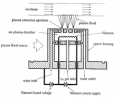
No, it doesn't glow. As a heavy noble gas (~131u vs ~40u for argon) it can act as a more effective tungsten gas buffer by increasing the mean free path (bounce back to the filament) from the filament to the bulb without reactions in the heated tungsten filament space charge. It's very common to use Xenon gas (sometimes as a plasma) in vacuum chambers to neutralize or control unwanted charged particles from other plasma beams.
I’m not sure what xenon lamps really are. I very much doubt that they are xenon gas-discharge tubes (as in photo-flash). I think it is marketing hype for something or other.
They are tungsten filament halogen lamps, the Xe gas is the noble gas used with the halogen. They aren’t HID lamps, just halogens with Xe in them. There are also “Krypton lamps” and it’s the same idea.
I was thinking about the Xenon flash tubes and how they glow. But that is a lot different. Also, they do explode if the flash does not extinguish rather rapidly. So it is not wise to power a xenon flash tube from a high power regulated supply. (this is a bit off topic, I suppose. But that glow condition is what I was thinking about with my comment in post #26)

 Facebook
 Google
 GitHub
 Linkedin