Looking for advice on building an enclosure

Thread Starter

kyle7119

Joined Feb 11, 2011
84
I have been looking around at getting an enclosure built for my project. Here are some things I have learned:
(1) Most of the enclosures are made of bent aluminum or stainless steel.
(2) The bare aluminum can be colored by anodizing, painting, powercoating, or printing.
(3) Text and graphics are added by engraving, silkscreen, plastic/lexan overlays, or printing

I am looking for recommendations on (1) which manufacturing method people have had the best success with and (2) some of the favorite places to get these services done.
 

Tonyr1084

Joined Sep 24, 2015
9,744
Personally, I'm a hands on sort of guy. If I can make an enclosure I'll do just that. Especially if I have the materials to work with. I'm in the process right now of taking an old microwave control panel and using it to control some outlets. I have some power supplies that were built as an educational tool for high school electronics classes. I have several of these enclosures, and with a little bit of modification I have the size and shape case I want. I have the control panel mounted inside; now all I need to do is cut the openings for the duplex outlets, the power input and to wire it up to the control panel. Primarily I want to be able to turn it on for any period of time from 1 second all the way up to 99 minutes and 99 seconds (1 hour, 40 minutes and 39 seconds) Then plug my soldering iron into it. I have a nasty habit of turning it on and leaving it on for hours on end. So if I want to do some soldering work that should take me 15 minutes I can set it to run for 20 minutes. If I forget to turn it off then power goes off automatically.

The control panel also has controls for a fan and for a light. So I can wire those up to additional duplex outlets and plug in something that I may want to be able to turn on and off from the control panel.

Depending on what sort of enclosure you need, you have options. You can build with plexiglass if you want something cool you can see inside. You can look for scrap materials. Around here lots of people throw out old dishwashers. Most have plastic bodies but they almost always have a sheet metal face, good for some sheetmetal working - if you know how. My local hardware store has sheet goods I can buy, cut and build with as well. Since I can weld I can fabricate something from some heavier products. I also have some scrap iron from bicycles and from treadmills. There are plenty of sources for an enclosure. You can even use a PVC pipe with some end caps to enclose an electronic package. Just some ideas to mull over in your mind.
 

MaxHeadRoom

Joined Jul 18, 2013
30,570
There is no mention of size or application?
It can vary from a simple hand held unit to a full Electrical Control enclosure.
I first see if there is anything already on the market that will do the job I need.
If not, I may then draw a unit up and get the local tin bashers to whip a custom one up for me.
One rule of enclosure law is that always size 20% larger than estimated!!:D
Max.
 
Last edited:

Tonyr1084

Joined Sep 24, 2015
9,744
A junior high school science project my son did was to make a light sensor and a buzzer. The brighter the light the higher pitched the buzzer sounded. He then enclosed it in an old deodorant carcase. Drilled a hole in the cap and put the photo transistor (or resistor, I don't remember) in it and a plug to connect the sensor to the electronics along with a couple AAA batteries inside for a power source. Got an A.

Way back in elementary school, a friend of mine took an old shoe box, some tacks and some wires and hooked up a buzzer and a bell along with two probes. You use one probe to touch a question and the other to touch a potential answer. If you were right the bell would ring. A wrong answer you got the buzzer. He got an A on his project.

The gist of it is that you can use lots of things that already exist. I've seen (on YouTube) people use an Altoids tin. Larger projects can be put in larger cookie tins. You could use a plastic cereal bowl. With or without a lid. LOTS of options.

If you're good at wood working you could build a beautiful wooden box for your project.
 

GopherT

Joined Nov 23, 2012
8,009
I have been looking around at getting an enclosure built for my project. Here are some things I have learned:
(1) Most of the enclosures are made of bent aluminum or stainless steel.
(2) The bare aluminum can be colored by anodizing, painting, powercoating, or printing.
(3) Text and graphics are added by engraving, silkscreen, plastic/lexan overlays, or printing

I am looking for recommendations on (1) which manufacturing method people have had the best success with and (2) some of the favorite places to get these services done.

I like open frame stuff. Sometimes I put a piece of clear acrylic in fron and behind the circuit board with some offsets if protection is needed. What is the fun in a diy project if it looks factory made.
 

cmartinez

Joined Jan 17, 2007
8,730
Sometimes I put a piece of clear acrylic in fron and behind the circuit board with some offsets if protection is needed.
Yeah... how else could one be able to brag a little after a hard worked at project is finished? ... I just love transparent enclosures.
 

GopherT

Joined Nov 23, 2012
8,009
My final product is going in an experimental aircraft. Electronics in an aircraft generally merit a little protection... :)
Common, you are living on the edge already with experimental aircraft. "A little" protection is all you should need.

Alternatively, cast it in epoxy or other conformal coating resin.
 

AnalogKid

Joined Aug 1, 2013
12,069
If this is going in the instrument panel, most of those items have fully custom enclosures, all aluminum. Dimensions? Mounting method?

If you are going to be altering things as the design progresses, then something with a removable, perfectly flat front panel makes for much easier and lower cost updates. Silk screeners hate recessed panels.

I recommend against anodizing, as it creates an insulating layer on the surface that prevents good ground contact. Chromating is an acid etch bath that leaves a clear or gold color that is a good conductor for shielding integrity. It is usually done as a pre-treatment to painting (paint does not adhere well to raw aluminum), but is not a bad look on its own, especially if the aluminum has been brushed beforehand. Hexavalent was the standard, but is toxic; it is banned for new MIL projects and for RoHS compliance. Trivalent is the replacement.

https://en.wikipedia.org/wiki/Chromate_conversion_coating

If you don't want/need all custom, there are catalog standard panel meter enclosures.

ak
 

AnalogKid

Joined Aug 1, 2013
12,069
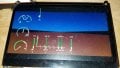
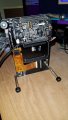
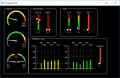
I was writing that while you posted the photos. Now that I see what you have, another option is a deep drawn aluminum can as the back 5 sides, up against a front panel with a large cutout for the screen. How much I/O is there?

Where are you located?

ak
 

Thread Starter

kyle7119

Joined Feb 11, 2011
84
I was writing that while you posted the photos. Now that I see what you have, another option is a deep drawn aluminum can as the back 5 sides, up against a front panel with a large cutout for the screen. How much I/O is there?

ak
two DB-25 ports. The picture are not current. There is another I/O board attached to the other header pin port
 

AnalogKid

Joined Aug 1, 2013
12,069
Those would be two simple punches in the back of a rectangular, shallow can. If your system lends itself to having everything mounted off the front panel, so the back of the box is nothing but shielding, I think it is something to consider. If you need to mount things to the sides or back wall, then a can creates more trouble than it saves cost.

ak
 
Top