Looking for a cheap isolated CC buck boost converter, does this not exist?

Thread Starter

Ruben Müller

Joined Jun 9, 2019
6
As per the title, it seems to me that it's something that should exist, but for the life of me, I can't find one.
Does anyone have any ideas?
Input voltage would be between 10V and 13V and output voltage roughly 13.8V and 10A.

Thanks!
 

DickCappels

Joined Aug 21, 2008
10,661
That would be buck-boost because the output voltage can be lower (buck) or higher (boost) the input voltage.

I do no think “cheap” and “10 A” belong in the same sentence. You are talking about a 100 watt power supply.

Maybe somebody will point you towards something that meets your needs.

Are you interested in making such a power supply rather than buying it?
 

BobTPH

Joined Jun 5, 2013
11,463
Cheap happens when there is large demand for the product. It might actually be cheaper to run a inverter coupled to a 13.8 V power supply, because each of those would be higher demand products.
 
Last edited:

Papabravo

Joined Feb 24, 2006
22,058
The term buck-boost tends to be ambiguous since it refers to a topology that produces negative outputs. What the OP needs is something like a SEPIC converter that can do what he has described. 130W watts is not a cheap Chinese toy, it is a piece of work which won't come cheap. In other words, fuhgeddaboudit
 

Thread Starter

Ruben Müller

Joined Jun 9, 2019
6
Thanks for your replies everyone so far!

That would be buck-boost because the output voltage can be lower (buck) or higher (boost) the input voltage.

I do no think “cheap” and “10 A” belong in the same sentence. You are talking about a 100 watt power supply.

Maybe somebody will point you towards something that meets your needs.

Are you interested in making such a power supply rather than buying it?

The word "cheap" is relative of course. What I also meant by it is a fairly simple device to differentiate it from a Victron Orion DCDC that does exist as isolated, but it's very large and costs over $200.

10A is pretty common for DCDC chargers out there but I do are that it's a bit of current.

I would prefer to buy one, but building it is definitely an option.

What is the input source? What is its max available current (amperage)
I have a Radio Shack power supply that puts out 13.8V @ 19A. That's pretty cheap. Or it was when I bought it years ago. That turns 120VAC into 13.8VDC.
The source is DC and while input voltage can vary, it will mainly be 12.6V.
There's lots of potential current available so that won't be a limit, say 500A (short circuit current would be higher again).

It would help tremendously ........
if You would provide a complete explanation of the problem that You are trying to solve,
rather than asking for a solution to the solution that You have decided upon.
.
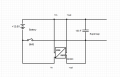
Basically I need to bypass a battery management system with low side switching and charge super capacitors with the DCDC charger.
Given it's low side switching, I can't use a non-isolated DCDC with a common ground. Common high-side would be fine, but they don't seem to exist, that's why I want isolated.

If the caps are at 0V, their resistance is extremely low, that's why I need to run it with constant current.

The 10V to 12V sounds like a car battery, or something like that.
The 13.8V @ 10A sounds like an automotive load of some kind. (sound system)
You're not far off the mark.

The term buck-boost tends to be ambiguous since it refers to a topology that produces negative outputs. What the OP needs is something like a SEPIC converter that can do what he has described. 130W watts is not a cheap Chinese toy, it is a piece of work which won't come cheap. In other words, fuhgeddaboudit
I did find a cheap 10A isolated buck boost, but unfortunately it wasn't current limited.
"Cheap" could be up to $50.
 

BobTPH

Joined Jun 5, 2013
11,463
Because the BMS is low side switching, so if the DCDC has a common ground and it's in parallel with it, the BMS will always be bypassed and this bypass isn't current limited in any way.
Without a schematic, I can make no sense of this. When the low side switch in the BMS is off, the battery is out of the circuit.
 

Thread Starter

Ruben Müller

Joined Jun 9, 2019
6
Without a schematic, I can make no sense of this. When the low side switch in the BMS is off, the battery is out of the circuit.
Terrible diagram, I know, but that's effectively it. I've drawn the BMS as a simple switch. As it does low Side switching, the DCDC will create a bypass at all times if it's not isolated.
 

Attachments

Tonyr1084

Joined Sep 24, 2015
9,744
The 13.8V @ 10A sounds like an automotive load of some kind. (sound system)
"Not far off the mark" the TS has said.
I need to bypass a battery management system with low side switching and charge super capacitors with the DCDC charger.
Why do you need BMS with super caps? OK, if you want to charge SC's to 13.8VDC from a varying battery source of 10 to 13VDC you need to boost the SC's to 13.8V Charge. And like @ronsimpson said, it seems like a car stereo system. You're after those booming 12 or 15 inch base speakers and want to shake my windows when you drive by.

Where is this system going to live? In a vehicle? If so, any time the engine is running the alternator should be producing plenty of voltage and amperage to charge your SC's. If you have this in the house (or other structure) and want to hang a car battery off it and run it then you're best off getting a battery charger that can keep up with the demand. I have a car radio playing in my shop right now. It plays off a lawn mower starter battery (12V 20AHr) with a trickle charger. It plays all day long - four speakers, left/right, front/rear. And I can play it at dangerous volumes. Plenty of base, no need for SC's. Oh well; free country. Do as you like.
 

LowQCab

Joined Nov 6, 2012
5,101
I asked for a complete explanation.

I guess this is another one of those "Top-Secret" projects that we seem to see so much of.

My guess is that Super-Capacitors are not going
to be the Magic-Silver-Bullet that You may be thinking they will be.
They will not practically replace Batteries except in
extremely niche applications such as temporary memory retention.
.
.
.
 
Top