LM3914 input affected by LED outputs

Thread Starter

VernonLS

Joined Oct 9, 2019
42
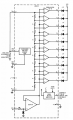
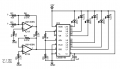
I built the circuit shown here with the intent of turning on successive LEDs as the input to the LM3914 Pin 5 rose. And that does happen. However, as I connect successive LEDs the input signal to pin5 is definitely affected. With no LEDs connnected to the output pins of the 3914 the input level is about 387mv. However when connect the first LED to pin 1, that causes the input signal to shift to about 582 mv. Connecting the next LED to pin 18 causes the input on pin 5 to shift upward to about 798 mv and then connecting an LED to pin 16 shifts the input upward to about 896 mv and so on.

How is it that the input signal to pin 5 of the LM3914 is affected by the load on the output pins? And what can I do to change that behavior?

As you can see from the diagram, the reference resistors are 1K and 220 ohm respectively and the voltage on pins 6 & 7 is about 1.54V. I have pin 9 connected to +4.95v. The connection indicated by the ground signal is the return of the +4.95 power supply. I put a capacitor on the 4.95v power supply as suggested, but that does not seem to affect this behavior.

I am stuck right now on how to fix this. LM3914-CIRCUIT.jpg
 

dl324

Joined Mar 30, 2015
18,326
For those who don't have LM3914 pin function memorized:
1574023391524.png

What are you trying to tell us with all of the breaks and extraneous connection dots?
1574023500348.png
 

Thread Starter

VernonLS

Joined Oct 9, 2019
42
The breaks are to indicate the manual connection of the LEDs one at a time as I tested it. I originally had about 6 pins connected to LEDs but I knew something was going on because I had previous records of the input signal before connecting the LM3914. The extra dots are just artifacts of my drawing program.
 

AlbertHall

Joined Jun 4, 2014
12,625
Is this built on a solderless breadboard?
It could be because of the LED current causing a voltage drop, perhaps in the 0V line, affecting the op-amp circuit.
 

Thread Starter

VernonLS

Joined Oct 9, 2019
42
Is this built on a solderless breadboard?
It could be because of the LED current causing a voltage drop, perhaps in the 0V line, affecting the op-amp circuit.
No, it is on a solder board, but I will check the power/ground pins to circuits. I did check the voltage bus on the board with various combinations of LEDs lit and it stays steady at 4.95V. Thanks for the suggestion.
 

dl324

Joined Mar 30, 2015
18,326
it stays steady at 4.95V.
Most of us would just call it 5V. Using the extra precision only makes sense when it could affect circuit operation.

I checked the specs for my Simpson 467 DVM and it's accurate to +/- 0.1% on the 20V range; so +/- about 0.02V.
 

Thread Starter

VernonLS

Joined Oct 9, 2019
42
Somehow the op amp output to pin 5 is apparently being affected.
Post the whole circuit schematic including the op amp circuit.
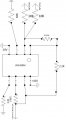
OK, here is the previous stage that provides the input to the LM3914. The previous stage is a LM1458 op amp that sums two input signals. The output of the LM1458 is on pin 7 and that pin directly feeds pin 5 of the LM3914.

Hope this is helpful. LLM1458-CIRCUIT2.jpg
 

dl324

Joined Mar 30, 2015
18,326
Hope this is helpful.
Not very much. The style you use to draw schematic isn't conducive to reading circuit intent.
EDIT: corrected typo (vary).

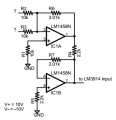
This is what I transcribed from your "schematic":
1574031178021.png
It still doesn't make sense.

Whenever you have more than one of a type of component, you should use component designators so components can be referenced in an unambiguous manner.

I don't know where R2 and R3 were connected. How did you choose the values for R1 and R5? Typically their values would be related to the resistances on the other input.
 
Last edited:

Thread Starter

VernonLS

Joined Oct 9, 2019
42
Not vary. The style you use to draw schematic isn't conducive to reading circuit intent.

This is what I transcribed from your "schematic":
View attachment 191751
It still doesn't make sense.

Whenever you have more than one of a type of component, you should use component designators so components can be referenced in an unambiguous manner.

I don't know where R2 and R3 were connected. How did you choose the values for R1 and R5? Typically their values would be related to the resistances on the other input.
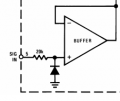
Your circuit redraw is much neater than mine. To answer your questions, I think R1 and R5 were taken from an earlier LM1458 application. I don't find much of help on the LM1458 tech description. However I still don't see how the input circuit of the LM3914 can affect the output from pin 7 of the LM1458 op amp. I am wondering if a diode placed in the circuit between the LM1458 pin 7 ouput and the LM3914 pin 5 input would be helpful. I noticed that the description of the LM3914 indicates that there is a "buffer" amplifier connected to pin 5 that looks like an op-amp with a gain of negative one and a diode preventing the input from dropping below ground level. So I think I need to place a diode that would prevent the feedback to pin 7. What do you think?
 

dl324

Joined Mar 30, 2015
18,326
I noticed that the description of the LM3914 indicates that there is a "buffer" amplifier connected to pin 5 that looks like an op-amp with a gain of negative one and a diode preventing the input from dropping below ground level.
The opamp buffer in the LM3914 is a voltage follower (gain of 1).
1574033497202.png

Since the input to the LM3914 can't be negative, you might get better performance with an LM358 operated from a 10V supply. It's output can go to within 20mV of ground without requiring a negative supply.
 

Thread Starter

VernonLS

Joined Oct 9, 2019
42
The opamp buffer in the LM3914 is a voltage follower (gain of 1).
View attachment 191752

Since the input to the LM3914 can't be negative, you might get better performance with an LM358 operated from a 10V supply. It's output can go to within 20mV of ground without requiring a negative supply.
Yes, sorry I did not notice that it was a non-inverting application. It does not invert. Still, I am wondering about putting a diode on the input to pin 5. May try this tomorrow. The input signal on pin 5 should never go negative.
 

dl324

Joined Mar 30, 2015
18,326
However, as I connect successive LEDs the input signal to pin5 is definitely affected. With no LEDs connnected to the output pins of the 3914 the input level is about 387mv. However when connect the first LED to pin 1, that causes the input signal to shift to about 582 mv. Connecting the next LED to pin 18 causes the input on pin 5 to shift upward to about 798 mv and then connecting an LED to pin 16 shifts the input upward to about 896 mv and so on.
Now that I can see the entire circuit, nothing from the LM3914 can be causing the symptoms you're describing.

The diode you're going to add won't fix the problem you described in your first post. There's already a diode in the LM3914 that will prevent the input from going below -0.7V.
 

crutschow

Joined Mar 14, 2008
38,503
In dl324's schematic, IC1B will override the output of IC1A and keep the input a 0V (as Albert noted),
I assume R4 should go to pin 6 to make an inverting , not pin 7.

A diode in series with pin 5 won't help.
All it will do is make the input voltage non-linear with about a 0.65v offset..
 

Audioguru again

Joined Oct 21, 2019
6,826
You have two opamps outputs connected together through the 2.2k R4 resistor. The opamp pin 7 will remain at 0V when the opamp output pin 1 gives a positive or a negative voltage.

We all believe that R4 should connect from pin 1 to pin 6 (not pin 7) so that IC1B can invert and slightly amplify the signal from pin 1.
 

Alec_t

Joined Sep 17, 2013
15,117
Since the voltage gain of your circuit is only 0.3, you could discard both opamps and mix the two inputs using just resistors.
 

MisterBill2

Joined Jan 23, 2018
27,507
The apparent shift in the input voltage as an LED is illuminated is caused by a voltage drop in a series resistance in the power connection. return line. IF you are able to measure the current with enough resolution, since you already know the change in the voltage you will then be able to calculate that resistance, which may help you find it. Unwanted resistance in the return connection to the power source can be a big pain i analog circuits, as you are discovering. Is the change causing a problem with the performance, or just a puzzle as to why it is happening? One more thing that I forgot to ask is if the change only happens when the LEDs illuminate? or even when they are connected but not illuminated?
What it looks like is a resistance in the circuit between the meter negative connection and the LM3914 negative power connection point. The voltage change is about 200 millivolts with a 20mA increase in current, implying a series resistance of about ten ohms. Are you able to measure the voltage directly at the pins, 2 and 5, of the LM3914? The symptom is the LED current causing a voltage drop in the power return line.
 
Last edited:
Top