Facebook
 Google
 GitHub
 Linkedin

Hi all,
I have a small circuit that uses 4 LM10CN as a current regulators that output 4-20mA. This has been used to simulate 4 x loop powered 4-20mA sensor when testing PLC assemblies.
There is a fixed 4mA and 20mA output and a variable output selected by toggle switches. See my sketch attached.
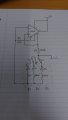
I was going to use the same circuit design the build smaller individual simulators rather that forking out a lot of money for a fluke meter but as I was reverse engineering it and found out what it was doing I wasn't able to get my head round how the thing is able to output the required range with the resistor values that have been used.
According to the TI datasheet the equation to calculate Iout is:
Iout = (R2+R3)*Vref / R1*R3 (where Vref is 0.2V)
However if you look at my sketch and do the math no matter which arrangement is selected the current output is around 0.2mA.
I must be doing something wrong as the circuit works but for the life of my I cant figure out what the problem is!
Can anyone give me some insight?
I have a small circuit that uses 4 LM10CN as a current regulators that output 4-20mA. This has been used to simulate 4 x loop powered 4-20mA sensor when testing PLC assemblies.
There is a fixed 4mA and 20mA output and a variable output selected by toggle switches. See my sketch attached.
I was going to use the same circuit design the build smaller individual simulators rather that forking out a lot of money for a fluke meter but as I was reverse engineering it and found out what it was doing I wasn't able to get my head round how the thing is able to output the required range with the resistor values that have been used.
According to the TI datasheet the equation to calculate Iout is:
Iout = (R2+R3)*Vref / R1*R3 (where Vref is 0.2V)
However if you look at my sketch and do the math no matter which arrangement is selected the current output is around 0.2mA.
I must be doing something wrong as the circuit works but for the life of my I cant figure out what the problem is!
Can anyone give me some insight?