Linux at Home

nsaspook

Joined Aug 27, 2009
16,325
My daughter's music studio runs an RT kernel. It's got its uses.
I know but as you say the RT kernel has been around for ages and most distro's don't use it by default unless there is a specific need. When I need a specific type of RT response (deterministic timing for example), I write a custom kernel module that bypasses the normal user scheduler and uses kernel tasks assigned to a dedicated processor on a multiprocessor machine.
 

nsaspook

Joined Aug 27, 2009
16,325
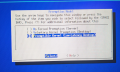
Changing the kernel preemption mode on the orange pi zero 3 and adding a few needed kernel modules for DAQ not included in the default distro.
https://doc-en.rvspace.org/VisionFive2/RTLinux/VF2_RT_Linux/1_4_kernel_preemption.html

Kernel Preemption
The mainline Linux kernel currently has three preemption settings available: server, desktop, and low-latency desktop. With the introduction of the PREEMPT_RT patch, a fourth real-time option becomes available. By using these options, it is possible to trade throughput for latency determinism. These options are described in the following list ordered from worst to best in terms of real-time performance.
  • Server is the traditional preemption model. With this selection, the kernel code is executed with preemption disabled for the maximum throughput.
  • Desktop preemption model adds explicit preemption points to the kernel code. This option provides better responsiveness at the cost of slightly lower throughput.
  • Low-Latency Desktop reduces the latencies by making all normal kernel code preemptible. This setting allows better reaction times to interactive events.
  • Real-Time option practically makes the whole kernel preemptible, including the most critical sections. This option is available only when the PREEMPT_RT patch is applied.
As the preemption option names suggest, each one of these settings has an appropriate use case. The server preemption can be used in server installations where throughput is the single most important figure. On the other hand, real-time preemption should be used in embedded systems where the absolute throughput is not critical but rather the maximum experienced latency is. Therefore, different preemption levels in Linux allow for great flexibility to be utilized in varying environments, i.e., the same operating system can be used in servers and embedded systems. Overall, this synergy is very beneficial for the whole ecosystem as improvements or fixes implemented for server systems can be also automatically applied for small embedded devices.
Even if some of the preemption settings claim to have reduced latency, in practice, the real-time setting is the only viable option for any real-time system. In this configuration, the majority of spinlocks are converted to normal sleeping locks, interrupt handlers are threaded, and high-resolution timers are used for precise timing. Additionally, there are some other more insignificant changes introduced. With these improvements, practically the whole kernel is completely preemptible. Only things like very low-level event handling are executed in a non-preemptible context. Altogether, the real-time preemption model significantly improves the system responsiveness but decreases the overall performance as every introduced change causes some additional overhead.

1726946690406.png
Default
1726946744582.png
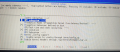
and add the ability to change modes a boot time. Now wait for hours as the opi 4 little cpus recompile the kernel, modules and device trees.
1726947116016.png
 

Thread Starter

joeyd999

Joined Jun 6, 2011
6,281
It won't really unless the old computer can emulate a MIPS R3000 processor. A MIPS R3000 emulator in 4004 assembly, that is IMO a more impressive thing than booting a canned, stripped version of Linux, very slowly.
Yes. My comment was made with my tongue firmly imbedded in my cheek.
 

nsaspook

Joined Aug 27, 2009
16,325
https://www.phoronix.com/news/Linus-Torvalds-Russian-Devs
Linus Torvalds Comments On The Russian Linux Maintainers Being Delisted

Linus Torvalds wrote:
"Ok, lots of Russian trolls out and about.

It's entirely clear why the change was done, it's not getting reverted, and using multiple random anonymous accounts to try to "grass root" it by Russian troll factories isn't going to change anything.

And FYI for the actual innocent bystanders who aren't troll farm accounts - the "various compliance requirements" are not just a US thing.

If you haven't heard of Russian sanctions yet, you should try to read the news some day. And by "news", I don't mean Russian state-sponsored spam.

As to sending me a revert patch - please use whatever mush you call brains. I'm Finnish. Did you think I'd be *supporting* Russian aggression? Apparently it's not just lack of real news, it's lack of history knowledge too."
 

Lightium

Joined Jun 6, 2012
320
I am currently working to get a lean and mean linux with xfce, to install on a K6-2 with 512Mb of ram. I have more ram on the way. So, say nothing about the ram.
 

nsaspook

Joined Aug 27, 2009
16,325
But....512Mb?
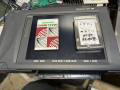
I've run Linux embedded systems with at lot less memory but it was a custom kernel, with NO module support, only the drivers, cpu support and baseline networking needed in the kernel blob, stripped of all debugging info, with only the user binaries needed to run the application. It was cross-compiled on another more powerful system and the system build was transferred to the tablet HD with a PCMCIA card interface on the workstation.

I ran Linux (pre 1.0 kernels) on one of these systems.
https://classicbits.net/1997-Site-Archive/styl500.htm
The Stylistic 500(tm) from Fujitsu Personal Systems, Inc. is supposedly the lightest, most powerful PC tablet on the market today. Powered by an Intel 486 DX2-50 microprocessor, it brings the computing power of desktop workstations to mobile workers. And, at less that three pounds, the Stylistic 500 can be used in a wide variety of field decision support applications where light weight and high performance are essential. You can customize your system(s) to meet your needs. Add on additional RAM and Hard disk size.

  • Small tablet size, pen-base computer
  • 7.2'' x 10.7'' x 1.5'' dimensions
  • 4 to 20 Meg DRAM available
  • 128KB Flash Rom Bios
  • RF capability
1734669963897.png
1734669982720.png

With graphics (Xwindows), GUI and touch pen interface.
This is what's possible if you have actual Linux kernel hacking (with old code still in today's kernel tree) experience.
 
Last edited:

Thread Starter

joeyd999

Joined Jun 6, 2011
6,281
IIRC, back around Y2K I put together a Linux router on a 16MB 486 to share my dialup. The entire OS loaded off a floppy. I still have the US Robotics 56K modem.

https://en.m.wikipedia.org/wiki/Linux_Router_Project
BTW, this is how I discovered that Windows phoned home often, if given a chance. I configured the router to dialup automatically when an internet request was made. For a couple of weeks, I couldn't figure out why I was woken each night to the sound of 56K negotiation tones. Win 98, IIRC.
 
Top