linear regulator question

Thread Starter

hhsting

Joined Apr 25, 2024
395
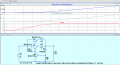
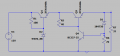
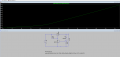
Below I have a snapshot of the linear regulator circuit I built. My V3 varies from 0V to 12.50V, and my output is at R7. I want a constant 3.6VDC @100mA starting around V3 of 5V at my output, which I get. My load is R7. However, the max power requirements of Q3 I get is 1.1W. See snapshot below. My Q3, which is BC337, is not able to handle that much power; the datasheet says around 0.6mW. I am using BC337 because they are cheap and I have a lot lying around.

My first question: Is there anything that can be done to tweak the circuit to get the power at Q3 to be low using only discrete components, without using ICs, op amps, etc.?

My second question is there any cheap transistor other than BC337 I can use for at least 1.1W power at 200mA? I don't want SMD components either, for me it's hard to solder on pcb myself.
1762878891718.png
 
Last edited:

WBahn

Joined Mar 31, 2012
32,706
As you noted in your title, this is a linear regulator. So if you want 100 mA through your load, then your supply is going to be delivering at least 100 mA. With a 12.5 V input, that's 1.25 W delivered, of which about 360 mW (assuming you actually have 3.6 V at 100 mA) is consumed by the load. You are dropping, nominally, 809 V across Q3 and also have to supply the current to the zener, If all of the zener current is going through R6, and if Q4 is on, then that's another 9 mA. So you are looking at about 110 mA to 120 mA through Q3, which means it's going to dissipate right about 1 W to 1.1 W, which is what your sim shows. There's not much getting around that in a linear regulator, but you can play some games to shift that heat to something else. The simplest is to put a resistor between the supply and the Q3 collector. Unfortunately, you want regulation to be in place by 5 V, which means you already only have about 1.4 V of Vce. You could probably cut that back to ebout 0.7 V and still be okay, so if you drop 0.7 V across a current limiting resistor at 120 mA, that would require about a 5.6 Ω resistor (using the next smaller standard size). But that would only dissipate about 80 mW.

You could put a cascode transistor to clamp the collector of Q3 at about 4.3 V, but I don't know how well that will work when your input is only 5 V.

You could put transistors in parallel with small ballast resistors to share the heat.

Or you could get transistors that are rated for at least 2 W and use proper heat sinking.

But then you mention 200 mA. Where is that coming from? You need to size your components for the worst case that you need to accommodate. What is that worst case?

Note that 3.6 V at 100 mA would require a load of 36 Ω, not 33 Ω, so your load current and power are off by about 10%. As long as you give yourself a reasonable safety factor, this is not a big deal.
 

wayneh

Joined Sep 9, 2010
18,089
Pretty expensive, AliExpress show them $1.50 for 5pcs plus shipping gets right there about $10 for 5.
That's pretty much unavoidable unless you already have a part on hand or can find one locally. Back in the day, I scavenged parts from scrap electronics or went to Radio Shack.

What electronics suppliers ship to your area? Some have a lower shipping cost, as low as $5. As a personal choice, I probably wouldn't use AliExpress and prefer the extra level of quality control - counterfeit avoidance - that a legitimate electronics supplier brings.
 

Thread Starter

hhsting

Joined Apr 25, 2024
395
That's pretty much unavoidable unless you already have a part on hand or can find one locally. Back in the day, I scavenged parts from scrap electronics or went to Radio Shack.

What electronics suppliers ship to your area? Some have a lower shipping cost, as low as $5. As a personal choice, I probably wouldn't use AliExpress and prefer the extra level of quality control - counterfeit avoidance - that a legitimate electronics supplier brings.
None. They all went bankrupt and closed, to be honest. We used to have Radio Shack, but it's gone same reason. The only thing we have is Micro Center, and you know they don't carry parts like this, only very few transistors at best.
 

WBahn

Joined Mar 31, 2012
32,706
Nice, thanks, but why the need for 0.1ohm resistors?
They are known as ballast resistors. Without them, the sharing between transistors is ill defined and relies on the matching of the characteristics of the two transistors. The result will be uneven matching and can even result in one transistor carrying the entire load, especially if it starts warming up due to a phenomenon known as thermal runaway. The ballast resistors provide a negative feedback mechanism to counteract that.
 

Thread Starter

hhsting

Joined Apr 25, 2024
395
They are known as ballast resistors. Without them, the sharing between transistors is ill defined and relies on the matching of the characteristics of the two transistors. The result will be uneven matching and can even result in one transistor carrying the entire load, especially if it starts warming up due to a phenomenon known as thermal runaway. The ballast resistors provide a negative feedback mechanism to counteract that.
Thanks you had mentioned that originally as first person post but I couldnt see how its configured until edited .asc was posted.

You also had mentioned originally:

“You could put a cascode transistor to clamp the collector of Q3 at about 4.3 V, but I don't know how well that will work when your input is only 5 V.”

I can work with 4.3V. I thought one cant get input to be lower then 5V so I put that however in my case the lower the input it goes and output is 3.6V @100 ma the better. How does cascode transistor configure and work? Can anyone in here show me casecode transistor option? I posted .asc file earlier post.
 
Last edited:

WBahn

Joined Mar 31, 2012
32,706
Thanks you had mentioned that originally as first person post but I couldnt see how its configured until edited .asc was posted.

You also had mentioned originally:

“You could put a cascode transistor to clamp the collector of Q3 at about 4.3 V, but I don't know how well that will work when your input is only 5 V.”

I can work with 4.3V. I thought one cant get input to be lower then 5V so I put that however in my case the lower the input it goes and output is 3.6V @100 ma the better. How does cascode transistor configure and work? Can anyone in here show me casecode transistor option? I posted .asc file earlier post.
Here's a quick idea -- I haven't tuned component values, just made rough guesses.

1762963212664.png

The idea is that when V3 gets above a certain voltage (roughly the zener voltage of D2), the base of Q1 becomes clamped at the zener voltage and so the collector of Q3 is clamped about one diode drop below that even as V3 continues to increase, Below that certain voltage, Q1 basically behaves as a diode-connected BJT, which roughly behaves like a diode, provided R1 isn't too big.

What this allows you to do is (given the max current draw to the load) is put a limit on the voltage seen across, and hence power dissipated by, Q3. Beyond that, the additional power is dissipated by Q1. The power still has to be dissipated -- it is a linear regulator, after all -- but it gives you more control over where the power gets dissipated.
 

ci139

Joined Jul 11, 2016
1,949
  • V3 varies from 0V to 12.50V
  • I want a constant 3.6VDC @100mA starting around V3 of 5V
  • power requirements of Q3 I get is 1.1W
  • BC337 datasheet says around 0.6mW
  • is there any cheap transistor other than BC337 I can use for at least 1.1W power at 200mA
what's the real life scenario for your input voltage source - if it's a battery say Li-ion pack of 3x 3.7V and they have each 2.7V open circuit then your 3.6V at output won't hold for too long . . .

@ linear reg. circuit the Q3 acts as a variable resistor
TO-92 package limits your power dissipation - i doubt it will tolerate 200mA continuously (i speculate) it requires 4 in parallel or more if your input voltage is higher the 5V

https://www.onsemi.cn/download/data-sheet/pdf/bc337-fsc-d.pdf –5mW/°C above 25°C = at 150°C it shall pass no current

at 200mA from 5V to 3.6V (@ 280mW) the junction T would be https://www.everythingpe.com/calculators/junction-temperature-calculator
81°C and powerdissipation limit 625 – 280 = 345 mW ← the nearby ambient and PCB may heat up from thatdegrading the value further . . .
(the non-heatsinked TO-92 is mildly warm up to 50mA through it at near 1.5V Vce)
you may try to clamp them to heat sink and design thermal pads to PCB or put a lot of 'em in parallel --or-- make an SMPS inverter to convert your varying input to near 5V and use 1 to 4 for linear regulator --or-- use commercially availabe SMPS controller or module considering the prototyping cost can be higher --and-- achieved reliability and functionality will likely suffer of - being practical

however i run an 3W audio power amp dropping 3V (→1.8W← at BJT) on
MJE13005 (ic.max 5A continuous* 75W) or
2SD1252A (ic.max 3A * 35W) with (precautios) 10cm² Al heat sink & it barely got noticably warmer ??
▲ it's like 100x more powerful devices
 

ci139

Joined Jul 11, 2016
1,949
https://www.ti.com/lit/an/slua844b/slua844b.pdf
https://www.electronics-cooling.com...s-steady-state-compared-to-transient-methods/
https://electronics.stackexchange.c...resistance-of-spring-for-cheap-to-92-heatsink

bc337-thermal.png
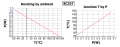
the leftmost graph : IF you put your circuit into an owen where the (ambient) T is +150°C then there wouldn't be any ∆T to cool the BC337 so you cant pass any current through it
the rightmost graph : IF you have the (constant) ambient of +25°C (incase of an open air env. --or-- by active cooling) then the equillibrium junction T will not exceed the value shown at vertical axes IF the total power dissipation at the BC337 --e.g.-- Pᴛᴏᴛ = Vʙᴇ·Iʙ + Vᴄᴇ·Iᴄ has a value at horizontal axes
 
Last edited:
Top