Linear function with practical example?

Thread Starter

vead

Joined Nov 24, 2011
629
Hello
I need help to understand term linear function in electronics . In mathematics, I understand what is linear function and their graph. I am showing my effort to understand linear function.
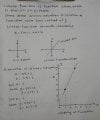
_20160830_160217.JPG
In electronics, signal or system may be linear. Someone can help me with the example of linear function in electronics?
 

DGElder

Joined Apr 3, 2016
351
Most practical analog electronics is about linear functions, starting with Ohm's law.

For example the voltage across a resistor and a battery in series:
where Bv is the battery voltage.

V = R* I + Bv
 

komal@31

Joined Aug 30, 2016
1
Normally in electronics starting from diodes to transistors & higher levels of devices... mostly are under the category of Non-linear devices for they have Non-linear I-V characteristic( Current-Voltage Char.)... but to see the normal functioning we limit our area of operation to linear part of the Characteristic. Over the linear area the circuit follows Ohms Law ( i.e. V prop. to I ).

Linear & Non-Linear char physically signifies the variation in the value of Voltage w.r.t. the change in Current.
 

DGElder

Joined Apr 3, 2016
351
Even where behavior is non linear we usually transform the problem into a linear problem to make the analysis easier, e.g. with logarithms or transforming differential equations into the s-domain.
 

Thread Starter

vead

Joined Nov 24, 2011
629
Someone can explain with example or just give hint that is related to electronics (voltage, current, time). So that I can find out actual use of linear function
 

OBW0549

Joined Mar 2, 2015
3,566
Someone can explain with example or just give hint that is related to electronics (voltage, current, time). So that I can find out actual use of linear function
Here's one example: an amplifier circuit.

What the amplifier is used for, and how it is built, are not important; what matters is that the output voltage of the amplifier is an amplified replica of whatever it's input voltage is. The factor by which it amplifies is a constant we call the gain of the amplifier, and we can express the output of the amplifier as being a linear function of its input times the gain constant:

Vout = Vin * Gain

Sometimes the output of an amplifier will show an offset voltage, such that at zero input voltage the output will be something other than zero, and at all input voltages the output will be shifted up or down, positively or negatively, by that constant amount. Thus we can write:

Vout = (Vin * Gain) + Voffset

This, too, is a linear function; the output is equal to the input times a constant (the gain), plus a second constant (the offset).

Hope this helps a bit...
 

Thread Starter

vead

Joined Nov 24, 2011
629
Here's one example: an amplifier circuit.

What the amplifier is used for, and how it is built, are not important; what matters is that the output voltage of the amplifier is an amplified replica of whatever it's input voltage is. The factor by which it amplifies is a constant we call the gain of the amplifier, and we can express the output of the amplifier as being a linear function of its input times the gain constant:

Vout = Vin * Gain

...
I appreciate you help. Can we continue with your example? As I shown in my first post, mathematically I understand how graph create for linear function. How equations make for linear function . Do you agree?
I just want to understand how to make graph and linear equations with your example. I think I need some value of input, output and gain. So that I can make graph and equation.
 
Last edited:

OBW0549

Joined Mar 2, 2015
3,566
I appreciate you help. Can we continue with your example? As I shown in my first post, mathematically I understand how graph create for linear function. How equations make for linear function . Do you agree?
The two equations in that post are both examples of linear equations because they contain no non-linear operations, such as the multiplication of an input by itself (as would be the case in a non-linear circuit such as a squaring circuit) or by a second input, as in a multiplier circuit.

I just want to understand how to make graph and linear equations with your example. I think I need some value of input, output and gain.
Let's say we have an amplifier whose gain is 10, with an output offset voltage of +2 volts. We apply some input voltages, and measure the output voltages:

At an input voltage of zero volts, the output is [(0 * 10) + 2] = 2 volts.
At an input voltage of one volt, the output is [(1 * 10) + 2] = 12 volts.
At an input voltage of two volts, the output is [(2 * 10) + 2] = 22 volts.
At an input voltage of three volts, the output is [(3 * 10) + 2] = 32 volts.

If we plot those four points on a graph, with input voltage represented across the horizontal axis and output voltage along the vertical axis, we see that they lie along a straight line. The fact that the line is straight tells us that the function Vout = (Vin * Gain) + Voffset is a linear function.

Does this help a bit?
 

Thread Starter

vead

Joined Nov 24, 2011
629
The two equations in that post are both examples of linear equations because they contain no non-linear operations, such as the multiplication of an input by itself (as would be the case in a non-linear circuit such as a squaring circuit) or by a second input, as in a multiplier circuit.


Let's say we have an amplifier whose gain is 10, with an output offset voltage of +2 volts. We apply some input voltages, and measure the output voltages:

At an input voltage of zero volts, the output is [(0 * 10) + 2] = 2 volts.
At an input voltage of one volt, the output is [(1 * 10) + 2] = 12 volts.
At an input voltage of two volts, the output is [(2 * 10) + 2] = 22 volts.
At an input voltage of three volts, the output is [(3 * 10) + 2] = 32 volts.

If we plot those four points on a graph, with input voltage represented across the horizontal axis and output voltage along the vertical axis, we see that they lie along a straight line. The fact that the line is straight tells us that the function Vout = (Vin * Gain) + Voffset is a linear function.

Does this help a bit?
Thank you very much for helping me. Now I understand what is linear function and their graph related to electronics.
 

Papabravo

Joined Feb 24, 2006
22,081
The load line for a common emitter amplifier follows a linear function. It intersects the y-axis (current) at Vcc/Rc, that is the Supply voltage divided by the collector resistor. It intersects the x-axis at Vcc. From this information you can use the point slope formulation of a linear equation to derive the following:

\(y-y_0 = m(x - x_0)\)

the slope m is just

\(\frac{0-\frac{V_{cc}}{R_C}}{V_{cc}-0}=-\frac{1}{R_C}\)

and picking the x-axis intercept

\(y-0 = -\frac{1}{R_C}(x - V_{cc})\)

\(y = -\frac{1}{R_C}x + \frac{V_{cc}}{R_C}\)
 
Last edited:
Top