LED replacement

Thread Starter

Jrlaidle

Joined Apr 27, 2021
6
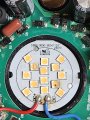
Throughout my house I have recessed lighting (LED 30021-1 WH) Whenever a light stops working I have to replace the entire fixture for about $30. I have tore several apart and they all have LED chip lights with apparent damage. I believe if I can find the chip light i could replace it and have it work fine. I have attached a picture of it here. Can someone point me to a source for this? Also is there a way to test the LED driver with a simple multimeter?
 

Attachments

dl324

Joined Mar 30, 2015
18,261
I believe if I can find the chip light i could replace it and have it work fine.
Is it worth risking burning down your house to save a few dollars? Buy high quality bulbs with warranties. Make warranty claims if they fail under warranty. Otherwise, just buy replacements.

The only thing I'd consider doing is salvaging the LEDs.
is there a way to test the LED driver with a simple multimeter?
No.
 

gaber2611

Joined Mar 14, 2013
324
Is it worth risking burning down your house to save a few dollars? Buy high quality bulbs with warranties. Make warranty claims if they fail under warranty. Otherwise, just buy replacements.

The only thing I'd consider doing is salvaging the LEDs.
No.
Why No?, he can only measure the output voltage of the Led driver with any multimeter, just set Multimeter on Dc voltage and measure, if There’s output then it’s ok, that’s simple
 

gaber2611

Joined Mar 14, 2013
324
Can someone point me to a source for this?
If you change the leds you need change all leds, because they have a certain life time , and when one start burn means life time start finish
You will need special tool for heating under the heat sink and put every led in right polarity
I think only aliexpress is the source
 

Jon Chandler

Joined Jun 12, 2008
1,570
The problem in replacing the LEDs are actually multiple LED elements in a common package. The number of LED elements in the package varies with the design of the driver, the operating voltage and output power of the the bulb. I believe these are all proprietary and probably not readily available.

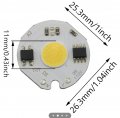
One option would be to replace the entire LED assembly – the metal plate with the LEDs on it. These are readily available. You'll need to know the output specs of the driver (current rating or power, and voltage range - see below).

Another option (cue the burn your house down crowd) is to solder a jumper across the LED with the black-spot-of-death. This may stress the driver a bit but you may get useful life if the failed LED was just not-so-good to start with. If the fixture fails a second time with another blown LED, I would not jump an additional LED.


LED drivers are a constant current source. They will vary the voltage to maintain the desired current. If the driver is open circuit (i.e., no load attached) it will raise its output voltage to the maximum it can provide in a futile attempt to drive the rated current through the output. With the rated number of LEDs connected to the driver, the voltage will drop to maintain the rated current.

Generic LED drivers are rated by watts and a range of LEDs they will support. For example, it may be rated for 1 watt bead LEDs, with 6 – 12 LEDs in series. The number of LEDs is determined by the range of the driver's output voltage.

You can test a driver by measuring its open circuit voltage and the voltage across a high power resistor of appropriate resistance (those calculations are beyond me at the moment – Back surgery yesterday and lots of pain pills, and I just don't care).


A third option to replacing an LED: LED arrays (the metal plate with the LEDs) are available with line-voltage drivers on the plate. Ditch the existing LED assembly and driver entirely, mount the LED assembly with integral driver in the original LED assembly's place, connect line power and you're done. Use heat sink compound.

I did this for a failed porch light a couple years ago, and it's been working ever since.
 

gaber2611

Joined Mar 14, 2013
324
A third option to replacing an LED: LED arrays (the metal plate with the LEDs) are available with line-voltage drivers on the plate. Ditch the existing LED assembly and driver entirely, mount the LED assembly with integral driver in the original LED assembly's place, connect line power and you're done. Use heat sink compound.
I think this is the best solution
 

gaber2611

Joined Mar 14, 2013
324
how many watts is your device?, can you share photo of info on behind the device?, and based on this info we may select suitable chip for you
 

Ian0

Joined Aug 7, 2020
13,112
If there is a single LED failure, then you can extend the life of the lamp by shorting out the dead LED.
(THis assumes that it has a constant current driver - which they nearly all do)
A dead LED can often identified by a black spot in the centre.
 

Ian0

Joined Aug 7, 2020
13,112
Because more voltages will go to other leds which with time can not withstand
I tried that already a lot and always fail after a certain time
You are mistaken. It is a constant current drive. Reducing the number of LEDs by one will reduce the output voltage whilst the output current remains the same. The power dissipated by the LED module will therefore reduce. The power required from the power supply will also reduce, and assuming that efficiency remains constant, the heat generated there will also reduce. The entire lamp will run at a lower temperature and therefore the life of the remaining LEDs will improve.
 

BobTPH

Joined Jun 5, 2013
11,482
If these are failing regularly it is a bad design. I would replace each failed one with a different model that is more reliable.
 

ElectricSpidey

Joined Dec 2, 2017
3,316
You are mistaken. It is a constant current drive. Reducing the number of LEDs by one will reduce the output voltage whilst the output current remains the same. The power dissipated by the LED module will therefore reduce. The power required from the power supply will also reduce, and assuming that efficiency remains constant, the heat generated there will also reduce. The entire lamp will run at a lower temperature and therefore the life of the remaining LEDs will improve.
I'm curious...

What if the driver is already running at or near its minimum output voltage?

Will it simply keep outputting that voltage and the extra voltage gets divided over the remaining LEDs?

Will it shutdown?
 

Jon Chandler

Joined Jun 12, 2008
1,570
Here is an example of LED assembly with integrated driver and what I used to repair my porch light. It originally had 3 similar LED assemblies on an aluminum plate with an external driver.

Replacing the old assemblies was simple. I used heatsink tape to secure the new LED assemblies (since there aren't any mounting holes in these), soldered about 6" wires to the input pads, and connected the 3 of them in parallel to the 120vac supply.

In your fixtures, it looks like the LED assembly is mounted to the metal case, so just remove it and the driver, and replace it with an assembly of this type.

SmartSelect_20240713_084250_Edge.jpg
 

Jon Chandler

Joined Jun 12, 2008
1,570
What if the driver is already running at or near its minimum output voltage?
Since the voltage across the LEDs will be less, more voltage will be placed across the driver circuit. This increased power dissipation will cause the drive circuit to run hotter.

Will the driver be happy with the increased power dissipation? I've done this trick a few times without issues. Will it work long-term in this case? Don't know but there's nothing to lose by trying it. There are 19 LED elements in the existing fixture, so jumping one out is ~5% change in voltage.
 

Ian0

Joined Aug 7, 2020
13,112
I'm curious...

What if the driver is already running at or near its minimum output voltage?

Will it simply keep outputting that voltage and the extra voltage gets divided over the remaining LEDs?

Will it shutdown?
It depends. . .
If you take a "conventional" flyback driver, that uses an auxiliary winding to power the circuit, then at some point it won't make the UVLO voltage of the flyback driver. At that point, it will flash on and off.

Any "self-powered" flyback driver, or buck regulator that derives its own supply from the mains will probably keep going until there are no LEDs left.
 
Top