LED forward voltage?

Thread Starter

spinnaker

Joined Oct 29, 2009
7,830
So I have some LEDs that are supposed to have a forward voltage of 3.4-3.6V but they are nice and bright at 3.3V. In fact I can even take it down to 3.2V without too much lose of brightness.

So what voltage do I use in my current limiting resistor calculations? Obviously if my supply is greater tham the rated forward voltage I am going to get a negative value for the current limiting resistor.
 

wayneh

Joined Sep 9, 2010
18,100
The last time I looked, the LEDs I was playing with had forward voltage range of about 0.5 V as the current increased from 0 to 20mA. If you really need accuracy, you could apply that estimate and get a little closer. It obviously helps if you have a datasheet you can trust.
 

WBahn

Joined Mar 31, 2012
32,798
So I have some LEDs that are supposed to have a forward voltage of 3.4-3.6V but they are nice and bright at 3.3V. In fact I can even take it down to 3.2V without too much lose of brightness.

So what voltage do I use in my current limiting resistor calculations? Obviously if my supply is greater tham the rated forward voltage I am going to get a negative value for the current limiting resistor.
Huh?

How does having a supply that is greater than the rated forward voltage of the LED lead to a negative value for the current limiting resistor?

Let's say that you have a 5 V supply and the forward voltage of the LED is 3.2 V at the current you want to operate at. That places 1.8 V across the resistor.

LEDs typically have a pretty soft knee so the forward voltage at difference currents varies a lot more than it does for a typical rectifier diode. But that doesn't change the fact that you want to design your circuit to control the current in the LED, not the voltage across it (unless that is a specific need for what you are trying to accomplish). The spec'ed Vf is usually at the spec'ed If current. Lower current means lower voltage.

If you are happy with how bright that particular LED is with a forward voltage of 3.2 V, then measure the current that is flowing and then design your circuit for that current. If you design your circuit to apply that voltage, then the results you will get for different LEDs (or even the same LED at different temperatures) will probably be unsatisfactory (e.g., many LEDs might not light up at all, particularly at lower temperatures).

Unless your supply voltage is pretty close to the LED forward voltage, the changes in current that result from the Vf being different than the value you designed for will be pretty minimal.

For instance, let's say that you use 5 V for the supply (which is getting pretty close to the LED Vf for good performance as a current source) and 3.6 V for the LED Vf and want a current of 10 mA. So you would use a resistor equal to

R = (5 V - 3.6 V) / 10 mA = 140 Ω

Now let's say that the actual Vf was 3.2 V. The actual current would be

If = (5 V - 3.2 V) /140 Ω = 12.9 mA

This is about 30% more current and most humans can't really tell much of a difference in LED brightness of even a factor of two in current.
 

MrChips

Joined Oct 2, 2009
34,778
So what voltage do I use in my current limiting resistor calculations? Obviously if my supply is greater tham the rated forward voltage I am going to get a negative value for the current limiting resistor.
I think you have that backwards.

The solution is simple. Adjust the value of the resistor until you reach a brightness level that meets your satisfaction.
 

ScottWang

Joined Aug 23, 2012
7,500
So I have some LEDs that are supposed to have a forward voltage of 3.4-3.6V but they are nice and bright at 3.3V. In fact I can even take it down to 3.2V without too much lose of brightness.
The manufacturer claimed that the voltage range is 3.4V~3.6V, so the brightness could reach their standard and safety, when the Vf less the range that it doesn't means the LED will be have bad performance, for the brightness and usaged life, I like to suggest the better is that the current set to If≤80% rated current (If= forward current), if you think that you can accept the brightness at Vf=3.3V then calculate for a 20mA LED, the Rf = (5V-3.3V)/(20mA*80%) = 1.7V/16mA = 106Ω, so you can use 100Ω for 17 mA or 14.17 mA for 120Ω.
 

Thread Starter

spinnaker

Joined Oct 29, 2009
7,830
I think you have that backwards.

The solution is simple. Adjust the value of the resistor until you reach a brightness level that meets your satisfaction.

No forward voltage. They are supposed to start working at 3.4 volt to 3.6V. But they are plenty bright at 3.3 or even 3.2. I want to make sure I don't exceed the current rating of the LED.
 

Thread Starter

spinnaker

Joined Oct 29, 2009
7,830
The manufacturer claimed that the voltage range is 3.4V~3.6V, so the brightness could reach their standard and safety, when the Vf less the range that it doesn't means the LED will be have bad performance, for the brightness and usaged life, I like to suggest the better is that the current set to If≤80% rated current (If= forward current), if you think that you can accept the brightness at Vf=3.3V then calculate for a 20mA LED, the Rf = (5V-3.3V)/(20mA*80%) = 1.7V/16mA = 106Ω, so you can use 100Ω for 17 mA or 14.17 mA for 120Ω.

Exactly what I was looking for thanks. I sort of figured that but just wanted to be sure. My supply is going to be 3.3Vnow. Originally I thought I was going to have to have a 5V supply. Of course I still need to go though the whole batch and see if they all respond the same at 3.3V.
 

ScottWang

Joined Aug 23, 2012
7,500
Exactly what I was looking for thanks. I sort of figured that but just wanted to be sure. My supply is going to be 3.3Vnow. Originally I thought I was going to have to have a 5V supply. Of course I still need to go though the whole batch and see if they all respond the same at 3.3V.
Please you don't just apply 3.3V for the LED without current limiting resistor, you need to apply more voltage and in series with a resistor, if you don't in series with the resistor then the led will be reducing the usage life, if you don't care about the usage life then just apply 3.3V to the led.
 

ebeowulf17

Joined Aug 12, 2014
3,307
Exactly what I was looking for thanks. I sort of figured that but just wanted to be sure. My supply is going to be 3.3Vnow. Originally I thought I was going to have to have a 5V supply. Of course I still need to go though the whole batch and see if they all respond the same at 3.3V.
From the Rohm website: (https://www.rohm.com/electronics-basics/leds/led-characteristics)
Forward Voltage (VF)
Except in special cases, changes in VF are caused by variations in the emission wavelength and semiconductor bandgap. When the temperature rises VF decreases by 2mV/°C. VF change is an important consideration in circuit design.

When the LED operates at constant current VF change should pose no serious problems as a circuit constant. However, at constant voltages VF will drop as the temperature rises, causing an increase in current.

As the current rises Tj will continue to increase, resulting in a further drop in VF until equilibrium is reached. In contrast, as low temperatures VF increases, causing the current to drop, which may make it difficult to obtain the required luminosity during constant voltage operation.

Characteristics Fluctuations
LEDs inherently possess distributed characteristics and variations during manufacturing. For this reason, minimum values have been established for luminosity rank and even electrical characteristics.

As a result, it is necessary to take these variations into account in optical and circuit designs. For example, before any VFfluctuations occur due to temperature, variations are present based on a particular distribution.

Therefore, if there is insufficient design margin, when the VF change is large it is important to consider whether the desired characteristics can be obtained taking into account temperature variations. Depending on the circuit and set characteristics it may be necessary to narrow the width of characteristics variations. In this case it is important to determine whether it's possible to consider and support the introduction of special standards.
For those who don't want to read that quote, it firmly reinforces what @WBahn said above, and it's straight from a manufacturer. Running constant voltage is generally not advisable because the resulting current through the LED is uncontrolled and somewhat unpredictable.

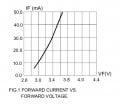
The graph below shows how quickly current varies with small changes in voltage:
upload_2018-11-16_6-25-13.jpeg
And that was for an LED whose Vf spec could be anywhere from 3.2-4V. A swing from one LED to the next of 0.8V, when it only takes 0.2V to go from 10-20mA, represents a huge degree of variability when running constant voltage with no current limiting. It might work *well enough* for a one-off, hand calibrated build, but it's generally not a good idea.
 

Thread Starter

spinnaker

Joined Oct 29, 2009
7,830
Please you don't just apply 3.3V for the LED without current limiting resistor, you need to apply more voltage and in series with a resistor, if you don't in series with the resistor then the led will be reducing the usage life, if you don't care about the usage life then just apply 3.3V to the led.

Already have it in the plans.
 

MrChips

Joined Oct 2, 2009
34,778
You need a constant current source. For that, the supply voltage must be greater than the LED voltage.
An ideal constant current source has infinite series resistance. Lower the series resistance below 100Ω and you move further away from an ideal current source. That is, at 10mA your headroom is only 1V with a series resistance of 100Ω.
 

dl324

Joined Mar 30, 2015
18,310
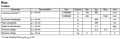
LEDs are characterized at specific currents. The forward voltage spec is often at 10mA or 20mA, as is the brightness. But an LED will turn on as soon as it's conducting current.

upload_2018-11-16_7-29-42.png

I recall showing the IV curves of an LED with a curve tracer to my son. I was surprised to see it emitting light in reverse breakdown, but it makes sense when you think about it.
 

Thread Starter

spinnaker

Joined Oct 29, 2009
7,830
You need a constant current source. For that, the supply voltage must be greater than the LED voltage.
An ideal constant current source has infinite series resistance. Lower the series resistance below 100Ω and you move further away from an ideal current source. That is, at 10mA your headroom is only 1V with a series resistance of 100Ω.

Thanks that is good to know. I will need 5V *in addition to the 3.3V) on board anyway. Might as well use it for the LEDs. I will need a higher wattage current limiter. All I have is 1/4 W resistors on hand but I could always tput some in parallel.
 

ScottWang

Joined Aug 23, 2012
7,500
One resistor for one led, if like this W= V*I = 1.7V*280mA = 0.476W, 280mA is 80% of 350mA, for a typical application that the wattage is 5 times of calculation values, Wp = 0.476*5 =2.38W, so 5W is enough for the led with 3.3V/350 mA rated current.

Edit : but don't forget to put the heatsink for each led.
 

Thread Starter

spinnaker

Joined Oct 29, 2009
7,830
Okay.
Do you know how much current they are using when they are "nice and bright"?
I assume that's where you want to operate them.

For starters they won't be on all the time. If I am recalling my measurements correctly a given LED will be pulsed at every 70ms and up. The LED won't be on for more than 1us at any given time.

But since they are 350ma LEDs, I would assume they are going to use 350ma safely when they are on full. (which should not happen under normal circumstances, being on full that is).
 

Thread Starter

spinnaker

Joined Oct 29, 2009
7,830
That's a completely different kettle o' fish.
You would need 6Ω 1W series resistor and that's not the route to take. You need an LED constant current driver circuit or a PWM circuit.

And what if I bring the voltage down to 4.5V with a couple of diodes? I would still be 1V over the optimum operating voltage of the LED.
 
Top