Facebook
 Google
 GitHub
 Linkedin

Hi All,
I have an LED flasher design that uses 9 LEDs and works well, to improve its efficiency and address the issue, which is the delayed startup flash as it takes about 5 seconds for the first flash.
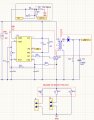
The device works from 16V-24VDC, with Vf LED of 10.5V each. So I am using a voltage step-up circuit that reaches around 130VDC. All this works well and I don’t really want to change much of it.
The delayed start-up flash is obviously do to the fact that it takes a few seconds to raise the voltage to the minimum voltage to light up the LEDs. It is taking this time on purpose to reduce the operating current, I can make it faster at the cost of extra current, not an option. A work around I thought, is to bypass a number of LEDs at the start until the voltage gets where it needs to get to light up all of them and then stop bypassing them.
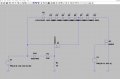
So, I thought to use a P-MOSFET to basically short out a number of the LEDs and when the voltage gets to a certain level, the MOSFET would switch off and no longer bypass the LEDs, and normal operation would then resume. So ideally, at the start, maybe 3 LEDs would flash, and once the voltage has reached say 110V or thereabouts, the bypass is removed. So I was wondering if this is doable in a simple way as described. I don’t normally use LTspice, so no expert by miles, but I have attached the sim to give you a simplified circuit
D10 is to drop the input voltage to within the limits of the (random P-MOSFET). R1 & R2 create a voltage divider for the switching point, and R3 is a limiting resistor for the active LEDs at the start.
Would appreciate your inputs and suggestions.
I have an LED flasher design that uses 9 LEDs and works well, to improve its efficiency and address the issue, which is the delayed startup flash as it takes about 5 seconds for the first flash.
The device works from 16V-24VDC, with Vf LED of 10.5V each. So I am using a voltage step-up circuit that reaches around 130VDC. All this works well and I don’t really want to change much of it.
The delayed start-up flash is obviously do to the fact that it takes a few seconds to raise the voltage to the minimum voltage to light up the LEDs. It is taking this time on purpose to reduce the operating current, I can make it faster at the cost of extra current, not an option. A work around I thought, is to bypass a number of LEDs at the start until the voltage gets where it needs to get to light up all of them and then stop bypassing them.
So, I thought to use a P-MOSFET to basically short out a number of the LEDs and when the voltage gets to a certain level, the MOSFET would switch off and no longer bypass the LEDs, and normal operation would then resume. So ideally, at the start, maybe 3 LEDs would flash, and once the voltage has reached say 110V or thereabouts, the bypass is removed. So I was wondering if this is doable in a simple way as described. I don’t normally use LTspice, so no expert by miles, but I have attached the sim to give you a simplified circuit
D10 is to drop the input voltage to within the limits of the (random P-MOSFET). R1 & R2 create a voltage divider for the switching point, and R3 is a limiting resistor for the active LEDs at the start.
Would appreciate your inputs and suggestions.
Attachments
-
2.7 KB Views: 36




 .)
.)