LED current?

Thread Starter

joewales44

Joined Oct 8, 2017
218
No, and no.

If you want to control the current in two parallel strings, you need two controllers.

That said, you can ameliorate the problem by putting a series resistor in each string.
if i need 2 controllers then i wouldn't need to run them in parallel? it would be 2 separate circuits? is that what you mean?
do i put the resistor in series with each string of LEDs?
what value resistor?
 

Thread Starter

joewales44

Joined Oct 8, 2017
218
No.
It's bad enough that you have parallel strings of LEDs with no ballast resistor for each string. The extra connection exacerbates the problem of unmatched forward voltages.

How bad this is depends on LED specifications (continuous current, peak current, forward voltage spread) and how you're driving them.

Parallel LEDs in inexpensive flashlights is a common practice, but that doesn't mean it's good. I have several where most of the LEDs no longer light.
what does a ballast resistor do?
i understand you need a resistor when running directly from power source to use excess voltage not needed for the LEDs.
i thought the driver chip controlled the current and that's all that mattered?
 

dl324

Joined Mar 30, 2015
18,326
what does a ballast resistor do?
It allows better current sharing between strings.

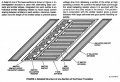
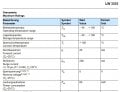
This excerpt from National Semiconductor AN-110 might be helpful:
an110Excerpt.jpg
i understand you need a resistor when running directly from power source to use excess voltage not needed for the LEDs.
i thought the driver chip controlled the current and that's all that mattered?
The driver chip can't divide current equally between strings. That's your job and you didn't do it the way a conservative designer would.

If the forward voltages of the LEDs you're using haven't been matched, then you shouldn't connect them in parallel. If you're using matched LEDs, you should indicate that on your schematic.

With unmatched LEDs in parallel, the one with the lowest forward voltage will hog current. If you're operating them near their maximum peak current rating, that can setup a cascading failure.
 

BobTPH

Joined Jun 5, 2013
11,514
what does a ballast resistor do?
i understand you need a resistor when running directly from power source to use excess voltage not needed for the LEDs.
i thought the driver chip controlled the current and that's all that mattered?
The driver controls the current at 1A. I does not and can not control how much of that goes into each of two parallel strings.

Can the chip run at a high enough voltage for all 4 LEDs? If so, use a higher voltage and put all 4 in series.

Ballast resistors in the case of parallel strings help balance by dropping more voltage on the string with the higher current. Their value would be based on how much excess voltage there is. They should be sized to drop most (but not all) of that excess at the desired current for the string.
 

Thread Starter

joewales44

Joined Oct 8, 2017
218
It allows better current sharing between strings.

This excerpt from National Semiconductor AN-110 might be helpful:
View attachment 300680
The driver chip can't divide current equally between strings. That's your job and you didn't do it the way a conservative designer would.

If the forward voltages of the LEDs you're using haven't been matched, then you shouldn't connect them in parallel. If you're using matched LEDs, you should indicate that on your schematic.

With unmatched LEDs in parallel, the one with the lowest forward voltage will hog current. If you're operating them near their maximum peak current rating, that can setup a cascading failure.
all 4 LEDs are very close to same forward voltage.
they're the same part coming on same reel.
forward voltage is 3.6 to 3.7 volts.
is this close enough that i don't need the resistor?
i don't know how to indicate matched LEDs.
bottom line is - if LEDs are matched and driver chip is producing 1 amp, does each string get 0.5 amp?
thanks
 
Last edited:

dl324

Joined Mar 30, 2015
18,326
all 4 LEDs are very close to same forward voltage.
they're the same part coming on same reel.
forward voltage is 3.6 to 3.7 volts.
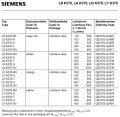
It's more typical for LEDs to be binned by brightness, not forward voltage, because the assumption is that they'll be driven at the same current if brightness matching is important.
siemensLedBinning.jpg
is this close enough that i don't need the resistor?
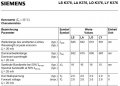
You still haven't provided sufficient information. What are the LED specs?
siemensLedSpecs.jpg
It's unusual for these colors to have the same forward voltage range, but I don't have reason to doubt the manufacturer specifications.

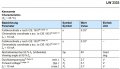
OSRAM gives a min, typical, and max forward voltage specification:
osramLedSpecs.jpg
i don't know how to indicate matched LEDs.
That's traditionally done with a note on the schematic.
 

Thread Starter

joewales44

Joined Oct 8, 2017
218
It's more typical for LEDs to be binned by brightness, not forward voltage, because the assumption is that they'll be driven at the same current if brightness matching is important.
View attachment 300683
You still haven't provided sufficient information. What are the LED specs?
View attachment 300684
It's unusual for these colors to have the same forward voltage range, but I don't have reason to doubt the manufacturer specifications.

OSRAM gives a min, typical, and max forward voltage specification:
View attachment 300686
That's traditionally done with a note on the schematic.
these are binned by forward voltage, wavelength, and light output.
seems voltage is all i need to worry about for current safety?
i don't care if light output is off a little.
will each string be close to 0.5 amp if forward voltage in each string is close to same?
 

BobTPH

Joined Jun 5, 2013
11,514
will each string be close to 0.5 amp if forward voltage in each string is close to same?
No way to tell without measuring. They also must be at the same temperature. The problem is that if one is getting more current, its temperature goes up, causing it to take even more current.
 

dl324

Joined Mar 30, 2015
18,326
these are binned by forward voltage, wavelength, and light output.
Show me the data.
seems voltage is all i need to worry about for current safety?
No. The most important parameter is current.
will each string be close to 0.5 amp if forward voltage in each string is close to same?
You still haven't provided sufficient information to do any analysis.

What is the peak forward current rating for the LEDs? What is the maximum continuous current? Are we still talking about a 2S2P configuration without the shorting connection you asked about?

These are the maximums for the OSRAM LEDs referenced earlier:
osramMax.jpg
500mA is a no-go for these.
 
Last edited:

ronsimpson

Joined Oct 7, 2019
4,690
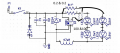
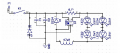
Here is what I have done in the past to help the current share in two strings.
Each string gets a different current resistor. (0.2 or 0.22 ohm)
The feed back pin has two 100 ohm resistor that feed the average of the two voltages. (current )
1692285986764.png
In the big picture 0.2//0.2=0.1 so the total current is the same.

Unless you ask for binned diodes they are not. Maybe you have and you have (part number)-C or -D. If you get the parts on the hobby market the voltages are unpredictable.
 

Thread Starter

joewales44

Joined Oct 8, 2017
218
Here is what I have done in the past to help the current share in two strings.
Each string gets a different current resistor. (0.2 or 0.22 ohm)
The feed back pin has two 100 ohm resistor that feed the average of the two voltages. (current )
View attachment 300696
In the big picture 0.2//0.2=0.1 so the total current is the same.

Unless you ask for binned diodes they are not. Maybe you have and you have (part number)-C or -D. If you get the parts on the hobby market the voltages are unpredictable.
please remember i'm a mechanical guy, not electrical.
looks like the 100^ resistors would be in series with the 0.2^ resistors and change what current the driver is sending out?
 

Thread Starter

joewales44

Joined Oct 8, 2017
218
Just do it right. Use two chips. Why mess around with an inferior solution?
limited board space, power consumption, and parts cost.
i'm only concerned with protecting LEDs from over current. not worried about variations in brightness.
these LEDs can run at up to 1 amp and i thought this circuit would drive each string at 0.5 amp.
even if current isn't exactly balanced between strings, wouldn't it still be well below 1 amp?
if the chip is only putting out 1 amp and the LEDs are rated for 1 amp, how could it damage LEDs in either string?
thanks
 

djsfantasi

Joined Apr 11, 2010
9,237
if the chip is only putting out 1 amp and the LEDs are rated for 1 amp, how could it damage LEDs in either string?
First, given that you’re using the OSRAM LEDs mentioned earlier, the LEDs are NOT rated for 1A (1000mA); they are rated for 20mA per the datasheet) and should be run lower than that. Without the proper current limiting resistor, 1000mA blows away (or blows up) a 20mA device.

Secondly, with a forward voltage between 2.0 and 2.6V, you don’t have enough headroom to put two LEDs in series; the resistor value will be two small and you might blow the LEDs because current won’t be regulated enough for 5V input.

Your driver chip HAS current regulation built in. The datasheet will tell you how to pick the appropriate resistor value. Size it for 15mA.

I recommend wiring on a breadboard 5V, resistor and LED and you can experiment with different resistor values and select the desired LED current.

To calculate the desired resistor value (R) for the desired current (A), you need to know the number of resistors to parallel (n), the supply voltage (Vs) and the forward voltage. Then use Ohm’s law …
R = (Vs -Vf ) / A
Using values from your circuit,
R = (5 - 2.3 ) / 0.015 = 180
With two LEDs in series, the calculations are:
R = (5 - 4.6) / 0.015 = x
 
Last edited:
Top