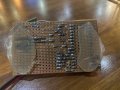
Learnt something amazing ....circuit board I put together a while back has "failed in service"

Thread Starter

daba1955

Joined Apr 27, 2019
218
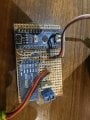
.. a little circuit board I put together a while back has "failed in service". The board had been held in place in its enclosure using silicon sealant
2024-11-04 21.17.55.jpg
 

Attachments

Last edited by a moderator:

joeyd999

Joined Jun 6, 2011
6,246
.. a little circuit board I put together a while back has "failed in service". The board had been held in place in its enclosure using silicon sealant, and it turns out that silicon sealant eats solder !!!

In the pictures you can clearly see that where the sealant is on the back of the board, the solder is blackened, and the connections made there have become intermittent.

Now I'm racking my brains to try to remember other projects that I might have used silicon sealant on ...
View attachment 335125View attachment 335127
Acetoxy Silicone
Acetoxy Silicones derive their name from their release of acetic acid. During the curing process these silicones have a vinegar-like smell. Acetoxy silicones cure with the presence of atmospheric moisture and typically have a very fast cure time and strong adhesion. Because of the acid released, however, acetoxy cure silicones have a stronger smell than neutral cure silicones, and the acid can be corrosive to certain substrates and metals.
 

meth

Joined May 21, 2016
302
Ordinary (neutral cure) silicone sealant should be harmless to the PCB.
You can read the effects of the Acetoxy silicone.
Anyways, the whole approach for fixing the PCB using glues or silicons is completely wrong. You have so many different PCB holders, mounters, spacers which are super cheap and easy to mount.
 

Art Vandelay

Joined Nov 1, 2024
140
Looks like you used the silicone for strain relief on the power leads as well. I seen acetic acid wick all the way up copper wires due to capillary action. Acetic acid will turn copper blue. This was during electrolysis but it's worth a look if you plan to repair.
 

Art Vandelay

Joined Nov 1, 2024
140
Well if that is DC voltage you have everything you need for electrolysis..
What?

I didn't know that. This explains why I've seen blue wires during repairs. Very interesting. See! Even this old dog can learn something new.
It might even be green or black depending on which compounds are formed. The color comes from the oxidation state of copper which provides a clue to the reactants.

In the case of copper and acetic acid, the reaction is: Cu + 2CH3COOH -> Cu(CH3COO)2 + H2 which is greenish blue. It becomes deep blue in high concentrations. Turns out the products from this reaction are both poisonous (Copper (II) acetate) and flammable (hydrogen gas). Probably not an issue in most cases but something to keep in mind.

Similar reactions happen with salt water or carbon dioxide which is why the statue of liberty is green.
 

Thread Starter

daba1955

Joined Apr 27, 2019
218
All good answers, and all confirm what I can see with my own eyes.

This particular project was a low-cost one, and I simply thought just mechanically anchoring the stripbaord to the housing would be sufficient.

However, I said I had learnt something new, and won't ever again use silicon(e) adhesive to secure anything electrical, or anything metal.

Strange, but most answers refer to the acidity affecting the copper, but that doesn't appear to be the case here, it's the solder that it appears to have reacted with. Copper areas under the silicone don't seem to be affected.

Going forward, I'll have to remake this gizmo, and I'll be securing it with my hot-glue gun. Think that'll be ok, won't it, the hot-glue won't be emitting acidic vapours while it "cures", or will it ?
 

Ya’akov

Joined Jan 27, 2019
10,226
All good answers, and all confirm what I can see with my own eyes.

This particular project was a low-cost one, and I simply thought just mechanically anchoring the stripbaord to the housing would be sufficient.

However, I said I had learnt something new, and won't ever again use silicon(e) adhesive to secure anything electrical, or anything metal.

Strange, but most answers refer to the acidity affecting the copper, but that doesn't appear to be the case here, it's the solder that it appears to have reacted with. Copper areas under the silicone don't seem to be affected.

Going forward, I'll have to remake this gizmo, and I'll be securing it with my hot-glue gun. Think that'll be ok, won't it, the hot-glue won't be emitting acidic vapours while it "cures", or will it ?
Electronics grade silicone adhesive excellent option—for example, Chipquick's EGS10B-20G. You ca find it on Amazon, or direct from the manufacturer. Silicone adhesive has a lot of excellent properties, you just can't use common RTV.
 
Top