LCR Pro1 Plus

tautech

Joined Oct 8, 2019
497
Jumping into this tread in support of SMD smart tweezers having brought mine in 2007 although they were the now outdated ST3 they have been my goto passive component measuring tool for all these years.
Will replace them in an instant when they crap out with a more modern set and one that measures diodes in Auto mode rather than needing to select Diode mode. One might think these are only suitable for SMD however anything you can stretch the tweezer legs over can be measured therefore it's rare one has to get the DMM out for the majority of work.
I have my eye on these as more modern replacements:
https://www.eevblog.com/forum/testgear/design-a-new-precision-lcr-tweezers/
If Shannon and his buddy (the designers) can install a good feature set and offer them at a hot price I'm sure they'll be very popular.
 

Thread Starter

bob2

Joined Jun 15, 2019
226
tautech
Hi
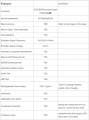
I would like to suggest some ideas for the table of specifications.
Automatic reduction of the excitation voltage.
In-circuit C / L connection analyzer.
A universal table (or two) ESR of electrolytic capacitors introduced into the program.
ESR / Q function.
The capacitance of the capacitors should be measured in-circuit within the tolerances, even if there is a resistance of 1 Ohm in parallel.
 

tautech

Joined Oct 8, 2019
497
tautech
Hi
I would like to suggest some ideas for the table of specifications.
Automatic reduction of the excitation voltage.
In-circuit C / L connection analyzer.
A universal table (or two) ESR of electrolytic capacitors introduced into the program.
ESR / Q function.
The capacitance of the capacitors should be measured in-circuit within the tolerances, even if there is a resistance of 1 Ohm in parallel.
Bob
I have an entirely different view in that we are the master of our instrument rather than the reverse.
While your ideas have some merit they certainly won't fit all use cases especially for the through hole component measurement that many are now discovering you can also do with SMD tweezers.

I use the cap measurement a lot to check ESR where my old ST3's show ESR as a 2nd measurement to capacitance (Auto or Cap mode) and in appliance SMPS in particular it's not uncommon to get caps in parallel on the output stages so accurate in-circuit measurements are fruitless without removing caps.
Resistors values OTOH are are mostly not that crucial to circuit operation and to measure in circuit parallel paths are indeed more common yet as resistor failure modes are either open or drifted high, read values are most commonly lower for sound resistors when there's a parallel measurement path therefore with a little logic applied by the user a quick and definitive component fault finding can be accomplished.
I do use other than default settings but mostly find them a little frustrating so mostly use Auto mode yet ST3 needs be placed in Diode mode where it only indicates >I to represent a junction or displays Short where parallel measurement paths too frequently give a false indication of a faulty diode. In Diode mode IMO the Vf needs also be indicated along with the junction direction: I< or >I .

My views certainly won't align with everyone that uses SMD tweezers and are from a practical perspective for a variety of hobbyist uses.
 

Thread Starter

bob2

Joined Jun 15, 2019
226
tautech
This is normal. Everyone has their own knowledge and practice in electronics.
Your experience with the ST3 tweezers is very rewarding, any ideas have their own value.
My ideas did not arise out of nowhere, they are the result of practical experience with various tools, industrial and homemade.
The implementation of these ideas greatly simplifies the analysis of the situation and the search for faulty components.
The basic mode of any tweezers is the measurement of capacitor parameters (C / ESR). The ideal solution is the simultaneous measurement of these two parameters. That is, we measure the capacitance at a frequency of 100 Hz, and ESR at a frequency of 10 or 100 kHz. Two parameters are displayed simultaneously on the display. This function has long been implemented in some amateur designs. It's better than constantly switching modes in tweezers.
The idea of introducing an ESR table into the software logically completes the process of analyzing capacitor parameters.
Concerning the idea of simultaneous measurement of two ESR / Q parameters.
This function is implemented in one of the tweezers and has quite practical sense. We know that it is not always possible to measure the capacitance due to the shunting effect of low resistance. In this case, we will not be able to estimate the D of the capacitor, but only the ESR. But one parameter is not enough for evaluating the suitability of the capacitor, therefore the simultaneous measurement of ESR / Q completely solves this problem.
 

tautech

Joined Oct 8, 2019
497
Sure but consider the possible wide use case for caps in particular where one day you might be repairing an old piece of gear with a linear PSU where low ESR caps were never specified or used as most caps also that might be used for coupling or remote bulk capacitance however jump to a SMPS and throw all that thinking out the window as generally anything to do with SMPS are low ESR.
How do you properly cater for these different use scenarios with other than operator knowledge and experience ?
 

Thread Starter

bob2

Joined Jun 15, 2019
226
tautech

You are right about LOW ESR capacitors. We need good tools for this. They should work very confidently. LCR tweezers should be able to measure the ESR of these capacitors as well.
https://industrial.panasonic.com/cdbs/www-data/pdf/ABE0000/ABE0000C51.pdf
Automatic reduction of the excitation voltage.
We must not forget that the lower the excitation voltage, the lower the accuracy, and this is clearly reflected in the specifications.
In automatic mode, the tweezers independently select the excitation voltage, depending on the situation of the in-circuit connection of the components. If the tweezers understand, for example, that there is a Schottky diode with a low opening voltage, it reduces the voltage to the required level. If there is nothing shunting, it continues the test with an excitation voltage of 1V .
The main advantage of this measurement mode is that we do not have to constantly switch the excitation voltage.
That is, in the default automatic measurement mode, we also have an automatic excitation voltage regulation mode.
SP-Cap.jpg
 
Last edited:
Top