Keeping duty cycle constant while changing frequency

sghioto

Joined Dec 31, 2017
8,634
I'm referring to the circuit you posted in post 33
OK, I think I know what you are asking.
Using pin 3 requires only 1 resistor in the R-C timing network.
Works best using a cmos 555 to get a 50% duty cycle, although not that important as the duty is going to be reduced to 15%.
 

Thread Starter

ane1983

Joined Jul 15, 2024
55
OK, I think I know what you are asking.
Using pin 3 requires only 1 resistor in the R-C timing network.
Works best using a cmos 555 to get a 50% duty cycle, although not that important as the duty is going to be reduced to 15%.
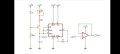
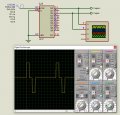
Ok, thanks a lot. After doing some research I learned that by adding a fast diode, preferably between pins 5 and 3, the wave starts almost from zero. In this case, if we remove the current source, a resistor would also be used, the difference is that you don't use pin 7.Screenshot_20240723_161252_Opera.jpgScreenshot_20240723_161252_Opera.jpgScreenshot_20240723_161252_Opera.jpg
 

MisterBill2

Joined Jan 23, 2018
27,528
Way Back in post #51 I suggested a simple digital scheme to provide a settable pulse percentage of "ON TIME" completely independent of frequency. That will work quite well for mapping the advance versus RPM profile for electronic spark controllers, which is what I think that the TS is wanting to do.
That is totally different from tuning an engine for max power or best economy, and it does not even require an engine, let alone a dynamometer.
ALL of the analog schemes proposed require close tolerance components and a fair amount of calibration. A digital system would only require accurate assembly once, although it will still require a means to read the frequency/RPM value.
In fact, it could even be achieved with one of those small micros that so many are in love with.
 

Thread Starter

ane1983

Joined Jul 15, 2024
55
Way Back in post #51 I suggested a simple digital scheme to provide a settable pulse percentage of "ON TIME" completely independent of frequency. That will work quite well for mapping the advance versus RPM profile for electronic spark controllers, which is what I think that the TS is wanting to do.
That is totally different from tuning an engine for max power or best economy, and it does not even require an engine, let alone a dynamometer.
ALL of the analog schemes proposed require close tolerance components and a fair amount of calibration. A digital system would only require accurate assembly once, although it will still require a means to read the frequency/RPM value.
In fact, it could even be achieved with one of those small micros that so many are in love with.
In the search for a solution another objective is to learn, a specific example is 555.
 

Thread Starter

ane1983

Joined Jul 15, 2024
55
Ok, thanks a lot. After doing some research I learned that by adding a fast diode, preferably between pins 5 and 3, the wave starts almost from zero. In this case, if we remove the current source, a resistor would also be used, the difference is that you don't use pin 7.View attachment 328100View attachment 328100View attachment 328100
Sorry for the repetition of images, the slow connection makes me think that they have already been uploaded and I will try again
 

Thread Starter

ane1983

Joined Jul 15, 2024
55
Way Back in post #51 I suggested a simple digital scheme to provide a settable pulse percentage of "ON TIME" completely independent of frequency. That will work quite well for mapping the advance versus RPM profile for electronic spark controllers, which is what I think that the TS is wanting to do.
That is totally different from tuning an engine for max power or best economy, and it does not even require an engine, let alone a dynamometer.
ALL of the analog schemes proposed require close tolerance components and a fair amount of calibration. A digital system would only require accurate assembly once, although it will still require a means to read the frequency/RPM value.
In fact, it could even be achieved with one of those small micros that so many are in love with.
I was also thinking about that idea, but as far as my knowledge goes, the useful cycle would be chosen by jumps between counter outputs, for example 36°, 72°, etc. I want to be able to set the time on high continuously, for example 5°, 6°, 10°, 12°. If I were to digitalize it, it would vary from 2° to 2° or perhaps 3° to 3°; but I don't know how to do that.
Examplecaptor.jpg
 

MisterBill2

Joined Jan 23, 2018
27,528
I was considering an oscillator running at 100 times the desired frequency, feeding a counter that counted from zero to 100 and then rolled over to zero. The "zero count" would start the pulse and when it reached some number the pulse would end, while the count continued to 100, at which time it would roll over to Zero, triggering the start of the next pulse. So pulses widths could be selected from 1percent to 99 percent, in one percent increments. Quite stable and only the frequency would depend on external variable, like supply voltage and temperature. The duty cycle would depend on switch settings.
 

Thread Starter

ane1983

Joined Jul 15, 2024
55
So, to select the corresponding pulses that make up the high time, how do I capture them and how could I vary them? With 4017, which is the decimal I know, I don't think it could be done and another way would be a whole combination of logic gates for each case, for example 15 combinations. Please, if you have another one, could you help me? I would learn a little more. Thanks.
 

MisterBill2

Joined Jan 23, 2018
27,528
So, to select the corresponding pulses that make up the high time, how do I capture them and how could I vary them? With 4017, which is the decimal I know, I don't think it could be done and another way would be a whole combination of logic gates for each case, for example 15 combinations. Please, if you have another one, could you help me? I would learn a little more. Thanks.
it would be TWO CD4017 decade counters, and then a single AND gate to select the ones digit and the tens digit, and reset the FF that gets set on the rollover to zero zero, which would be sensed by another AND gate. So the circuit would be rather simple, a total of probably FOUR ICs. Totally separate from the frequency generator. That could still be a 555, but generating a higher frequency.
A separate frequency counter would be needed, though.
 

MisterBill2

Joined Jan 23, 2018
27,528
I understand but I don't know how to implement the design. I will study and search a little.
The various oscillators described in the different posts can work quite well for generating the frequency, although the resistor and capacitor values will need to be a bit less. Cascading to CD4017s has been covered in many places, and selecting the outputs with 2 ten position switches is very straightforward. Connecting two input and gates to sense two-digit counts has also been covered in applications literature for the 4017 as well. Setting and resetting a CD4013 flipflop is just as simple as it sounds.
 
Top