Cheers lad. When you said pull-down res, did you mount a 10k in the pull down? My original circuit only has one 8.2k res on the not_in node (pin 1 connecting to res and capacitor)I used the pin numbers from your schematic.
Yes. Initially I was going to use a switch to trigger the circuit, but I had a signal generator mounted in the box with the scope, so I used it instead so I didn't have to worry about switch bounce or triggering the scope. I left the resistor because it was a convenient point to connect the signal generator.When you said pull-down res, did you mount a 10k in the pull down?
Would you mind sharing with me the schematic of the connections? I presume you're using 2 resistors?Yes. Initially I was going to use a switch to trigger the circuit, but I had a signal generator mounted in the box with the scope, so I used it instead so I didn't have to worry about switch bounce or triggering the scope. I left the resistor because it was a convenient point to connect the signal generator.
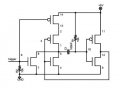
Cheers, I'll retry to mount it on a breadboard todayIt's the same as your schematic with the addition of the pull down resistor:
View attachment 194679
The device with the bubble on the gate is PMOS.
Tested it out. Worked fine, I probably must have mounted it incorrectly. Thank you all for the help!It's the same as your schematic with the addition of the pull down resistor:
View attachment 194679
The device with the bubble on the gate is PMOS.
The circuit from @ronsimpson simply replaced the active devices with a resistor. The disadvantages are speed, power dissipation, and pull up strength. CMOS is superior in all regards.Care to explain?