Normally to fully turn on a BJT as a switch into saturation, a β of 10 to 20 is used.
The β of 200 hundred only applies when the transistor is used as an amplifier and the collector operating voltage is at least several volts.
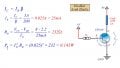
Where did you get the 2.2V you subtracted from the 8V to calculate the value of RB? Typically the VBE of a transistor is less than a volt.
Normally to fully turn on a BJT as a switch into saturation, a β of 10 to 20 is used.
The β of 200 hundred only applies when the transistor is used as an amplifier and the collector operating voltage is at least several volts.
Where did you get the 2.2V you subtracted from the 8V to calculate the value of RB? Typically the VBE of a transistor is less than a volt.
Thank you for your reply
There are two reason to use TIP 160:
First that is that the available transistor for me now.
second when the beta of 200 That make Rb watting is small.
2.2V is VBE from data sheet!!
OK
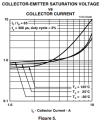
At 5A Ic the collector emitter saturation is about 1.3V
If you make base current with 77mA at 5A collector current , the current gain will be 65
but the lowest value for current gain is 200?
It's good practice to overdrive a BJT transistor with a forced beta value lower than its typical active value to achieve low saturation voltage.
Otherwise if you get a transistor with a minimum beta, it might not fully turn on.
If you are using an 8 V supply that limits at 5 A, then if you try to power this 6 V lamp that draws 6.6 A you will drag the supply voltage down to whatever voltage is needed to get 5 A through that bulb (which will be something less than 6 V). This is assuming that your supply actually goes into a current-limiting mode and doesn't just shut down or blow a fuse or let out magic smoke, or some other undesired behavior. But, assuming it does, now your assumed 8 V for your base current section will no longer be at 8 V, but rather something less than 6 V as well (assuming both 8 V sources are from the same supply).
Why not pick a load that your supply can actually drive?
If you are using an 8 V supply that limits at 5 A, then if you try to power this 6 V lamp that draws 6.6 A you will drag the supply voltage down to whatever voltage is needed to get 5 A through that bulb (which will be something less than 6 V). This is assuming that your supply actually goes into a current-limiting mode and doesn't just shut down or blow a fuse or let out magic smoke, or some other undesired behavior. But, assuming it does, now your assumed 8 V for your base current section will no longer be at 8 V, but rather something less than 6 V as well (assuming both 8 V sources are from the same supply).
Why not pick a load that your supply can actually drive?
What LED terminal? You said you were using a 6 V lamp.
Are you actually using a power LED?
Your numbers make no sense. Your Vbe and Vbc equate to a Vce of 0.95 V. If your LED is dropping 4.66 V then that means that your supply is at about 5.6 V. Where is this 9 V or 10 V number coming from? Is it the supply voltage when the transistor is OFF?
OK
At 5A Ic the collector emitter saturation is about 1.3V
If you make base current with 77mA at 5A collector current , the current gain will be 65
but the lowest value for current gain is 200?
All,
Let's give the TS a break! He has made it abundantly clear that his goal is to learn how a transistor functions. No, he didn't use a symbol that most of us recognize as a Darlington. It's rather likely that the TS did not know that a different symbol existed. He also did not use a resistor symbol that most of us consider standard; why not chastise him for that too? (To me it is clear that he copied the posted circuit; he did not create it from scratch.) I suspect that the TS also knows that 6 * 6.6 does not equal 45.. The TS seems to be trying to understand the concept of β. If someone were to tactfully acquaint him with electronic symbols, he might well learn about those as well. He asked if his posted equations were correct. Why not, again tactfully, answer that and instruct him--not beat him over the head--wherein the error lies?
What LED terminal? You said you were using a 6 V lamp.
Are you actually using a power LED?
Your numbers make no sense. Your Vbe and Vbc equate to a Vce of 0.95 V. If your LED is dropping 4.66 V then that means that your supply is at about 5.6 V. Where is this 9 V or 10 V number coming from? Is it the supply voltage when the transistor is OFF?
Sorry,It's a 6V lamp not LED
That is the voltages i get with 8.2v POWER SUPPLY
I mean the voltage between lamp terminals stay about 4.5V while exceed power supply voltage to 9 or 10V?
Sorry,It's a 6V lamp not LED
That is the voltages i get with 8.2v POWER SUPPLY
I mean the voltage between lamp terminals stay about 4.5V while exceed power supply voltage to 9 or 10V?
I'm trying to understand where these numbers are coming from because they don't make sense (as I'm understanding it right now).
You seem to be saying that the voltage across the lamp is about 4.5 V but your other measurements say that the voltage across the collector-emitter terminals of the transistor are only about 1 V. That is simply not consistent with and 8.2 V supply (let along 9 V or 10 V) because they only add up to about 5.5 V. Where is the rest of the voltage appearing.
Please measure the supply voltage when the lamp is on and has 4.5 V across it. Also measure the Vce (collector-emitter voltage) of the transistor under those same conditions. Report all three numbers.
I suspect that the power supply voltages you are stating are the open-circuit voltage that the supply is set to and that it is dropping significantly under such a heavy load.
All,
Let's give the TS a break! He has made it abundantly clear that his goal is to learn how a transistor functions. No, he didn't use a symbol that most of us recognize as a Darlington. It's rather likely that the TS did not know that a different symbol existed. He also did not use a resistor symbol that most of us consider standard; why not chastise him for that too? (To me it is clear that he copied the posted circuit; he did not create it from scratch.) I suspect that the TS also knows that 6 * 6.6 does not equal 45.. The TS seems to be trying to understand the concept of β. If someone were to tactfully acquaint him with electronic symbols, he might well learn about those as well. He asked if his posted equations were correct. Why not, again tactfully, answer that and instruct him--not beat him over the head--wherein the error lies?

 Facebook
 Google
 GitHub
 Linkedin