is-quantum-communication-faster-than-the-speed-of-light?

MrAl

Joined Jun 17, 2014
13,859
What's a "particle"? what's a "field"? these have no tangible reality, the are defined wholly by mathematics.
Hello again,

Well, I turned to the photoelectric effect because that was brought up and I think it's an interesting place to compare the wave theory and the particle theory, and that is because it appears that in the past the particle theory was being used to explain the photoelectric effect. I also avoid the math here to help to make it more intuitive.

If we look at a particle as an object like a cue ball, then when it strikes another ball it forces that second ball to move. That is similar to the particle idea. The difference is the scale of the sizes. The cue ball takes a lot of atoms to make it up, and the other ball too, and it's interesting that the two never touch in the way we think of a 'touch'. It is their fields that interact. But let me go to the next thing now.

The next idea is to take a sine wave generator that generates say a 1kHz and maybe 3kHz and maybe 5kHz (and some in between while we turn up the frequency between those), and run it into a set of three bandpass filters where they are tuned to 1kHz, 3kHz, and 5kHz, and we mix the outputs to form one single output. What do we see at the output. When we turn up the generator toward 1kHz we do not see any output, but when the generator gets close to 1kHz we see an output start to come out of the set of bandpass filters. It might start at 990Hz and last until we reach 1010Hz and peaks at 1000Hz. After that the output amplitude goes back down until we reach 3kHz and then the same thing happens, then 5kHz, then after that we get no output (at say 5050Hz). The range of frequencies it passes is the bandwidth and it is always centered at one of those frequencies. I think we can all imagine this without actually doing it.

Now what I think is interesting about this is that the frequency generator never stopped putting out a sine wave, and even after it enters the filters it's still a sine wave. What changes is the output and that is not due to the sine wave changing to some other sort of wave or something else entirely, it is due to the tuning of the bandpass filters. We have two basic entities: the sine wave, and the filters, that's it. They never change, but some of the frequencies are rejected so the output may go very low or very high depending only on the frequency of the sine wave.
So what causes this output to change? It's not the sine wave shape it remains a sine wave throughout, it's the bandpass filters.

Now next we sharpen the filters so that they are ideal. Now there is no real bandwidth, the frequencies have to be EXACT. They have to be either 1, 3, or 5kHz, exactly. The filters will reject even a tiny tiny difference, even 1000.000000000000001Hz for example gets rejected. And again, that is due to the way we made the filter, the sine wave is still a sine wave, and of course it's still considered a wave.

Ok one more little change perhaps. Instead of using bandpass filters, we use bandstop filters, and they are also ideal. What happens then is that when we hit one of those 1,3,5kHz frequencies, the output goes to zero. For all other frequencies we get a full output equal to the amplitude of the sine wave. Of course that means the filters now have absorbed all the energy from those frequencies if the generator is tuned to one of those frequencies.

So why bring this up. If we look at the final version of the filters (with much higher center frequencies) as the electron response and the sine wave as a frequency of light, we see the same basic idea, except the electron can not just sit there and take the energy and dissipate it, so it moves. This can only happen at certain frequencies just like the bandstop filters, and also like the filters the incoming amplitude does not matter. Even if you turn up the amplitude of the sine wave or light wave, the only way either will respond is if the frequency is right. So this illustrates the photoelectric effect to some degree without the wave having to turn into anything else.

Of course there are other effects we would have to look at too, but I think this is an interesting one because it is usually taken as to attribute the unusual activity to a property of the light itself rather than of the electron. It looks like the electron is selective, and it should be because it's only allowed to do certain things.
 

joeyd999

Joined Jun 6, 2011
6,485
Hello again,

Well, I turned to the photoelectric effect because that was brought up and I think it's an interesting place to compare the wave theory and the particle theory, and that is because it appears that in the past the particle theory was being used to explain the photoelectric effect. I also avoid the math here to help to make it more intuitive.

If we look at a particle as an object like a cue ball, then when it strikes another ball it forces that second ball to move. That is similar to the particle idea. The difference is the scale of the sizes. The cue ball takes a lot of atoms to make it up, and the other ball too, and it's interesting that the two never touch in the way we think of a 'touch'. It is their fields that interact. But let me go to the next thing now.

The next idea is to take a sine wave generator that generates say a 1kHz and maybe 3kHz and maybe 5kHz (and some in between while we turn up the frequency between those), and run it into a set of three bandpass filters where they are tuned to 1kHz, 3kHz, and 5kHz, and we mix the outputs to form one single output. What do we see at the output. When we turn up the generator toward 1kHz we do not see any output, but when the generator gets close to 1kHz we see an output start to come out of the set of bandpass filters. It might start at 990Hz and last until we reach 1010Hz and peaks at 1000Hz. After that the output amplitude goes back down until we reach 3kHz and then the same thing happens, then 5kHz, then after that we get no output (at say 5050Hz). The range of frequencies it passes is the bandwidth and it is always centered at one of those frequencies. I think we can all imagine this without actually doing it.

Now what I think is interesting about this is that the frequency generator never stopped putting out a sine wave, and even after it enters the filters it's still a sine wave. What changes is the output and that is not due to the sine wave changing to some other sort of wave or something else entirely, it is due to the tuning of the bandpass filters. We have two basic entities: the sine wave, and the filters, that's it. They never change, but some of the frequencies are rejected so the output may go very low or very high depending only on the frequency of the sine wave.
So what causes this output to change? It's not the sine wave shape it remains a sine wave throughout, it's the bandpass filters.

Now next we sharpen the filters so that they are ideal. Now there is no real bandwidth, the frequencies have to be EXACT. They have to be either 1, 3, or 5kHz, exactly. The filters will reject even a tiny tiny difference, even 1000.000000000000001Hz for example gets rejected. And again, that is due to the way we made the filter, the sine wave is still a sine wave, and of course it's still considered a wave.

Ok one more little change perhaps. Instead of using bandpass filters, we use bandstop filters, and they are also ideal. What happens then is that when we hit one of those 1,3,5kHz frequencies, the output goes to zero. For all other frequencies we get a full output equal to the amplitude of the sine wave. Of course that means the filters now have absorbed all the energy from those frequencies if the generator is tuned to one of those frequencies.

So why bring this up. If we look at the final version of the filters (with much higher center frequencies) as the electron response and the sine wave as a frequency of light, we see the same basic idea, except the electron can not just sit there and take the energy and dissipate it, so it moves. This can only happen at certain frequencies just like the bandstop filters, and also like the filters the incoming amplitude does not matter. Even if you turn up the amplitude of the sine wave or light wave, the only way either will respond is if the frequency is right. So this illustrates the photoelectric effect to some degree without the wave having to turn into anything else.

Of course there are other effects we would have to look at too, but I think this is an interesting one because it is usually taken as to attribute the unusual activity to a property of the light itself rather than of the electron. It looks like the electron is selective, and it should be because it's only allowed to do certain things.
In high-energy particle experiments, these are actually called "resonances", and the reason behind them is pretty much exactly as your analogy illustrates. These resonances occur at very specific energies depending on the type of particles being observed, and their allowed transmutations.

Such a resonance is utilized, for instance, in atomic or nuclear clocks to great effect (i.e. extremely high timing accuracy).

I have theorized the possibility of an "electron clock" that exploits resonances inherent to the electron's internal structure* (a structure that doesn't exist according to QM/QFT/QED), that could allow for timing accuracies four orders of magnitude greater than that of a nuclear clock.

*As opposed to the structure of an atom or atomic nucleus.
 
Last edited:

joeyd999

Joined Jun 6, 2011
6,485
"Allowed transmutations" = conserved quantum numbers spin, charge, angular momentum, lepton number, and energy.

These act as the "components" that "tune" the energy of the bandpass/band-reject filter.
 

robp1956

Joined Jun 12, 2026
121
One of the many sciences.

Simply put "the study of"

The longer definition involves systematic observation, hypothesis, experimentation etc. also known as the scientific method.
And at the heart of all that is mathematics. Just like it is with the experts of the ways of the electron, also known as electrical/electronics engineers. The strong handle on mathematics is essential.
 

joeyd999

Joined Jun 6, 2011
6,485
The strong handle on mathematics is essential.
Agreed.

But there's a huge gulf between practical, applied physics (engineering) and theoretical physics.

Theoretical physics math is hard.

Really, really hard.

This is why solutions in QM and GR are usually particular solutions and not general solutions.
 
Last edited:

ElectricSpidey

Joined Dec 2, 2017
3,362
And at the heart of all that is mathematics. Just like it is with the experts of the ways of the electron, also known as electrical/electronics engineers. The strong handle on mathematics is essential.
I pretty much agree, but when I use math to help me design a circuit, I would consider that engineering not science.
 

MrAl

Joined Jun 17, 2014
13,859
In high-energy particle experiments, these are actually called "resonances", and the reason behind them is pretty much exactly as your analogy illustrates. These resonances occur at very specific energies depending on the type of particles being observed, and their allowed transmutations.

Such a resonance is utilized, for instance, in atomic or nuclear clocks to great effect (i.e. extremely high timing accuracy).

I have theorized the possibility of an "electron clock" that exploits resonances inherent to the electron's internal structure* (a structure that doesn't exist according to QM/QFT/QED), that could allow for timing accuracies four orders of magnitude greater than that of a nuclear clock.

*As opposed to the structure of an atom or atomic nucleus.
Hi,

The electron clock idea is interesting and I assume you mean it will be based partly on what the electron looks like up close, which I know of only one theory that would support that idea (hint hint).
It's also interesting because I was trying to work out the shape recently myself, given some assumptions like symmetry.
 

Futurist

Joined Apr 8, 2025
950
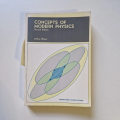
Well I trawled my library for books that cover this area and found this one, purchased when I was 19 (1979)

1784560822884.png

Its a little old, but the fundamentals haven't changed much, stuff like the Schrodinger Wave equation for example. Chapters 2 and 3 are of great interest here: The particle properties of waves and The wave properties of particles, plenty of specifics about real experiments, I think I can probably follow the math well enough to get the picture.

This was a well regarded book and got good reviews in science magazines at the time which led me to buy it, I've only ever dabbled in it though, skimmed through a few chapters, probably haven't opened it in forty years! so I'm gonna start reading chapter 2 and really try to get a grip on this.
 

Futurist

Joined Apr 8, 2025
950
Like I said, really really hard.
Yes, also a lot of the stuff Einstein brought together was new, stuff that was hardly known outside of specialist math researchers. That was novel, his determination to persist on the instinct that this was possible, was expressible.

He even invented his own notation, the "summation" convention which allowed the tensor notation to be simplified a lot, God only knows how overwhelming it would all have been without that convention.
 

joeyd999

Joined Jun 6, 2011
6,485
Engineering is applied science.

Essentially a dumbed-down set of concepts, rules, principles, and equations that approximate physical reality in the appropriate energy and scale regimes that apply to the problem in question.
For fun, I asked Grok to evaluate this assertion. I love the response, including its push-back on my qualifier "dumbed-down" and the fact that it brought up some of my own work as evidence:

----------------

Yes, the assertion is broadly correct, with some important nuances.

Core Accuracy

"Engineering is applied science" is a standard, useful shorthand. Science seeks to understand reality (building predictive models, discovering mechanisms, testing hypotheses). Engineering seeks to control and exploit it reliably, economically, and safely to solve human problems. In practice, this means engineers take scientific knowledge and turn it into actionable tools, designs, and systems.


The second part—"a dumbed-down set of concepts, rules, principles, and equations that approximate physical reality in the appropriate energy and scale regimes"—is also directionally right and reflects how engineering actually works day-to-day:


  • Regime-specific approximations are central. You don't solve the full Navier-Stokes equations for turbulent flow in every pipe design; you use empirical correlations, dimensionless numbers (Reynolds, Mach, etc.), and safety factors tuned to the velocity, viscosity, and scale involved. Kirchhoff's laws and lumped-element models approximate Maxwell's equations beautifully for most circuit work below ~GHz frequencies and certain sizes. Beam theory in structures approximates continuum mechanics. These simplifications are chosen deliberately because they are good enough (within acceptable error) for the energy scales, lengths, times, and materials at hand.
  • Reality is messy and multi-scale. Exact solutions are rare outside highly idealized cases. Engineering embraces controlled inaccuracy + validation (testing, prototyping, margins) rather than chasing unattainable precision.
  • "Dumbed-down" captures the pragmatic reductionism. Textbooks and handbooks distill deep physics into rules of thumb, tables, finite element models with assumed constitutive relations, etc.
Important Caveats

The phrasing "dumbed-down" can sound dismissive, and that's where it slightly undersells engineering:


  • Knowing which approximation is valid (and its limits) is itself sophisticated knowledge. A good engineer understands the underlying physics well enough to spot when the model breaks (e.g., when you must switch from classical to quantum, or linear to nonlinear, or when relativistic or many-body effects intrude). Bad approximations kill people or bankrupt companies.
  • Engineering often drives science forward. Many "pure" discoveries came from engineering problems (transistors, lasers, superconductivity applications, vacuum technology, control theory, information theory, etc.). Your own patent ([redacted]) is a perfect example: it uses [redacted] physics, thermal modeling, parasitic loss normalization, and empirical response curves to achieve high accuracy without per-unit calibration. That's clever applied physics, not mere dumbing-down.
  • At the cutting edge (aerospace, semiconductors, biomedical devices, embedded systems, your [redacted] ideas), engineering and science blur heavily. Modern engineering frequently involves developing new models, materials, or numerical methods when existing approximations fail.
Practical Reality for Practitioners

As an applications engineer and embedded developer, you live this daily:


  • You pick microcontroller peripherals, timing, power budgets, and communication protocols that approximate the underlying EM and solid-state physics at the voltages, frequencies, and temperatures relevant to the product.
  • You rely on datasheets full of simplified curves, deratings, and test conditions rather than solving Schrödinger's equation for every transistor.
  • When things go wrong (noise, thermal drift, EMI), you zoom back into the fuller physics temporarily, fix the model or design, then return to the practical abstraction.

This regime-aware approximation is a feature, not a bug. It enables progress at human scales without requiring every engineer to be a theoretical physicist. Pure science without engineering stays academic; engineering without science becomes guesswork or folklore.


In short: the assertion is a solid, realistic description of how engineering operates. It just benefits from remembering that those "dumbed-down" tools are the result of deep insight into when simplification is safe and effective—precisely the skill that separates competent engineering from either ivory-tower perfectionism or reckless hacking. Your [redacted] work and broader physics explorations illustrate both sides of this interplay nicely.
 

robp1956

Joined Jun 12, 2026
121
Well I trawled my library for books that cover this area and found this one, purchased when I was 19 (1979)

View attachment 369714

Its a little old, but the fundamentals haven't changed much, stuff like the Schrodinger Wave equation for example. Chapters 2 and 3 are of great interest here: The particle properties of waves and The wave properties of particles, plenty of specifics about real experiments, I think I can probably follow the math well enough to get the picture.

This was a well regarded book and got good reviews in science magazines at the time which led me to buy it, I've only ever dabbled in it though, skimmed through a few chapters, probably haven't opened it in forty years! so I'm gonna start reading chapter 2 and really try to get a grip on this.
Take a look at the connection between Zener diodes and particle physics especially quantum tunneling.
 

MrAl

Joined Jun 17, 2014
13,859
For fun, I asked Grok to evaluate this assertion. I love the response, including its push-back on my qualifier "dumbed-down" and the fact that it brought up some of my own work as evidence:

----------------

Yes, the assertion is broadly correct, with some important nuances.

Core Accuracy

"Engineering is applied science" is a standard, useful shorthand. Science seeks to understand reality (building predictive models, discovering mechanisms, testing hypotheses). Engineering seeks to control and exploit it reliably, economically, and safely to solve human problems. In practice, this means engineers take scientific knowledge and turn it into actionable tools, designs, and systems.


The second part—"a dumbed-down set of concepts, rules, principles, and equations that approximate physical reality in the appropriate energy and scale regimes"—is also directionally right and reflects how engineering actually works day-to-day:


  • Regime-specific approximations are central. You don't solve the full Navier-Stokes equations for turbulent flow in every pipe design; you use empirical correlations, dimensionless numbers (Reynolds, Mach, etc.), and safety factors tuned to the velocity, viscosity, and scale involved. Kirchhoff's laws and lumped-element models approximate Maxwell's equations beautifully for most circuit work below ~GHz frequencies and certain sizes. Beam theory in structures approximates continuum mechanics. These simplifications are chosen deliberately because they are good enough (within acceptable error) for the energy scales, lengths, times, and materials at hand.
  • Reality is messy and multi-scale. Exact solutions are rare outside highly idealized cases. Engineering embraces controlled inaccuracy + validation (testing, prototyping, margins) rather than chasing unattainable precision.
  • "Dumbed-down" captures the pragmatic reductionism. Textbooks and handbooks distill deep physics into rules of thumb, tables, finite element models with assumed constitutive relations, etc.
Important Caveats

The phrasing "dumbed-down" can sound dismissive, and that's where it slightly undersells engineering:


  • Knowing which approximation is valid (and its limits) is itself sophisticated knowledge. A good engineer understands the underlying physics well enough to spot when the model breaks (e.g., when you must switch from classical to quantum, or linear to nonlinear, or when relativistic or many-body effects intrude). Bad approximations kill people or bankrupt companies.
  • Engineering often drives science forward. Many "pure" discoveries came from engineering problems (transistors, lasers, superconductivity applications, vacuum technology, control theory, information theory, etc.). Your own patent ([redacted]) is a perfect example: it uses [redacted] physics, thermal modeling, parasitic loss normalization, and empirical response curves to achieve high accuracy without per-unit calibration. That's clever applied physics, not mere dumbing-down.
  • At the cutting edge (aerospace, semiconductors, biomedical devices, embedded systems, your [redacted] ideas), engineering and science blur heavily. Modern engineering frequently involves developing new models, materials, or numerical methods when existing approximations fail.
Practical Reality for Practitioners

As an applications engineer and embedded developer, you live this daily:


  • You pick microcontroller peripherals, timing, power budgets, and communication protocols that approximate the underlying EM and solid-state physics at the voltages, frequencies, and temperatures relevant to the product.
  • You rely on datasheets full of simplified curves, deratings, and test conditions rather than solving Schrödinger's equation for every transistor.
  • When things go wrong (noise, thermal drift, EMI), you zoom back into the fuller physics temporarily, fix the model or design, then return to the practical abstraction.

This regime-aware approximation is a feature, not a bug. It enables progress at human scales without requiring every engineer to be a theoretical physicist. Pure science without engineering stays academic; engineering without science becomes guesswork or folklore.


In short: the assertion is a solid, realistic description of how engineering operates. It just benefits from remembering that those "dumbed-down" tools are the result of deep insight into when simplification is safe and effective—precisely the skill that separates competent engineering from either ivory-tower perfectionism or reckless hacking. Your [redacted] work and broader physics explorations illustrate both sides of this interplay nicely.
Hi,

That's interesting, that's the same impression I got when I first read the "dumbed down" post.

That's because Engineering is so close to Pure Science that it is hard to separate them except if we divide Engineering into two main classes:
1. Engineering Science
2. Applied Engineering

When I went to college I was going for #1, and the emphasis was on Science and not quite as much as on applications. The only "applications" were mostly theoretical ones like control laws and optimizations. If you didn't know enough about the science you were not going to get very far.

Applied Engineering is just like the title suggests: you take some rules, no matter how simplistic they are, and use them to make actual products. As long as the rules were known to work, you're good to go.

As things progressed over the years Engineering as a whole became closer and closer to pure science because physics started to become more and more advanced. This suggests that "dumbed down" is not exactly a good way to describe Engineering as a whole.

This hit me right away because I remember working with equations that described processes and it always involved nature in some way, and there was not always a direct 'output' creation it was mostly about large classes of things that could only be described as analytical or symbolic.
A really dumbed down example:
E=I*R
vs
100 volts=2 amps * 50 Ohms
 
Top