is-quantum-communication-faster-than-the-speed-of-light?

MrAl

Joined Jun 17, 2014
13,859
"We are human first" is totally irreverent and makes my point about your arguments direction.

This is a public forum, this is a public topic and I have nothing private to say to you. The science-fiction area of the forum would be a better place for this discussion, not
Hello again,

You're just saying the same thing over and over again.
I think i already told you but i'll repeat here...

1. Nothing can go faster than the speed of light in this local part of the universe and and in this era.
2. All i say is that the future may be different because what we knew in the past always seems to change in the future.

For #1 notice i leave open comparisons over vast distances and also with no other influences.
For #2 i leave the future open because nobody can predict the future no matter what laws we have now and no matter how valid they are.

Therefore, i am not predicting the future because i am stating that i dont know what will happen in the future. I leave it open for just about anything. If we are still alive we may find out some day what else there could be as far as laws and the like.

Maybe yours is sci fi because you are solidly stuck on trying to predict the future. No let me rephrase that, you ARE predicting the future. Maybe you are psychic i dont know :)

Also notice in part #1 i am mostly agreeing with you with a couple added limitations.
#2 is the only part where i think i am disagreeing with you, and it's not just for space travel it's for a lot of things.

I guess i am going to have to stop replying to this thread because it is not telling me anything new and i dont have anything new to add. So you can have the last word, as they say. Good luck to you.
 

xox

Joined Sep 8, 2017
936
Hello again,


You're just saying the same thing over and over again.

I think i already told you but i'll repeat here...


1. Nothing can go faster than the speed of light in this local part of the universe and and in this era.

2. All i say is that the future may be different because what we knew in the past always seems to change in the future.


For #1 notice i leave open comparisons over vast distances and also with no other influences.

For #2 i leave the future open because nobody can predict the future no matter what laws we have now and no matter how valid they are.


Therefore, i am not predicting the future because i am stating that i dont know what will happen in the future. I leave it open for just about anything. If we are still alive we may find out some day what else there could be as far as laws and the like.


Maybe yours is sci fi because you are solidly stuck on trying to predict the future. No let me rephrase that, you ARE predicting the future. Maybe you are psychic i dont know :)


Also notice in part #1 i am mostly agreeing with you with a couple added limitations.

#2 is the only part where i think i am disagreeing with you, and it's not just for space travel it's for a lot of things.


I guess i am going to have to stop replying to this thread because it is not telling me anything new and i dont have anything new to add. So you can have the last word, as they say. Good luck to you.

Considering that there is really no evidence at all that FTL speeds are even possible, it's almost a pointless exercise. If it can't be measured or inferred then it can't really be considered science, can it?

Anyway the principles of time dilation demonstrate that it is sort of a moot question. Provided you had some sort of exotic fuel that could propel you at a constant 1-G acceleration for say 20 years (according to your onboard clock that is), regardless you would have travelled a distance much further than 20 light years. In fact at that point Earth would be thousands of light-years away. Thus in a sense it is almost as if you had travelled faster than light, if that makes sense.
 

nsaspook

Joined Aug 27, 2009
16,503
I didn't want to say the same thing over and over but the hope was eventually it would sink in. I guess not sadly. I leave the future open too, to things that are possible or likely to be possible but not the improbable.. You do think that sometime in the future physics laws will change to the point that actual working perpetual motions machines that deliver endless free-energy will happen? We all have our limits on what we think the future will bring. IMO some are closer to reality.

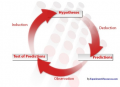
Yes, I am predicting the future, it's a very scientific thing to do if scientific methods are used.
One of the most useful parts of the scientific method is predicting the future as a check of correctness of a theory, so yes, we do it all the time with varying degrees of success.
1657566884250.png
https://explorable.com/prediction-in-research
Physics and Prediction in Research
One fine example of making experimental predictions and generating hypotheses was the work of J.J. Thomson, who conducted a wonderfully innovative series of physics experiments by making predictions.

After he completed an experiment and showed that his prediction had some basis and fitted the observations, he made the next prediction and worked towards a greater goal, in stages. Of course, physicists also work at the other end of the scale and make the huge predictions that are capable of shaking the world of science.

Some of the biggest proponents of prediction in research are the theoretical physicists, such as Einstein and Hawking. They use sweeping and elegant mathematical theories to predict how that they think the universe behaves. Their predictions actually guide the direction of entire scientific paradigms as the empirical physicists test and attempt to falsify parts of the theory, leading to refinement and change.
 

xox

Joined Sep 8, 2017
936
I didn't want to say the same thing over and over but the hope was eventually it would sink in. I guess not sadly. I leave the future open too, to things that are possible or likely to be possible but not the improbable.. You do think that sometime in the future physics laws will change to the point that actual working perpetual motions machines that deliver endless free-energy will happen? We all have our limits on what we think the future will bring. IMO some are closer to reality.

Yes, I am predicting the future, it's a very scientific thing to do if scientific methods are used.
One of the most useful parts of the scientific method is predicting the future as a check of correctness of a theory, so yes, we do it all the time with varying degrees of success.
View attachment 271254
https://explorable.com/prediction-in-research
Exactly. Any given theory is only as good as the predictions that it makes.

Some theories have an even higher threshold of proof. I have a theory of my own for example which proposes that we are actually wrapped around the event horizon of an immense black hole. I have lots of evidence to back it up too. But guess what? It isn't even remotely verifiable at this point. So as far as real science goes it is not much more than an interesting "what if".
 

Thread Starter

Wendy

Joined Mar 24, 2008
23,859
If experimentally it is shown that we can have FTL communications,then we will create new theories to match the facts just as we did with relativity. Relativity made lots of predictions that have been verified experimentally which means it is not too far off from what we think of as the truth.
 

nsaspook

Joined Aug 27, 2009
16,503
If experimentally it is shown that we can have FTL communications,then we will create new theories to match the facts just as we did with relativity. Relativity made lots of predictions that have been verified experimentally which means it is not too far off from what we think of as the truth.
The speed of light is not the problem, there is something more fundamental that needs to proven experimentally, that we can break the speed of causality.
 

Thread Starter

Wendy

Joined Mar 24, 2008
23,859
Well I have nothing to back up this opinion, I figure if you change the past you change the present to match the past. Causality has not been violated. Quantum days throws are also figuratively reset.
 

nsaspook

Joined Aug 27, 2009
16,503
Well I have nothing to back up this opinion, I figure if you change the past you change the present to match the past. Causality has not been violated. Quantum days throws are also figuratively reset.
That's true is there is no free will that can break closed timelike curves (with our time machine), and the past is immutable. IMO that makes for a pretty dull universe meaning it's very likely to be true.

Maybe it's actually true as no time travelers crashed his party.
https://mashable.com/article/stephen-hawking-time-travel-party
Stephen Hawking hosted a party for time travelers, but no one came
 
Last edited:

Ya’akov

Joined Jan 27, 2019
10,356
That's true is there is no free will that can break closed timelike curves (with our time machine), and the past is immutable. IMO that makes for a pretty dull universe meaning it's very likely to be true.

Maybe it's actually true as no time travelers crashed his party.
https://mashable.com/article/stephen-hawking-time-travel-party
Stephen Hawking hosted a party for time travelers, but no one came
Mr. Hawking made several innovative contributions for which he can be rightfully credited, this 2009 event, unfortunately, is not one ot them. (Unless MIT student Dorai is a time traveler out to scoop him...)

mit-student-holds-time-travel-convention
 

nsaspook

Joined Aug 27, 2009
16,503
Mr. Hawking made several innovative contributions for which he can be rightfully credited, this 2009 event, unfortunately, is not one ot them. (Unless MIT student Dorai is a time traveler out to scoop him...)

mit-student-holds-time-travel-convention
No big deal but look at the time and place my traveler.
His party should have been the party for time-traveling party crashers.
 
Last edited:

MrAl

Joined Jun 17, 2014
13,859
Considering that there is really no evidence at all that FTL speeds are even possible, it's almost a pointless exercise. If it can't be measured or inferred then it can't really be considered science, can it?

Anyway the principles of time dilation demonstrate that it is sort of a moot question. Provided you had some sort of exotic fuel that could propel you at a constant 1-G acceleration for say 20 years (according to your onboard clock that is), regardless you would have travelled a distance much further than 20 light years. In fact at that point Earth would be thousands of light-years away. Thus in a sense it is almost as if you had travelled faster than light, if that makes sense.
Hello,

If you dont want to read all of this at least read the last paragraph. Thanks.

I like your showing of time dilation as it connects to FTL travel. It think that is a very good point even though i have a 'however' to add.
The 'however' point is that that would apply to an object with mass wouldnt it? This new point may be moot too though because of the following.

The way i understand it, as limited as it may be, FTL communication is different than FTL travel, and that may be because we are talking about fields not objects per se.

Also the way i understand it is that FTL communication is not only possible it is actually happening today. The only problem right now is that we dont know how to control it. So it's not that it does not exist, we just dont know how to manipulated it yet.

I am talking of course about the particle to particle interaction. If we roll a two die one on one side of a large room and the other on the other side of a large room and the first die stops and displays a '3' and when we look at the second die and it shows a '3' also, there had to have been some communication channel open between the two dice. This wouldnt actually happen with a pair of dice but it does happen with two entangled particles.
If we had a white noise generator transmitting a signal via antenna and a radio 50 feet away the radio would pick up the white noise and although it could receive the white noise it would not do us any good because we cant change the white noise of the transmitter or else it would not be white noise anymore. However, if we turn the white noise generator off the radio would continue to receive white noise because the signal travel time is finite and non zero so there would be a very short time while the radio still sees the signal even though the transmitter is no longer transmitting anything. Thus the reality of the speed the signal can travel is that there is a delay before the radio no longer sees any signal.
This isnt the case with entangled particles the way i understand it. The communication between particles in instantaneous. So even though the state of the far away particle may be random the close by particle still gets synced to the same state (or opposite state) so when we look at it it has the same state. The problem right now today is that the person observing the far away particle can not manipulate the state of that particle, so they can not send a message to the far away particle. All they can do is observe what state it happens to collapse into, and being so far away they have no way to tell the close by particle observer what state they have transmitted.
The fact remains however, that the time it takes for the close by particle to settle into one specific state when the far away particle settles is in theory zero. Therefore we can only conclude, i believe, that the communication between particles is FTL and it must be because they have a very special communication channel that we as a civilization dont yet understand fully.

However, if we learn what is happening here, we may be able to change all that. With the white noise generator and radio maybe we can use a filter of some kind to change the white noise just a little bit after it is generated, then we could possibly use that to change the way the close by particle reacts although this would have to involve a quantum process also that probably involves multiple entanglements not just one. In any case, we are not likely to be able to do this with a resistor and capacitor low pass or high pass filter (chuckle) it has to be a quantum process.
Now because we dont yet understand the mechanism behind the particle to particle communication that says that we dont yet understand all there is to know about quantum mechanics, if there really even is such a thing in the normal sense. If we can find out, we may be able to exploit this but it is going to take some process that is also at the quantum level and we have to hope that we can find a way to transform that process into a 'real' world process and be able to use it in everyday life.

Right now there are laws that suggest that this can not happen, and they suggest this pretty strongly. However, before anybody knew about entanglement properties nobody knew about entanglement properties, yet now they do. That's probably the best illustration of where we sit now as a civilization.
 

MrAl

Joined Jun 17, 2014
13,859
No big deal but look at the time and place my traveler.
His party should have been the party for time-traveling party crashers.
Hi,

I thought that was funny too, but can it still happen some day. Hawking would have to be able to show up too though :)
 

nsaspook

Joined Aug 27, 2009
16,503
The way i understand it, as limited as it may be, FTL communication is different than FTL travel, and that may be because we are talking about fields not objects per se.

Also the way i understand it is that FTL communication is not only possible it is actually happening today. The only problem right now is that we dont know how to control it. So it's not that it does not exist, we just dont know how to manipulated it yet.
"Also the way i understand it is that FTL communication is not only possible it is actually happening today."

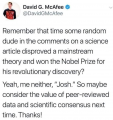
You understand incorrectly as usual on this subject.
1657639540521.png
 

xox

Joined Sep 8, 2017
936
This isnt the case with entangled particles the way i understand it. The communication between particles in instantaneous.
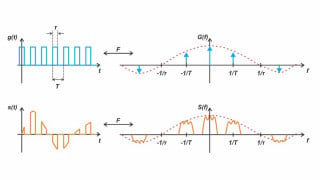
This so-called "quantum entanglement" is really nothing more than the conservation of angular momentum, a simple consequence of symmetry which has nothing to do with instantaneous propagation. In fact the laws of physics would arguably unravel if FTL anything were possible.
 

MrAl

Joined Jun 17, 2014
13,859
This so-called "quantum entanglement" is really nothing more than the conservation of angular momentum, a simple consequence of symmetry which has nothing to do with instantaneous propagation. In fact the laws of physics would arguably unravel if FTL anything were possible.
Hello,

So why do you think Einstein called it Spooky action at a distance?
Also, how do you explain the actual mechanism behind how the two particles are able to break down into the same state when they are very far away from each other?
 

nsaspook

Joined Aug 27, 2009
16,503
https://www.technologyreview.com/20...ion-at-a-distance-paradox-older-than-thought/
The EPR paradox stumped Bohr and was not resolved until 1964, long after Einstein’s death. CERN physicist John Bell resolved it by thinking of entanglement as an an entirely new kind of phenomenon, which he termed “nonlocal.”

The basic idea here is to think about the transfer of information. Entanglement allows one particle to instantaneously influence another but not in a way that allows classical information to travel faster than light. This resolved the paradox with special relativity but left much of the mystery intact. These days, the curious nature of entanglement is the subject of intense focus in labs around the world.
https://arxiv.org/abs/1203.1139
In 1930 Einstein argued against consistency of the time-energy uncertainty relation by discussing a thought experiment involving a measurement of mass of the box which emitted a photon. Bohr seemingly triumphed over Einstein by arguing that the Einstein's own general theory of relativity saves the consistency of quantum mechanics. We revisit this thought experiment from a modern point of view at a level suitable for undergraduate readership and find that neither Einstein nor Bohr was right. Instead, this thought experiment should be thought of as an early example of a system demonstrating nonlocal "EPR" quantum correlations, five years before the famous Einstein-Podolsky-Rosen paper.
 

MrAl

Joined Jun 17, 2014
13,859
Hello,

That's interesting. It's interesting that they have to qualify "information" as "classical information". Why the need to qualify it like that.
I was not suggesting "classical information" except possibly in the future after more research in this area and possibly a work around.
 

BobTPH

Joined Jun 5, 2013
11,666
The “information” that might be sent FTL in the EPR experiment is not accessible to us by any means. So it is not information in the classical sense.

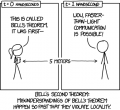
We really don’t know how the Bell’s Theorem correlation happens. The are possibilities other than FTL communication.

Superdeterminism
 

nsaspook

Joined Aug 27, 2009
16,503
The “information” that might be sent FTL in the EPR experiment is not accessible to us by any means. So it is not information in the classical sense.

We really don’t know how the Bell’s Theorem correlation happens. The are possibilities other than FTL communication.

Superdeterminism
"Now you all know that I think free will is logically incoherent nonsense"

Yes, that's what I tell my wife, I was predetermined, at the beginning of the universe, to have this drink with a steak dinner in Las Vegas.
IMG_20190327_202542218.jpg
 
Top