Is my Professor wrong? or am I wrong?

Thread Starter

jean.the.beginner

Joined May 29, 2016
10
Hello people. first of all forgive me my ignorance. I'm new here and new to electrics as well. Also I searched for answers among the threads and didn't find anything.. So. the thing is. I got an exercise I must solve, but so far I couldn't make it.

A 20W lamp is connected to a 12V battery by a 20 Meter long copper wire (with transversal Area of 0.75 mm square)
given the specific resistance for copper rho(copper) = 0.017 Ohm*mm^2/m I need to find.

Power on the Lamp
Power dissipated on the wire

Now... based on the known specific resistance of copper I was able to find that both 20 Meter long wires represent a resistance of 0.906Ohms total.

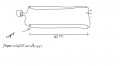
please check both images I uploaded.

In order to determine the power dissipated on the circuit, I need to determine the current for the circuit.
The teacher solved this problem on the blackboard beginning by determining the Resistance of the lamp

Resistance(lamp) = U^2 / P(lamp) Rlamp = 12Volt^2 / 20Watt
= 144 / 20
= 7.2 Ohms
after i came home, started trying to study by myself I thought that one can't just use the 12Volts as the tension applied to the Lamp,.
because as my second sketch shows, the Tension on the lamp can't be 12 Volts. It must be 12 Volts minus Voltage drop caused by the Wires resistance.


so. I'm on a Dead loop. and can't find any answer

On the board the teacher solved like this?
Rlamp = 7.2 Ohm

I total = V / (R lamp + R wires)

I total = 12 / (7.2 + 0.906 )Ohms therefore I total - 1.48 Amps

Power dissipated on the wires = I^2 * Rwires
Pwires = 2,19Amps * 0.906 Ohms
Pwires = 1.98 Watt

Power on the lamp = I^2 * Rlamp
Plamp = 1.48 ^2 * 7.2 Ohms
therefore Plamp = 15.77 Watt (how can it be possible, since the lamp was initially stated to be a 20W lamp?

thanks a lot
Below are the sketches
Drawing.png Drawing2.png
 

crutschow

Joined Mar 14, 2008
38,512
the Tension on the lamp can't be 12 Volts. It must be 12 Volts minus Voltage drop caused by the Wires resistance.
True.
But to determine the lamp resistance we can calculate it based upon its voltage and power rating, which the teacher correctly did.
(The implied assumption is that the lamp resistance is constant although it actually will vary some with voltage, but that's not part of this problem).
therefore Plamp = 15.77 Watt (how can it be possible, since the lamp was initially stated to be a 20W lamp?
Because some power is now being dissipated in the wire, which also reduces the voltage across the lamp and the current through it.
It only dissipates 20W when it has the full voltage applied.

Make sense?
 

SLK001

Joined Nov 29, 2011
1,549
The 20W with 12V applied is a standard that the manufacturer designs to, so the professor is correct in his calc of the resistance. It is the power that the lamp is rated for, not necessarily the power dissipated by the lamp. The lamp dissipated is voltage across the lamp squared, divided by the resistance.

The problem states that there is only 20M of wire, but you have 40M.

I'm not really following where you are having a problem.
 

#12

Joined Nov 30, 2010
18,224
It is the power that the lamp is rated for, not necessarily the power dissipated by the lamp.
You will find this every day in electronics. The maximum "rating" for a part is almost never the amount of power applied to the part. The rating is merely the point where the part moves into the range of operation where the part is in danger of becoming damaged.
 

crutschow

Joined Mar 14, 2008
38,512
The lamps rated power that the lamp is rated for, not necessarily the power dissipated by the lamp.
The lamps rated power is nominally the power used by the lamp which is dissipated by conduction and radiation.
It is not a "maximum" rating such as electronic devices have.
 

#12

Joined Nov 30, 2010
18,224
The lamps rated power is nominally the power
Well, now you've opened a can of worms. The T.S. is going to wonder which parts are rated for, "nominal" power, which are rated for, "maximum" power, and which 12V rated parts start emitting smoke if stressed with 12.0001 volts.:D
 

Thread Starter

jean.the.beginner

Joined May 29, 2016
10
Thanks a lot for all the answers!
but I think I still have a doubt.
The resistance of the wires can be found without doubt (check)
but to find the resistance of the whole circuit. I need Voltage (known) and Total resistance, (Rwires, known.... Rlamp. still unknown)
to find Rlamp
Powerlamp(known) = V on the lamp ^2 (still unknown) / Rlamp (this is what im looking for)
or
Rlamp = Vlamp^2 / Plamp(known)

the thing which I still didnt understand is.
shouldnt I use for Vlamp the value of Vbattery - Vdrop_on_wires ?

but I cant find the voltage drop on the wires. because I need the current of the whole mesh.

and to find the current of the whole mesh, i need to find the Total resistance, which for now is unknown coz I don't know the Resistance of the lamp

Got my doubt?
 

#12

Joined Nov 30, 2010
18,224

WBahn

Joined Mar 31, 2012
32,848
Thanks a lot for all the answers!
but I think I still have a doubt.
The resistance of the wires can be found without doubt (check)
but to find the resistance of the whole circuit. I need Voltage (known) and Total resistance, (Rwires, known.... Rlamp. still unknown)
to find Rlamp
Powerlamp(known) = V on the lamp ^2 (still unknown) / Rlamp (this is what im looking for)
or
Rlamp = Vlamp^2 / Plamp(known)

the thing which I still didnt understand is.
shouldnt I use for Vlamp the value of Vbattery - Vdrop_on_wires ?

but I cant find the voltage drop on the wires. because I need the current of the whole mesh.

and to find the current of the whole mesh, i need to find the Total resistance, which for now is unknown coz I don't know the Resistance of the lamp

Got my doubt?
You seem to be making the assumption that a 20 W light bulb always dissipates 20 W of power.

If I set a 12 V, 20 W light bulb on the table not connected to anything, is it dissipating 20 W?

Of course, not. It's sitting there looking stupid dissipating zero watts.

So what does it mean to say that you have a 12 V, 20 W lightbulb sitting on your table?

If means that this light bulb, when operated with 12 V across it, will dissipate 20 W of power. If you apply less voltage across it, it will dissipate less than 20 W. If you apply more voltage it will dissipate more than 20 W.

Because you know that the bulb is basically a resistor (and, as pointed out earlier, for the purposes of this problem we assume that the resistance is fixed, which is a bad assumption for an incandescent bulb, but we have to go with that assumption for a problem at this level). We know that WHEN the bulb has 12 V across it, it will dissipate 20 W. That's all we need to know to find the resistance. Once we have that resistance, we can then find out how much power it is actually dissipating when different voltages are applied across is (or when different currents are flowing through it).
 

MrAl

Joined Jun 17, 2014
13,704
Hi,

Yeah i agree we probably have to go with the bulb resistance as being constant for this problem. If the solution works out to the given result, then that;s what they must be assuming too. Using data on incandescent bulbs from an EE handbook, i get 16.45 watts which is up from the given 15.77 watts, but that is because as the voltage across the bulb goes down the resistance goes down too, being about 75 percent of the initial R (initial R=7.2 ohms here) at 50 percent voltage.
But 15.77 watts is probably right for this problem because of the assumption of constant resistance (i did not work out the problem that way though so i did not check that result).

As a side note, i think i remember measuring about 10 ohms for a 100 watt 120vac bulb with no voltage applied, but it would shoot up to 144 ohms at the 120v point. That's about as non linear as we ever see :)
 
Last edited:

Bordodynov

Joined May 20, 2015
3,431
I will confuse you a little. But it is possible to solve the problem more accurately. Previously, incandescent lamps were used as current stabilizers. The resistance of a cold lamp is 10 to 15 times less than in working condition. This is the nonlinearity of resistance against temperature. In the first approximation, we can assume that the current of the lamp does not change whether or not there is a wire. Count the current without wires. Then using the same current, calculate the voltage on the wires. You will receive voltage on the lamp. Multiply the received voltage by the previously calculated current and get a new power on the lamp. And if you want, then the new ohmic resistance of the lamp.
 

Thread Starter

jean.the.beginner

Joined May 29, 2016
10
Thanks for the answers. But why the lamp is not dissipating 20W is not my problem now. i understood why.

what I still didn't understand is:
In order to accurately find the current in the mesh, I need the total Resistance

I got only the resistance of the wires,
and I can't find the resistance of the lamp. because for that I need the Tension applied on the lamp

the Voltage applied on the lamp is not 12Volts, but slightly less,
since the wires themselves make the Volage drop


Rlamp = VoltageonLamp(unknown) ^2 / Power lamp (known)
 

crutschow

Joined Mar 14, 2008
38,512
I can't find the resistance of the lamp. because for that I need the Tension applied on the lamp
No you don't.
Okay, once again.
For the purposes of this problem we are assuming the lamp resistance does not vary with voltage.
Thus you can find the amp resistance from its power and voltage rating.
We then use that resistance to calculate the actual lamp voltage with the added wire resistance.

What don't you understand about that?
 

MrAl

Joined Jun 17, 2014
13,704
I will confuse you a little. But it is possible to solve the problem more accurately. Previously, incandescent lamps were used as current stabilizers. The resistance of a cold lamp is 10 to 15 times less than in working condition. This is the nonlinearity of resistance against temperature. In the first approximation, we can assume that the current of the lamp does not change whether or not there is a wire. Count the current without wires. Then using the same current, calculate the voltage on the wires. You will receive voltage on the lamp. Multiply the received voltage by the previously calculated current and get a new power on the lamp. And if you want, then the new ohmic resistance of the lamp.
Hello there,

I am not sure who you think you are confusing :)

"Previously, incandescent lamps were used as current stabilizers"
I dont know why you think that would apply to this problem. If you think that adding a bulb somehow magically makes the current stay the same in a circuit with a wire as in a circuit with no wire, you better go back and make some measurements in a real life circuit. Just because a bulb can possibly keep the current a little more constant in a circuit with a slightly variable resistance does not mean we can throw one into any circuit and have the current stay the same as when there is zero series resistance. That is because the effect of the wire LOWERS the nominal operating current of the bulb. In other words, the current will ALWAYS be lower with the wire than without.
When the bulb is used to 'regulate' the current, that current level is assumed to be at a LOWER level than it would be with no wire. That means we if we had 12v and 1 amp without a wire, we might have 12v and 0.9 amps with a wire, but that in turn means that we are not 'regulating' that 1 amp, we are 'regulating' that 0.9 amps.

So in short, the bulb may be able to help keep a current in a wire constant, but it can not keep the current constant at the same level as without a wire. "Constant" means zero change, but change itself does not imply any particular level.

Lucky though this problem just assumes the bulb never changes resistance, so we get off easy :)
 

Bordodynov

Joined May 20, 2015
3,431
Hello. Yes, I was embarrassed and mistaken. The incandescent lamp is not a current source, but only reduces the current change compared to the resistor.
I am sorry.
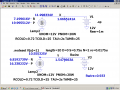
I realized this after I made a calculation on LTspice (as you can see). It just did not occur to me to correct myself. I was distracted by urgent work.
The calculation showed that the resistance of the lamp when connected without wires 7.2Ohm (P=20W), and with wires 6.82Ohm (P=16.34 W)
 
Top