Why do you want to risk destroying the tweeter or causing the amplifier to produce clipping?
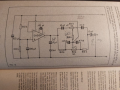
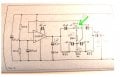
The tone controls have only a simple one capacitor and one resistor first-order highpass filter that has a maximum slope of only 6dB per octave.
If it is turned to max treble and is flat at 1kHz then 4kHz will be at +5dB, 8kHz will be at +11dB, 16kHz will be at +17dB and 32kHz will be at +23dB.
Why do you want to risk destroying the tweeter or causing the amplifier to produce clipping?
The tone controls have only a simple one capacitor and one resistor first-order highpass filter that has a maximum slope of only 6dB per octave.
If it is turned to max treble and is flat at 1kHz then 4kHz will be at +5dB, 8kHz will be at +11dB, 16kHz will be at +17dB and 32kHz will be at +23dB.
Point taken if I were to use it in an audio amplifier! But it's to drive a small, very low powered amplitude modulated transmitter. The output tuned circuit cuts the sidebands slightly, but worse, the IF bandwidth of most AM receivers (even vintage ones I restore) cut the treble at about +/- 4 kHz. So I'm trying to get a steep-ish boost 3 kHz upwards. The circuit shown almost does that, but only with the treble maxed out, so a point in the direction of which components to tweak was what I was after. There are complex ways the professional broadcasters do it, but that really is not worth the effort for a watt or so of AM.
The transmitted extended sidebands will only be attenuated by the transmitter's output tuned circuit. The range is only about 20 yards so not likely to splatter across adjacent channels. I choose transmit frequencies with no adjacent channels anyway.
You don't want to boost the high frequencies at the transmitter. This is going affect the RF transmission bandwidth required. There is good reason why the AF bandwidth is limited to 5kHz. This is the spread in the RF signal.
Here is an article from a US AM radio station chief engineer. He says that AM radio stations have been using pre-emphasis (treble boost) for decades. He says that the sharp cutoff needed to avoid adjacent stations interference causes group delay and "phasey" sound so they have a sharp cutoff at 7.5kHz that sounds OK. https://www.radioworld.com/news-and-business/opinion-39let39s-keep-am-sounding-good39
I think the poor high frequency response of AM radio sounds awful even with the pre-emphasis treble boost.
You don't want to boost the high frequencies at the transmitter. This is going affect the RF transmission bandwidth required. There is good reason why the AF bandwidth is limited to 5kHz. This is the spread in the RF signal.
Yes, I worked in broadcasting for 32 years and you are right. But as I said, this is not a station to broadcast to a wide area. It is just in the curtilage of my home. All I want to do is simply increase the treble - pre emphasis - of the transmission. The spread of the signal is irrelevant since a) I've explained why there are no affected adjacent channels, and b) vanishingly few people listen on medium wave in the UK now anyway. Oh, and c) Ofcom - the UK RF-spectrum regulator - don't have the resources to track down each tiny AM 'pirate'. In fact they have hardly any resources to work on anything other than the important stuff, which is no longer anything to do with AM broadcasting. Officially our AM stations don't transmit beyond +/- 4.5 kHz. That's horrid no matter how cleverly pre-emphasis is applied!
When you have plenty of vintage radios, messing about with their audio response and widening their IF bandwidth works up to a point, but they are what they are. It's when you hear a good Murphy set with adjustable IF and audio bandwidth that you know what's possible. Mini DIY broadcasting is not going to be able to emulate all the clever spectrum tailoring the big boys can do - which still sound crap. All that's required for me is some treble boost (and a bit of audio compression, but that's another story) and that's what I'm aiming to do with a tone control that might be tweaked to do just a bit more.
Here is an article from a US AM radio station chief engineer. He says that AM radio stations have been using pre-emphasis (treble boost) for decades. He says that the sharp cutoff needed to avoid adjacent stations interference causes group delay and "phasey" sound so they have a sharp cutoff at 7.5kHz that sounds OK. https://www.radioworld.com/news-and-business/opinion-39let39s-keep-am-sounding-good39
I think the poor high frequency response of AM radio sounds awful even with the pre-emphasis treble boost.
Thanks. That is exactly what I've been familiar with at work for many years. What makes matters worse is selective fading after dusk. But my little rig won't be suffering this just around my home!
I agree. AM plays a lot of static interference, FM does not. AM sounds muffled, FM sounds wideband.
You are lucky for an AM radio to produce 3.5kHz but an FM radio produces 15kHz which is almost hifi.
I agree. AM plays a lot of static interference, FM does not. AM sounds muffled, FM sounds wideband.
You are lucky for an AM radio to produce 3.5kHz but an FM radio produces 15kHz which is almost hifi.
Because I and many collect and restore vintage domestic radios. Any sets before about 1954 in the UK do not have FM. Yes, the sound is much better but that's not the point. AM can sound better than it generally does if the receiver has a wide IF and good audio amp and the received signal has the transmitted bandwidth. Still not as good as FM for reasons of interference, but can be pretty good.
AM Radios were made to listen to news or the scores and crowd screaming at ball games, not just to look at.
The stations were spaced at 10kHz apart then the total bandwidth must be 5kHz but all the stages combine to begin cutting 3.5kHz.
Later, FM radios were made to listen to music with the stations spaced at 200kHz allowing for stereo and SCA (stores background music) bandwidth..
Obviously, your 75 years old radio heats your home with its vacuum tubes.
AM Radios were made to listen to news or the scores and crowd screaming at ball games, not just to look at.
The stations were spaced at 10kHz apart then the total bandwidth must be 5kHz but all the stages combine to begin cutting 3.5kHz.
Later, FM radios were made to listen to music with the stations spaced at 200kHz allowing for stereo and SCA (stores background music) bandwidth..
Obviously, your 75 years old radio heats your home with its vacuum tubes.
In Europe the MW channel spacing is 9kHz. So theoretically top cut at the transmitter is +/- 4.5 kHz, but even in the heyday of AM broadcasting no stations would be working on adjacent channels to the same service area so in practice transmitted bandwidth could be more, although night time conditions were (and still are) pretty chaotic. Now however, many stations are leaving the band and it is slowly emptying. So no problem using a watt or so with +/- 10 kHz, though hardly any radio will be able to reproduce that!

 Facebook
 Google
 GitHub
 Linkedin