Ignition primary circuit help

Thread Starter

Autobike

Joined Feb 23, 2018
99
Hello. i own a 4 cylinder motorcycle which has a wasted spark system ( two spark plug leads per ignition coil ) and a TCI ignition system. recently i did a peak voltage test in my primary circuit and it went well. but i'm having a hard time to figure out the primary coil voltage path.

i did a bit of search about the TCI system and according to those explanations the primary coil grounds through the TCI. when the TCI gets the correct signal from the pulse generator, it cuts the ground path of the primary winding. due to that the magnetic field created inside the ignition coil collapses rapidly. it induces a voltage in both primary and the secondary winding. the secondary winding voltage is proportional to the primary winding voltage.

it's clear that the voltage induced in the secondary coil has a path to travel. so we get the sparks. in the below picture it shows well.


but in the primary coil, apparently there's no path to travel since the primary coil is not grounded at the time the voltage is induced. does the voltage in the primary coil go somewhere after the induction?

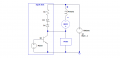
here you can see the ignition circuit of my bike


when getting the primary coil peak voltage the manual advises to put the (+) probe of my multimeter to the ground path of the primary coil and the (-) probe of my multimeter to the ground(chassis). i measured and got the correct voltage. but by putting the probes in that way how do we create a complete circuit to get the peak voltage reading of the primary coil? if someone can explain how it works, it'll be much appreciated. thank you.
 

Alec_t

Joined Sep 17, 2013
15,114
Welcome to AAC!
The spark unit includes a semiconductor switch which periodically connects the primary negative terminal to ground (chassis) to allow primary current flow and hence store energy in the primary's inductance. When the switch opens, the primary inductance causes the negative terminal to rise to a high voltage, much greater than the battery voltage. There will be a diode in the spark unit which allows that high voltage to drive a reverse current through the primary and battery. That current induces an even higher voltage in the secondary to fire the plugs.
 

Thread Starter

Autobike

Joined Feb 23, 2018
99
Welcome to AAC!
The spark unit includes a semiconductor switch which periodically connects the primary negative terminal to ground (chassis) to allow primary current flow and hence store energy in the primary's inductance. When the switch opens, the primary inductance causes the negative terminal to rise to a high voltage, much greater than the battery voltage. There will be a diode in the spark unit which allows that high voltage to drive a reverse current through the primary and battery. That current induces an even higher voltage in the secondary to fire the plugs.
thank you. yes the primary coil peak voltage i got was something 100DCV+ which is OK with the manual. the hard thing to understand is how we get that voltage by putting our probes in the above way i mentioned. due to the magnetic induction the coil has its own potential difference as the secondary coil. so we put our (+) probe to the ground path of the primary coil and (-) probe to the motorcycle chassis. it's hard to figure out a complete circuit there. the only path i see is below. i'm not sure it happens like this but just a guess :) thank you.


Alec_t

Joined Sep 17, 2013
15,114
This is what the relevant part of the circuit looks like :-
Sparks2.PNG
BEMF represents the back-emf, i.e. the voltage generated by the primary inductance when the transistor switch Q1 turns off. Your meter responds to this voltage when connected as shown. D2 is a Schottky diode which breaks down and allows reverse current to flow if the reverse voltage across D2 exceeds, say, 100V. This protects Q1 from excess voltage.
 
Last edited:

ian field

Joined Oct 27, 2012
6,536
Hello. i own a 4 cylinder motorcycle which has a wasted spark system ( two spark plug leads per ignition coil ) and a TCI ignition system. recently i did a peak voltage test in my primary circuit and it went well. but i'm having a hard time to figure out the primary coil voltage path.

i did a bit of search about the TCI system and according to those explanations the primary coil grounds through the TCI. when the TCI gets the correct signal from the pulse generator, it cuts the ground path of the primary winding. due to that the magnetic field created inside the ignition coil collapses rapidly. it induces a voltage in both primary and the secondary winding. the secondary winding voltage is proportional to the primary winding voltage.

it's clear that the voltage induced in the secondary coil has a path to travel. so we get the sparks. in the below picture it shows well.


but in the primary coil, apparently there's no path to travel since the primary coil is not grounded at the time the voltage is induced. does the voltage in the primary coil go somewhere after the induction?

here you can see the ignition circuit of my bike


when getting the primary coil peak voltage the manual advises to put the (+) probe of my multimeter to the ground path of the primary coil and the (-) probe of my multimeter to the ground(chassis). i measured and got the correct voltage. but by putting the probes in that way how do we create a complete circuit to get the peak voltage reading of the primary coil? if someone can explain how it works, it'll be much appreciated. thank you.
Most with that type of "black box" are CDI with a high voltage winding on the generator stator - somewhere in the general direction of 350V or more.

A basic Kettering type can develop back emf as high as 300V when working well. Kettering needs a capacitor across the points to slow rise time so the points separate quickly enough to quench the arc.

Some motorcycles use TAC units - but I don't see all that many.
 

ebp

Joined Feb 8, 2018
2,332
It is common to use a transistor (bipolar or FET) rated at 400 volts or more for the primary.

This is a "flyback" or "inductive discharge" system. The coil is a two winding inductor and not really considered to be a transformer - except when you would rather not have it be one.
When the transistor in the primary circuit is ON, energy is stored in the inductor as a magnetic field. The turns ratio between the primary and secondary is too low to generate a spark. When the switch turns off, the stored energy induces a voltage across the windings. Now the stupid thing wants to be a transformer, and the turns ratio comes into play. The spark voltage and the primary voltage are directly related by the turns ratio. If you want a high voltage spark that delivers as much energy as possible, you don't want to limit the voltage on the primary side to something too low. By using a high-voltage transistor the voltage across can be allowed to go very high.

Sometimes the primary voltage is controlled in a brute-force fashion to protect the transistor from voltage that is grossly too high (as it could be with the sparkplug disconnected). Sometimes a zener diode type circuit is used between the collector (or drain) of the transistor and the base (or gate) so that full turn-off of the transistor is prevented until enough energy has been dissipated. This is kind of mean to the transistor (high transient power dissipation), but properly selected devices will withstand it.
 

ian field

Joined Oct 27, 2012
6,536
It is common to use a transistor (bipolar or FET) rated at 400 volts or more for the primary.

This is a "flyback" or "inductive discharge" system. The coil is a two winding inductor and not really considered to be a transformer - except when you would rather not have it be one.
When the transistor in the primary circuit is ON, energy is stored in the inductor as a magnetic field. The turns ratio between the primary and secondary is too low to generate a spark. When the switch turns off, the stored energy induces a voltage across the windings. Now the stupid thing wants to be a transformer, and the turns ratio comes into play. The spark voltage and the primary voltage are directly related by the turns ratio. If you want a high voltage spark that delivers as much energy as possible, you don't want to limit the voltage on the primary side to something too low. By using a high-voltage transistor the voltage across can be allowed to go very high.

Sometimes the primary voltage is controlled in a brute-force fashion to protect the transistor from voltage that is grossly too high (as it could be with the sparkplug disconnected). Sometimes a zener diode type circuit is used between the collector (or drain) of the transistor and the base (or gate) so that full turn-off of the transistor is prevented until enough energy has been dissipated. This is kind of mean to the transistor (high transient power dissipation), but properly selected devices will withstand it.
Look on the ST website selection page - there are a few high voltage Darlingtons specified for TAC applications.

My DIY TAC used a 9A 900V MOSFET - awesome at high RPM, but not ideal for cold starting.
 

ebp

Joined Feb 8, 2018
2,332
ST devices

Many years ago (I should make that phrase an AutoHotkey macro) I designed a boiler burner igniter board and chose an SGS-Thomson, now ST Microelectronics, Darlington that had the zeners built in. Of course they promptly discontinued the part & I had to rework the board. Ψ

Some people from the company that wanted the igniter had purchased an automotive ignition coil and didn't understand why they only got one spark out of it when the hooked it up to a battery. Just a couple of week ago I pitched out the prototype board. I did salvage the heatsink I'd anodized and dyed purple, just for amusement. I've become very unsentimental about my life's work.

made me think of FETlingtons - wonder if anyone makes them anymore; never were very popular I don't think
 

Thread Starter

Autobike

Joined Feb 23, 2018
99
Welcome to AAC! The spark unit includes a semiconductor switch which periodically connects the primary negative terminal to ground (chassis) to allow primary current flow and hence store energy in the primary's inductance. When the switch opens, the primary inductance causes the negative terminal to rise to a high voltage, much greater than the battery voltage. There will be a diode in the spark unit which allows that high voltage to drive a reverse current through the primary and battery. That current induces an even higher voltage in the secondary to fire the plugs.
thank you. your circuit clearly explained it.

This is what the relevant part of the circuit looks like :-
View attachment 146883BEMF represents the back-emf, i.e. the voltage generated by the primary inductance when the transistor switch Q1 turns off. Your meter responds to this voltage when connected as shown. D2 is a Schottky diode which breaks down and allows reverse current to flow if the reverse voltage across D2 exceeds, say, 100V. This protects Q1 from excess voltage.
wow this is exactly what i wanted :) thank you very much for the circuit and it's very clear. now i have a good idea about how it happens. only one question remaining if you don't mind,
we know that due to the magnetic induction the bemf happens. it's a voltage opposed to the battery voltage. when it happens the negative terminal of the primary coil has a greater potential. so we can put the (+) probe of our multimeter there. but since a voltage measurement should be always relative to some other point we have to put our (-) probe to somewhere. but why do we put our (-) probe to the chassis (ground) instead of putting it to the positive terminal of the primary coil? isn't the bemf happening across the primary coil? kindly explain it. thx again :)

Most with that type of "black box" are CDI with a high voltage winding on the generator stator - somewhere in the general direction of 350V or more.A basic Kettering type can develop back emf as high as 300V when working well. Kettering needs a capacitor across the points to slow rise time so the points separate quickly enough to quench the arc.Some motorcycles use TAC units - but I don't see all that many.
thank you very much. actually this is a TCI :)

It is common to use a transistor (bipolar or FET) rated at 400 volts or more for the primary.
This is a "flyback" or "inductive discharge" system. The coil is a two winding inductor and not really considered to be a transformer - except when you would rather not have it be one.
When the transistor in the primary circuit is ON, energy is stored in the inductor as a magnetic field. The turns ratio between the primary and secondary is too low to generate a spark. When the switch turns off, the stored energy induces a voltage across the windings. Now the stupid thing wants to be a transformer, and the turns ratio comes into play. The spark voltage and the primary voltage are directly related by the turns ratio. If you want a high voltage spark that delivers as much energy as possible, you don't want to limit the voltage on the primary side to something too low. By using a high-voltage transistor the voltage across can be allowed to go very high.
Sometimes the primary voltage is controlled in a brute-force fashion to protect the transistor from voltage that is grossly too high (as it could be with the sparkplug disconnected). Sometimes a zener diode type circuit is used between the collector (or drain) of the transistor and the base (or gate) so that full turn-off of the transistor is prevented until enough energy has been dissipated. This is kind of mean to the transistor (high transient power dissipation), but properly selected devices will withstand it.
thx a lot for the explanation.
small question regarding the last part of the explanation, when we do a simple spark test in a 4cylinder bike we remove the plug caps. then connect a good known spark plug to a specific plug cap and ground to the engine. after that we crank the engine and inspect the spark. when we do it some say not to disconnect other plug caps from the plugs. if we do, since they are not grounded at that moment some bad things can happen to the ignition coil and the TCI. i think it's related with the secondary emf. my plug caps have 5kΩ resistors inside them and two plug leads per coil (wasted spark). so is this true ? to be honest i have done it several times due to the lack of awareness. nothing happened. but it's a good idea to get rid of it if it's bad to the coil and the TCI.


Alec_t

Joined Sep 17, 2013
15,114
we have to put our (-) probe to somewhere. but why do we put our (-) probe to the chassis (ground) instead of putting it to the positive terminal of the primary coil?
Either place would work. You'd just get a different voltage reading. If the bemf was 100V relative to chassis (taken as the 0V reference point) it would be 100V - 12V = 88V relative to the + terminal of the primary. Remember that a Voltage is a potential difference, so always has to be measured relative to some point of reference.
 

ebp

Joined Feb 8, 2018
2,332
With regard to risk of having plugs disconnected:

I can't give a good answer. If the circuit is well designed it should cause no harm if the situation exists for just a short time. The risk of harm will rise if the circuit is allowed to operate for too long just because the energy gets dumped into some components that will heat up. A sophisticated control system could detect the no-plug situation after a few cycles and simply prevent driving the coil until the ignition was turned off and back on, or it might try again every few seconds. I have no idea if any of them actually do that.
 

Alec_t

Joined Sep 17, 2013
15,114
ome say not to disconnect other plug caps from the plugs. if we do, since they are not grounded at that moment some bad things can happen to the ignition coil and the TCI.
That's possible. Referring back to post #4, when Q1 turns on the primary inductance stores energy. When Q1 turns off, some of that energy gets transferred to the high voltage secondary and hence to a pair of plugs to create a spark, but the remaining stored energy goes the D1/D2/R1 route and gets dissipated as heat in those components. If the cap is removed from one plug of the pair, a greater fraction of the energy goes that D1/D2/R1 route so the heating there would be greater. That could lead to component damage.
 

ian field

Joined Oct 27, 2012
6,536
With regard to risk of having plugs disconnected:

I can't give a good answer. If the circuit is well designed it should cause no harm if the situation exists for just a short time. The risk of harm will rise if the circuit is allowed to operate for too long just because the energy gets dumped into some components that will heat up. A sophisticated control system could detect the no-plug situation after a few cycles and simply prevent driving the coil until the ignition was turned off and back on, or it might try again every few seconds. I have no idea if any of them actually do that.
The spark plug gap is effectively a voltage clamp - without it, that duty falls on the windings insulation.

Most ignition coils are pretty robust - I only broke down a couple while prototyping my DIY TAC.

At one pub someone was in the habit of yanking my plug caps off, so I built a second TAC and a drive pulse generator - that HT lead had a broken plug cap on the end.

Sometimes the engine coughed when I switched on the swapped HT unit.
 

Thread Starter

Autobike

Joined Feb 23, 2018
99
Either place would work. You'd just get a different voltage reading. If the bemf was 100V relative to chassis (taken as the 0V reference point) it would be 100V - 12V = 88V relative to the + terminal of the primary. Remember that a Voltage is a potential difference, so always has to be measured relative to some point of reference.
thank you so much :) now it's crystal clear :)

With regard to risk of having plugs disconnected:
I can't give a good answer. If the circuit is well designed it should cause no harm if the situation exists for just a short time. The risk of harm will rise if the circuit is allowed to operate for too long just because the energy gets dumped into some components that will heat up. A sophisticated control system could detect the no-plug situation after a few cycles and simply prevent driving the coil until the ignition was turned off and back on, or it might try again every few seconds. I have no idea if any of them actually do that.
thank you very much. now i got it. i cranked several times (3 to 4 sec each ) without knowing this situation. i won't do it again.

That's possible. Referring back to post #4, when Q1 turns on the primary inductance stores energy. When Q1 turns off, some of that energy gets transferred to the high voltage secondary and hence to a pair of plugs to create a spark, but the remaining stored energy goes the D1/D2/R1 route and gets dissipated as heat in those components. If the cap is removed from one plug of the pair, a greater fraction of the energy goes that D1/D2/R1 route so the heating there would be greater. That could lead to component damage.
got it :) thx again.

The spark plug gap is effectively a voltage clamp - without it, that duty falls on the windings insulation. Most ignition coils are pretty robust - I only broke down a couple while prototyping my DIY TAC. At one pub someone was in the habit of yanking my plug caps off, so I built a second TAC and a drive pulse generator - that HT lead had a broken plug cap on the end.
Sometimes the engine coughed when I switched on the swapped HT unit.
thank you very much for sharing your experience. it's clear now :)
 

Thread Starter

Autobike

Joined Feb 23, 2018
99
i have a average knowledge about these things and i'm impressed how you people explained it. thx a lot. i forgot to ask something. hope i can ask it here.
my multimeter is kind of a budget one which i bought from ebay. mostly i use it for my bike. the readings are pretty accurate (voltage AC/DC, resistance, diode). according to the specs it has an input impedance of 10MΩ or greater for voltage measurements. according to the fluke site the more the input impedance the less it affects the circuit which we measure. please correct me if i'm wrong.
my bike manual recommends me to use a multimeter which has an input impedance of 10MΩ or greater for peak voltage tests. so i made a peak voltage adapter using a diagram found in the internet and it worked really well. measured both ignition primary and the pickup coil and got the readings without any problem :) they asked to pull all 4 plug caps out and put new good 4 plugs for each caps and ground them at once. then get the reading from each coil while cranking the engine. there's a video a guy doing it while the engine is running. so i was confused with those two methods and tried both. when the engine is running my voltage rose up to a bit more than 200DCV in my primary. i did some search again and found that the correct method is what my manual says. so i did that too and got the reading correctly.
so my question is when we use a multimeter to measure the DCV, does current go through my multimeter to calculate the voltage? can it create a short circuit to my circuit which i get the reading from? or is it safe to use a multimeter to test the voltage as long as the voltage isn't exceeding the maximum voltage in the multimeter specs? thank you very much.
 

Alec_t

Joined Sep 17, 2013
15,114
when we use a multimeter to measure the DCV, does current go through my multimeter to calculate the voltage?
Yes, but it's only a very small current. For example, if the voltage applied to the meter is 100V then the current is 100V/10megohm = 10 microamps.
can it create a short circuit to my circuit
No, providing the meter is set on a Voltage range. Be very careful not to connect the meter across any voltage source if it is set on a current range, as that would fry the meter.
is it safe to use a multimeter to test the voltage as long as the voltage isn't exceeding the maximum voltage in the multimeter specs?
Yes.
 

Thread Starter

Autobike

Joined Feb 23, 2018
99
Yes, but it's only a very small current. For example, if the voltage applied to the meter is 100V then the current is 100V/10megohm = 10 microamps.
No, providing the meter is set on a Voltage range. Be very careful not to connect the meter across any voltage source if it is set on a current range, as that would fry the meter.
Yes.
thank you. now i understood.
 
Top