Idea review - precise 5V reference with current boost

crutschow

Joined Mar 14, 2008
38,909
One caveat with your two IC circuit:
My simulations with several 5V references and a parallel regulator resulted in some overshoot of the voltage (up to near a 9V peak) depending upon the response time for the reference to come out of its initial current-limit saturation (which is normally not specified in the data sheet) when the current drops to its 5mA value.
I don't have a model for the reference you are using so don't know how much of a problem that might be for your circuit, but it definitely needs to be breadboard tested before you commit to that circuit, and also to make sure the reference is stable with that 10µF filter.

Another alternate circuit that occurred to me is to use a P-MOSFET switch in series with the load to delay the application of the load when voltage is applied until the 10µF capacitor is charged, since you stated that was sufficient to start the load.
Of course the switch would need to have a low enough on-resistance at 5mA not not significantly affect the load voltage (which is not difficult to do with modern, small MOSFETs in the low mΩ region).
 
Last edited:

panic mode

Joined Oct 10, 2011
5,399
may i ask what is it for? normally one hardly draws any current from a reference to avoid self heating and resulting thermal drift.
 
Last edited:

Thread Starter

MrSoftware

Joined Oct 29, 2013
2,280
may i ask what is it for? normally one hardly draws any current from a reference to avoid self heating and resulting thermal drift.
What I can tell you is the load generates an output that needs to be precise, but the loads output is directly affected by its supply voltage, and this is why I need a previse 5V. I wish I could tell you more.
 

Reloadron

Joined Jan 15, 2015
7,975
What I can tell you is the load generates an output that needs to be precise, but the loads output is directly affected by its supply voltage, and this is why I need a previse 5V. I wish I could tell you more.
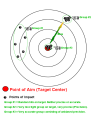
Something needs understood. Precision is simply a measure of repeatability, accuracy is defined as unbiased Precision. Like the picture!
Accuracy and Precision 1.png
You want a high level of accuracy. That's my read.

Ron
 

Thread Starter

MrSoftware

Joined Oct 29, 2013
2,280
Something needs understood. Precision is simply a measure of repeatability, accuracy is defined as unbiased Precision. Like the picture!

You want a high level of accuracy. That's my read.

Ron
Yes good catch on the terminology, it needs to be accurate and precise. 5V +/- 0.1%. This matches the spec on our old chip that was proven to work as we needed. Actually the new chip out performs the old one in the temperature department, 8ppm/C vs. 10ppm/C in a worst case and 3ppm/C vs 4ppm/C typical.
 

WBahn

Joined Mar 31, 2012
33,309
Something needs understood. Precision is simply a measure of repeatability, accuracy is defined as unbiased Precision. Like the picture!
View attachment 372445
You want a high level of accuracy. That's my read.

Ron
"Accuracy" is defined (by the International Vocabulary of Metrology (VIM), published by the Joint Committee for Guides in Metrology (JCGM)) as simply being the closeness of a measured value to the true value. It really deals with a single measurement, not a group of measurements. As such, it is difficult to use it as a quantitative description of the performance of a system.

"Trueness" (what most people that distinguish "accuracy" from "precision" mean when they use the word "accuracy") is how close the average of a set of measurements are to the true value, without respect to how close they are to each other, while "precision" is how close they are to each other, without respect to how close they are to the true value. Thus, these two metrics, which can be described quantitatively, are essentially independent parameters describing two different characteristics of a system.

Although it is NOT in conformance with the internationally-recognized definition, what most people mean when they say that a system is "accurate" is that is has a high degree of both trueness and precision, at least relative to comparable systems.

Also note that a specification such as 5 V ± 0.1% is not really firmly specifying either trueness or precision; though it is placing bounds on both, they can still be traded off against each other within those bounds. The resistors that where sorted and binned back in the day were a classic example. You could easily purchase a thousand 1 kΩ 10% resistors and find that all of them were more than 5% higher than they were marked, thus representing a relatively poor degree of trueness while, at the same time, exhibiting a much higher degree of precision. Or, you could find that they were scattered pretty much uniformly over the entire tolerance band, thus having a high degree of trueness but a level of precision that was barely within spec.
 

crutschow

Joined Mar 14, 2008
38,909
Another example:
You have an 8-bit digital word specifying a voltage.
Its precision is 1/256.
If it's accurate to ±2bits than its accuracy is ±0.78%.
 

WBahn

Joined Mar 31, 2012
33,309
Another example:
You have an 8-bit digital word specifying a voltage.
Its precision is 1/256.
If it's accurate to ±2bits than its accuracy is ±0.78%.
No. It's RESOLUTION is 1/256. Precision is about repeatability. If you send it thousands of random output values and measure the actual outputs and collect them (grouped by output value), you can determine the precision and the accuracy (trueness). The precision will probably be less than 1/256, but not necessarily, which would almost certainly be the case if the system is non-monotonic.
 
Top